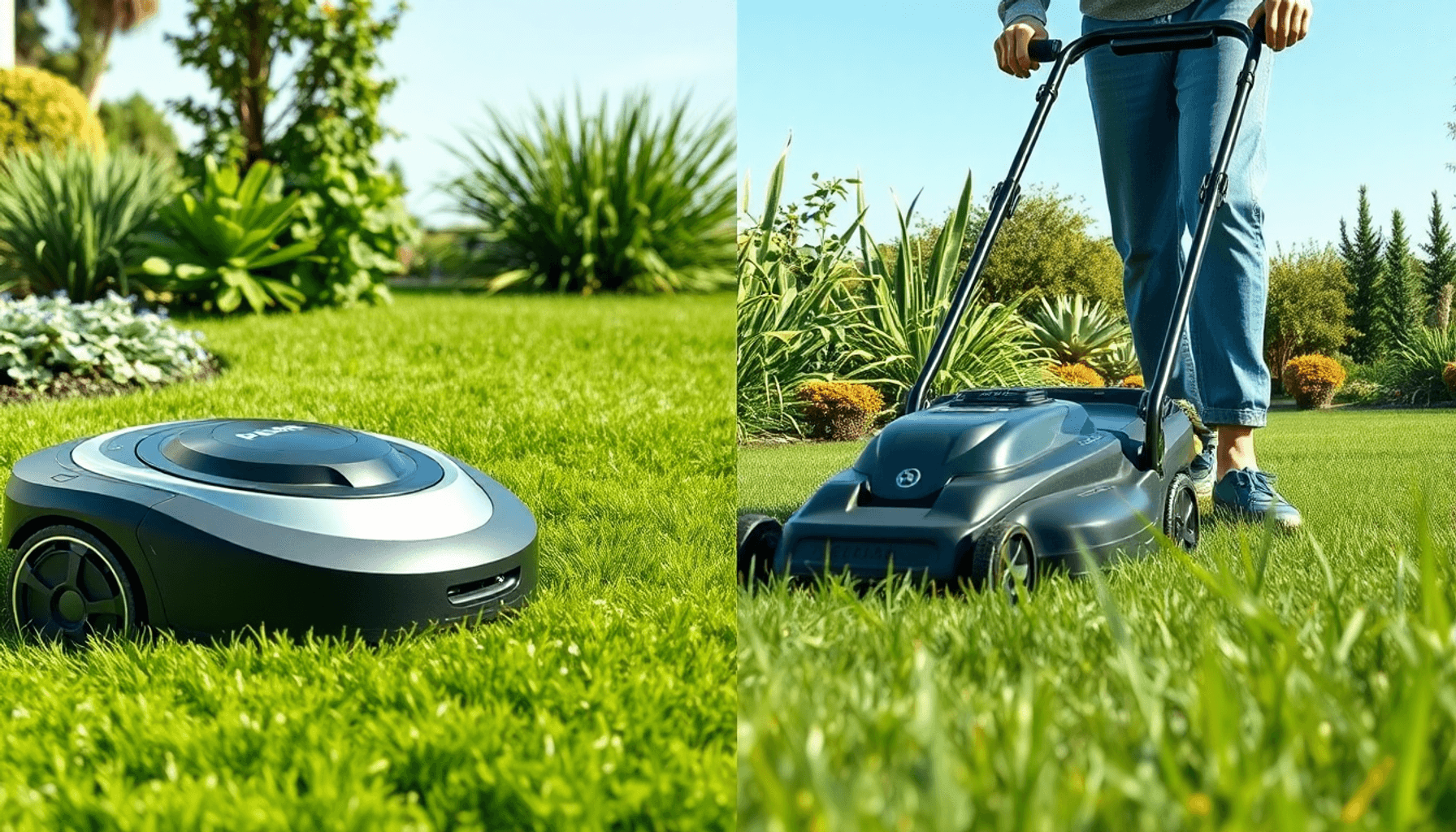

Maintaining a well-kept lawn is more than just curb appeal; it reflects your home's upkeep and contributes to the overall environment around your property. Lawn mowing remains a fundamental aspect of home maintenance, ensuring healthy grass growth and preventing overgrowth that can attract pests.
The question many homeowners face today is: Robot Lawn Mower vs Traditional Lawn Mower – which one is better and worth investing in? The rapid development of robotic technology has introduced new possibilities in lawn care, challenging the long-standing use of traditional mowers.
This article will guide you through a comprehensive lawn care comparison by examining:
- Differences in operation between robot and traditional mowers
- Convenience factors and user experience
- Environmental impact considerations
- Technological advancements in robotic mowing systems
- Cost analysis and budget implications
By exploring these aspects, you will gain clarity on is it worth it to switch to a robot lawn mower or stick with the conventional tools you know.
Understanding the Basics of Lawn Mowers
Lawn mowing is a routine task in home maintenance, and understanding the robot lawn mower basics alongside traditional lawn mower basics helps you make an informed choice.
Traditional Lawn Mower Basics
A traditional lawn mower is a machine designed to cut grass manually operated by a person. These mowers come in several types based on power source and size.
Manual Push Mowers
Manual push mowers rely entirely on human effort. You push the mower across your lawn while blades rotate to cut grass. They are lightweight, environmentally friendly, and ideal for small yards.
Gas-Powered Mowers
Gas-powered mowers use gasoline engines to power rotating blades, requiring less physical effort than manual models but producing noise and emissions. They are available in two main sizes:
- Push mowers — suited for small to medium lawns.
- Ride-on mowers and lawn tractors — designed for large properties with complex landscaping.
Traditional mowers generally cut grass in a heavier trim all at once, requiring less frequent mowing sessions but more physical exertion each time.
Robot Lawn Mower Basics
Robot lawn mowers are autonomous devices designed to maintain your lawn without manual intervention. Once programmed and set up, they navigate your yard using sensors and boundary wires or advanced navigation technology. Key features include:
- Battery-powered electric motors providing quiet and emission-free operation.
- Autonomous scheduling via smartphone apps, allowing you to set mowing times without being physically present.
- Frequent light trimming that mulches clippings back into the soil, promoting healthier grass growth.
Robot mowers can manage multiple zones within a property automatically, adjusting cutting patterns based on lawn size and obstacles detected in real-time.
Types of Lawn Mowers: Traditional vs Robotic
| Category | Common Types | Power Source | Operation Style |
| Traditional Lawn Mower | Push mowers, Ride-on mowers | Gasoline or Manual | Manual push or ride |
| Robot Lawn Mower | Basic robot models, Advanced AI-driven units | Battery-electric | Fully autonomous |
Choosing between these types depends on lawn size, terrain complexity, and personal preferences regarding manual control versus automation. Understanding these basics sets the stage for deeper comparison of operational differences, convenience factors, environmental impact, and cost considerations ahead.
Operational Differences Between Robot and Traditional Lawn Mowers
Understanding manual operation vs automatic mowing is key to choosing the right lawn mower for your needs. Traditional lawn mowers demand consistent physical effort. You push or ride on a fuel-powered or electric machine, controlling its direction and speed throughout the mowing session. This hands-on approach means you directly influence how the grass is cut but requires stamina and time commitment.
Robot lawn mowers eliminate manual labor entirely. Once set up, these devices operate fully autonomously. They navigate your yard on their own, following programmed schedules and cutting paths without any human intervention. This hands-free operation suits people who value convenience or have limited time for yard work.
Power Sources: Fuel vs Battery
Power sources differ significantly between the two types:
- Fuel-powered mowers usually operate on gasoline, providing strong cutting power but producing noise and emissions.
- Battery-powered mowers, typical of robotic models, run quietly and cleanly on rechargeable lithium-ion batteries.
Battery-electric robots often require less maintenance than gasoline engines, avoiding oil changes and spark plug replacements. Charging times vary by model but generally allow daily use with overnight recharging.
Cutting Frequency: Infrequent vs Frequent
Cutting frequency and style also contrast sharply:
- Traditional mowers tend to perform infrequent heavy cuts, removing large amounts of grass in a single pass. This can stress the lawn and produce clumps that need collection or disposal.
- Robot mowers execute frequent light trimming sessions, sometimes daily or several times per week. This approach keeps grass at an optimal height without overwhelming the lawn, naturally mulching clippings back into the soil for nourishment.
The frequent trimming pattern of robot mowers promotes healthier turf growth and reduces weed germination compared to the more disruptive cutting style of traditional machines.
You decide if you prefer direct control paired with physical effort or automated convenience powered by advanced battery technology. These operational differences greatly influence user experience, maintenance routines, and lawn health.
Convenience and User Experience Comparison
Robot lawn mowers redefine convenience by delivering hands-free mowing that fits seamlessly into your daily routine. Controlled via smartphone apps, these devices allow you to:
- Schedule mowing sessions according to your preferred times and lawn growth patterns.
- Monitor mower status remotely and receive notifications if issues arise.
- Adjust cutting height or operation modes without physically interacting with the mower.
This level of smartphone control transforms lawn care from a labor-intensive chore into an automated task that requires minimal user input. You gain precious time back, making robot mowers a clear choice for time-saving lawn care.
Traditional Lawn Mowers: Effort and Time Required
Traditional lawn mowers demand significant physical effort. You need to:
- Push or ride the mower across your yard, which can be exhausting especially on uneven terrain or slopes.
- Dedicate blocks of time regularly to complete mowing, often interrupting other activities.
- Perform manual maintenance such as refueling, blade sharpening, and cleaning after each use.
The time investment adds up quickly, particularly for larger properties where mowing sessions can last hours. Physical strain also factors heavily for older adults or those with mobility challenges.
Enhancing User Experience with Smart Home Integration
Robot mowers integrate with smart home systems to enhance user experience further. Possible integrations include:
- Voice assistant compatibility (Amazon Alexa, Google Assistant) for hands-off command execution.
- Connectivity with weather stations to pause mowing during rain and resume when conditions improve.
- Synchronization with home security systems allowing the mower’s cameras or sensors to assist in monitoring yard safety.
This creates a unified ecosystem where your lawn care adapts intelligently alongside other smart devices in your home.
The Clear Winner: Robot Mowers
The contrast between robot and traditional mowers is striking when it comes to convenience and user experience. Robot mowers enable effortless upkeep through automation and remote management while traditional models rely on manual labor and active supervision. For homeowners valuing ease and efficiency, this difference often tips the scale decisively in favor of robotic solutions.
Environmental Impact Assessment
Addressing noise pollution is crucial for maintaining neighborhood peace. Traditional lawn mowers typically operate around 90 decibels. This high noise level often disturbs not only the user but neighbors as well, especially during early mornings or weekends when many people prefer quiet time. Robot lawn mowers, by contrast, run at approximately 60 decibels, a significant reduction that makes them much less intrusive in residential areas.
Carbon Emissions
Gasoline-powered traditional mowers release carbon dioxide and other pollutants directly into the atmosphere with every use. This contributes to air pollution and global warming concerns. Robot mowers use electric batteries, resulting in zero direct emissions during operation. If charged using renewable energy sources, their environmental footprint shrinks even further.
Mulching Benefits
These devices perform frequent, light trimming rather than infrequent heavy cuts typical of traditional mowers. The finely chopped grass clippings are left on the lawn as mulch, serving several purposes:
- Improves soil health by returning nutrients naturally.
- Reduces waste by eliminating the need to bag grass clippings.
- Helps suppress weed growth by creating a protective layer.
This mulching process supports sustainable lawn care practices, enhancing turf vitality without chemical fertilizers.
The combination of quieter operation, reduced carbon emissions, and natural mulching makes robot lawn mowers a compelling choice for environmentally conscious homeowners seeking a greener alternative to traditional mowing methods.
Technological Advancements in Robot Lawn Mowing
Robot lawn mowers use advanced technology that makes them better than traditional mowers. These improvements not only make mowing more efficient but also increase safety and help manage the health of your lawn.
AI Vision in Mowers
- AI-driven vision systems allow robot mowers to interpret their environment more accurately. Cameras and sensors work together to recognize obstacles such as garden furniture, pets, or children.
- This technology enables precise navigation and prevents collisions, ensuring safe operation without constant human supervision.
- Some models use machine learning algorithms to adapt to changing yard layouts and optimize mowing paths over time.
LiDAR Navigation
- LiDAR (Light Detection and Ranging) technology provides detailed 3D mapping of the lawn area.
- By emitting laser pulses and measuring the reflection time, LiDAR creates an accurate spatial map that helps the mower navigate complex terrains and avoid obstacles dynamically.
- This results in efficient coverage of irregularly shaped lawns or multiple zones without missing spots or overlapping excessively.
RTK Precision Mowing
- RTK (Real-Time Kinematic) GPS enhances location accuracy down to a few centimeters.
- With RTK precision, robot mowers follow exact mowing boundaries, reducing run-off into flower beds or walkways.
- This level of accuracy supports consistent trimming patterns and minimizes damage to delicate landscaping elements.
Smart Yard Technology Features
- Robot mowers can adjust their cutting height automatically based on weather conditions such as rainfall or temperature fluctuations.
- Integration with smart home systems allows users to receive data reports on lawn health—tracking factors like grass growth rate, soil moisture, and coverage efficiency.
- These insights help homeowners maintain optimal lawn conditions while reducing water usage and fertilizer needs.
AI vision in mowers combined with LiDAR navigation and RTK precision represents a leap forward in autonomous lawn care. Smart yard technology transforms mowing from a routine chore into a data-driven process that promotes healthier, well-maintained lawns with minimal effort on your part.
Safety Features Comparison
Safety is a critical factor when deciding between robot lawn mowers and traditional lawn mowers. The risks and protections vary significantly between these two options.
Safety Concerns with Traditional Lawn Mowers
Traditional mowers demand active human involvement, which introduces several safety hazards:
- Physical contact with blades: There is a constant risk of injury from sharp blades during operation or maintenance.
- Thrown debris: Rocks, sticks, or other objects can be ejected at high speeds, potentially causing harm to people or pets nearby.
- Manual handling dangers: Maneuvering heavy machines on uneven terrain increases the chance of slips, trips, or falls.
- Child safety hazards: Children playing outside may unknowingly enter the mowing area, posing dangerous situations without automated safeguards.
Advanced Safety Sensors in Robot Mowers
Robot lawn mowers are engineered with multiple layers of protection, leveraging sophisticated obstacle recognition technologies:
- Real-time object detection: Sensors identify obstacles such as garden furniture, pets, or children and adjust their path immediately to avoid collisions.
- Lift and tilt sensors: When the mower is lifted or tilted, blades stop spinning instantly to prevent injuries.
- Boundary wire systems: These restrict the mower’s movement strictly within the designated mowing area, keeping it away from unsafe zones like pools or steep drops.
- Child safety features: The automated shutdown triggered by unexpected disturbances ensures that curious kids cannot operate the mower accidentally.
Anti-Theft Protection in Mowers
The investment in robotic technology comes with advanced security measures not found in traditional models:
- PIN code locks: The mower requires a secure PIN for activation after being powered on or moved.
- GPS tracking: If stolen or moved beyond preset boundaries, owners receive alerts and can track the device’s location in real time.
- Alarm systems: Loud alarms deter theft attempts and notify nearby people if unauthorized handling is detected.
Robot lawn mowers combine convenience with comprehensive safety protocols that protect your family and property. These features mark a significant leap forward compared to manual mower operation risks.
Cost Analysis and Budget Considerations
When comparing the upfront cost of lawn mowers, traditional models generally come with a lower purchase price. Basic push mowers or gas-powered walk-behinds can start as low as $150 to $400, depending on brand and features. Ride-on or zero-turn mowers, which cater to larger properties, range from $1,000 to $4,000. Robot lawn mowers, however, typically demand a higher initial investment. Entry-level robotic units start around $800 but more advanced models with AI navigation and larger coverage areas easily exceed $2,500 to $4,000.
Ongoing Costs
Traditional lawn mowers incur ongoing expenses such as:
- Fuel costs: Gasoline-powered machines require regular refueling. Depending on usage frequency and fuel prices, this can add up quickly.
- Maintenance expenses: Routine tune-ups, oil changes, spark plug replacements, blade sharpening, and occasional repairs are common.
- Storage and winterizing: Proper off-season care may involve additional costs if professional servicing is preferred.
Robot lawn mowers run on rechargeable batteries that eliminate fuel expenses. Electricity costs for charging are minimal in comparison—often just a few dollars per season. Maintenance mainly involves:
- Battery replacement every few years, which can be costly but infrequent.
- Blade replacements are needed less often since the mower trims lightly and frequently.
- Software updates are usually free but may require occasional user intervention.
Potential Long-Term Savings Robotic Mower Offers
Efficiency gains from robotic mowers translate into tangible savings over time:
- Reduced labor costs: With no need for manual mowing or hiring professionals regularly, your time becomes your biggest saving.
- Lower maintenance frequency: The gentle cutting style reduces wear-and-tear on blades and motors.
- Energy efficiency: Electric power is cheaper than gasoline per hour of operation.
- Prolonged lawn health: Consistent mulching promotes healthier grass, potentially reducing landscaping or reseeding expenses.
Factoring these elements together shifts the financial equation. While robot lawn mowers demand a higher upfront cost than most traditional options, their low ongoing expenses and labor-free operation can make them more economical in the long run—especially for busy homeowners or those with medium to large lawns.
Your choice will depend heavily on budget flexibility, how much time you value saving on yard work, and whether you prioritize convenience alongside cost-efficiency.
Suitability Based on Property Type and User Preferences
Choosing between a robot lawn mower and a traditional one depends heavily on the property complexity, small vs large yards mowing needs, and your automation preference. Each factor plays a crucial role in determining which mower suits your situation best.
Complex Yard Layouts and Multiple Zones
- Robot mowers excel in complex yard layouts due to their advanced navigation systems. Features like AI-driven path planning, boundary wire setup, and zone programming allow them to handle intricate lawns with multiple sections efficiently.
- You can set up schedules for different zones, ensuring each area gets the appropriate attention without manual intervention.
- Traditional mowers require physical maneuvering around obstacles, garden beds, and tight corners. This can be time-consuming and physically demanding, especially for larger or irregularly shaped properties.
- For properties with steep slopes or uneven terrain, some high-end robot models offer specific adaptations, but heavy-duty traditional mowers might still have an edge in raw power and control.
Small-Scale or Occasional Users
- If your lawn is small or you mow only occasionally, a traditional lawn mower might be more practical.
- The upfront investment for a robot mower can be significant relative to the size of the yard or infrequent use.
- Traditional push mowers or smaller electric models are often sufficient to maintain neatness without the need for complex setup or ongoing programming.
- Using a traditional mower occasionally means lower maintenance demands overall compared to regularly servicing batteries and sensors in robotic units.
Manual Control Versus Automation Preference
- Your personal comfort with technology affects the choice between manual and automated mowing.
- Manual control offers direct engagement with yard work, providing satisfaction from hands-on maintenance. Some users appreciate being actively involved in shaping their lawn’s appearance.
- Robot mowers cater to those who prefer automation and time-saving solutions. Scheduling mowing via an app allows you to focus on other tasks while the mower works independently.
- Integration with smart home systems adds layers of convenience that appeal to tech-savvy users but may feel unnecessary or intimidating to others.
- Safety concerns, such as monitoring children or pets around an autonomous device, influence some homeowners toward manual mowers despite technological safeguards.
Summary of Suitability Considerations
| Factor | Robot Lawn Mower | Traditional Lawn Mower |
| Property Complexity | Handles complex layouts & multiple zones | Requires manual navigation |
| Yard Size | Ideal for medium to large yards | Suitable for small yards or occasional use |
| User Preference | Automation lovers valuing convenience | Hands-on users preferring control |
| Maintenance Effort | Requires tech upkeep & battery management | Mechanical maintenance & fuel considerations |
Matching your property characteristics and personal preferences with these factors helps identify which mower type fits best into your lifestyle. The choice isn’t simply about technology versus tradition but about aligning tools with your mowing needs effectively.
The Future of Lawn Care Technology
The world of lawn care is changing quickly, thanks to the rise of smart yard systems future tech. Robotic lawn mowers are no longer just standalone machines; they are becoming key players in connected outdoor environments that make things easier and more efficient.
Integration with Weather Stations and Security Surveillance
- Robotic mowers are increasingly paired with weather stations that feed real-time climate data directly into their operating system. This enables the mower to adjust cutting schedules and blade height based on rain, temperature, or humidity, optimizing grass health and energy use.
- Security features such as surveillance cameras and motion sensors are being embedded into robotic lawn mowers. These additions transform the machines into multipurpose devices capable of monitoring property boundaries while maintaining the lawn. This dual function increases value by enhancing home security without extra equipment.
Innovations in Pest Detection Robotics
- Next-generation robot mowers are expected to feature pest detection robotics that identify signs of insect infestations or disease outbreaks early. By analyzing changes in turf color, texture, or growth patterns through integrated AI vision systems, these machines can alert homeowners or trigger automated pest control measures.
- This proactive approach reduces the need for broad chemical treatments, promoting eco-friendly pest management and healthier lawns.
Soil Nutrient Analysis AI Mowing
- Advances in sensor technology allow robotic mowers to perform soil nutrient analysis AI mowing during their routine passes. Embedded sensors can detect nutrient deficiencies or pH imbalances in various lawn zones.
- The mower’s app then provides detailed soil health reports along with customized fertilizer recommendations or watering adjustments. This precision agriculture technique helps maintain optimal growing conditions while minimizing resource waste.
Influence on the Shift Toward Robotic Solutions
- As these technologies mature, the distinction between simple robotic mowers and comprehensive smart yard caretakers will blur. Lawn maintenance will become a fully automated process encompassing mowing, pest control, soil health monitoring, and security.
- Homeowners seeking seamless integration with smart home systems will find robotic solutions increasingly attractive due to their expanding capabilities and efficiency gains.
- The cost-benefit dynamic will shift as ongoing savings from reduced manual labor, chemical use, and water consumption offset initial investments in high-tech robotic systems.
This wave of innovation is redefining what it means to care for a lawn. When comparing Robot Lawn Mower vs Traditional: Is It Worth It?, emerging smart yard technologies present compelling reasons to favor robotic options for long-term convenience, sustainability, and precision care.
Conclusion
Deciding between a robot lawn mower and a traditional mower depends on your specific needs, budget, and lifestyle preferences. Understanding the benefits of robotic mower investment helps clarify when this technology is worth the cost.
When a Robot Lawn Mower Makes Sense
- You value hands-free convenience and want to save time and physical effort.
- Your property benefits from frequent light trimming to maintain healthy grass.
- Environmental concerns matter — you prefer quiet operation and zero emissions.
- Integration with smart home systems appeals to you for enhanced control and monitoring.
- Safety around children and pets is a priority, thanks to advanced sensors in robotic models.
- You are ready to invest upfront for potential long-term savings on fuel, maintenance, and labor.
Weighing Your Options: Pros Cons Comparison Lawn Care
| Aspect | Robot Lawn Mower | Traditional Lawn Mower |
| Operation | Fully autonomous, app-controlled | Manual or ride-on, requires physical effort |
| Noise | Quiet (~60 dB) | Louder (~90 dB), noise pollution |
| Environmental Impact | Zero carbon emissions, mulching improves soil | Gasoline emissions, less eco-friendly |
| Maintenance | Battery charging, software updates | Fuel refills, engine maintenance |
| Cost | Higher initial investment but lower ongoing costs | Lower upfront cost but higher fuel/maintenance costs |
| Suitability | Complex yards, multiple zones | Small yards or occasional use |
Reflect on what matters most in your lawn care routine. If saving time and embracing automation align with your priorities, the pros of a robot mower stand out clearly. If budget constraints or preference for manual control dominate your decision-making, traditional mowers remain practical.
Choosing between these lawn care options isn’t just about price—it's about lifestyle fit. The Robot Lawn Mower vs Traditional: Is It Worth It? question can be answered by looking closely at how each aligns with your daily habits and values.
Invest wisely by balancing convenience, environmental impact, safety features, and budget considerations. Your ideal lawn mower should make maintaining your yard easier without compromising on quality or sustainability.
FAQs (Frequently Asked Questions)
What are the main differences between robot lawn mowers and traditional lawn mowers?
Robot lawn mowers operate autonomously using battery power and advanced navigation technologies like AI vision and LiDAR, requiring minimal user effort. Traditional lawn mowers are manually operated, either push or ride-on types, powered by gasoline or electricity, demanding physical effort and more frequent maintenance.
How do robot lawn mowers compare to traditional mowers in terms of convenience and user experience?
Robot lawn mowers offer hands-free mowing with smartphone control and scheduling features, saving time and integrating with smart home systems for enhanced convenience. Traditional mowers require manual operation, resulting in higher physical effort and time investment for lawn care.
Are robot lawn mowers more environmentally friendly than traditional gas-powered mowers?
Yes, robot lawn mowers produce zero carbon emissions as they run on battery-electric power, operate at lower noise levels (around 60 dB), and often include mulching capabilities that improve soil health. In contrast, traditional gas-powered mowers emit carbon pollutants and generate higher noise pollution (approximately 90 dB).
What safety features do robot lawn mowers have compared to traditional models?
Robot lawn mowers are equipped with advanced safety sensors for real-time obstacle detection including pets and children, reducing accident risks. They also incorporate anti-theft protection technologies. Traditional mowers lack these automated safety systems, posing higher risks during manual operation.
How does the cost of owning a robot lawn mower compare to a traditional mower?
While robot lawn mowers have a higher upfront purchase price than traditional models, they can offer long-term savings through reduced fuel costs, lower maintenance expenses, and labor efficiency. Traditional mowers typically have lower initial costs but incur ongoing fuel and maintenance expenses.
Which type of lawn mower is better suited for different property sizes and user preferences?
Robot lawn mowers excel in complex yard layouts or larger properties requiring frequent light trimming and automation preference. Traditional mowers may be preferable for small-scale or occasional users who favor manual control or have simpler yard needs. User lifestyle and property characteristics should guide the choice.