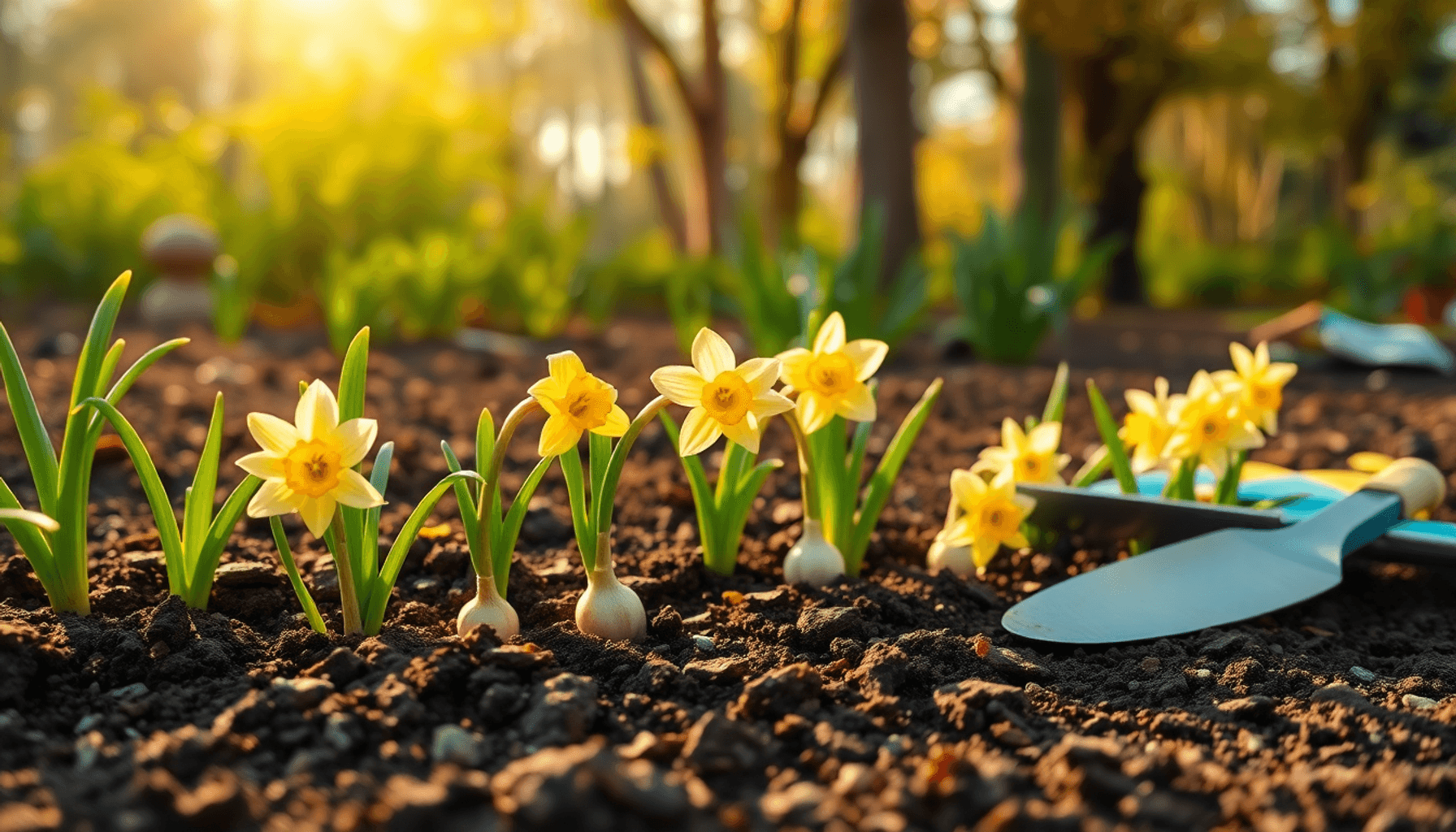

Knowing when to plant daffodil bulbs is crucial for gardeners who want to enjoy vibrant, healthy blooms each spring. Daffodil planting time directly influences the bulb’s ability to establish strong roots before winter, setting the stage for robust growth and abundant flowers.
Planting bulbs at the right moment offers several key benefits:
- Encourages deep root development essential for nutrient uptake.
- Ensures bulbs enter dormancy well-prepared to burst into bloom when temperatures rise.
- Reduces risks of bulb rot or poor flowering caused by planting too late or too early.
- Maximizes the lifespan and flowering potential of your daffodil clumps.
Understanding the importance of timely planting helps you plan your gardening activities effectively and achieve consistent success with these classic spring favorites.
Understanding the Daffodil Growth Cycle
Understanding the daffodil growth cycle is crucial to mastering when and how to plant your bulbs for the most vibrant spring display. The cycle of a daffodil begins with the bulb as its dormant storage organ. This bulb stores all the nutrients needed for sprouting, root development, and flowering.
Life Cycle Overview
- Dormancy: After flowering in spring, daffodils enter a dormant phase during summer. The foliage dies back naturally, and the bulb conserves energy underground.
- Root Development: In early autumn, as soil temperatures begin to cool but remain above freezing, roots start growing from the bulb. This phase is essential for establishing a strong foundation to support future growth.
- Shoot Emergence: As winter progresses and temperatures drop further, shoots slowly develop inside the bulb but stay protected underground.
- Flowering Season: When spring arrives with warmer air and longer daylight hours, shoots push through the soil surface, culminating in flower bloom.
Planting Time and Root Development
Planting your daffodil bulbs at the correct time directly influences root development. Bulbs planted too late may not have enough time to establish roots before winter freezes the ground. This weak root system can lead to poor nutrient uptake and affect flower quality or even prevent blooming altogether.
Healthy root growth during autumn ensures that when spring arrives, your daffodils have ample resources stored and can focus energy on producing strong stems and vibrant flowers.
Soil Temperature’s Role in Bulb Establishment
The relationship between soil temperature and bulb establishment is critical. Ideal soil temperatures for planting range between 50°F to 60°F (10°C to 16°C). This range encourages active root growth without triggering premature shoot emergence.
If bulbs are planted when soil is too warm:
- Roots may begin developing too early.
- Bulbs risk drying out or rotting if conditions become unfavorable.
If soil is too cold at planting:
- Root growth slows or halts.
- Bulbs remain shallowly rooted, leading to instability and weaker flowering.
Paying attention to soil temperature alongside calendar timing helps optimize bulb establishment for a successful daffodil flowering season.
Optimal Timeframe for Planting Daffodil Bulbs
Choosing the best time to plant daffodils sets the foundation for strong roots and vibrant spring blooms. Early autumn, typically between September and November, stands out as the ideal window for autumn planting daffodils. During this period, soil temperatures remain cool enough to encourage root growth but have not yet dropped to freezing levels that could damage the bulbs.
Key reasons why early autumn is optimal:
- Root development before winter dormancy: Planting in early autumn allows daffodil bulbs to establish a healthy root system. These roots support nutrient and water uptake during the growing season ahead.
- Soil still workable: Before the ground freezes, you can dig and prepare planting sites with ease. Frozen soil makes proper planting depth and spacing difficult or impossible.
- Preventing premature sprouting: Planting too early in summer risks bulbs sprouting above ground before cold weather arrives, which can weaken or kill young shoots.
- Avoiding delayed growth: Planting too late after ground freezes results in poor root development. Bulbs may survive but often produce fewer flowers or weaker foliage.
Planting during this timeframe maximizes the chances for bulbs to acclimate to their environment, store energy efficiently, and emerge healthy when spring arrives. The relationship between timing and successful flowering is clear: bulbs planted on schedule tend to produce more robust and abundant blooms.
You want to avoid waiting until the soil is frozen solid. This reduces root penetration, leaving bulbs vulnerable over winter. You also want to avoid planting too early when soil warmth encourages premature growth that can't withstand upcoming cold snaps.
Focusing on this specific window — from September through November — ensures your daffodils have enough time for root establishment, setting them up for a strong flowering season come springtime.
Interestingly, these principles of timing and preparation are also applicable when planting other types of bulbs or even trees. For instance, how to plant peonies involves similar timing considerations for optimal growth. Additionally, planting trees in late fall requires careful planning around soil temperatures and weather conditions to ensure successful establishment before winter dormancy sets in.
Preparing for Planting Daffodil Bulbs
Selecting the right location sets the foundation for successful daffodil growth. You want an area that receives full sun to partial shade. Daffodils thrive best with at least six hours of sunlight daily but can tolerate some afternoon shade, especially in warmer climates. If you plant them under deciduous trees, they will benefit from sunlight in early spring before the trees leaf out.
Soil preparation for daffodils is critical because these bulbs demand well-drained conditions. Poor drainage leads to bulb rot and weak flowering. Ideal soil feels loose and crumbly rather than compacted or soggy. If your garden soil tends to retain water, amend it by mixing in organic matter such as compost, peat moss, or well-rotted manure. This improves aeration and drainage while supplying nutrients.
Preparing the actual planting site varies depending on where you plan to place your bulbs:
- Garden beds and borders: Loosen soil to a depth of 8-12 inches using a garden fork or tiller. Remove stones, weeds, and debris. Work in organic matter to enhance texture and fertility.
- Lawns: Choose spots where mowing won’t disturb emerging shoots. Lightly loosen the turf using a garden spade or bulb planter before inserting bulbs. This ensures roots establish without obstruction.
- Containers: Use pots with drainage holes filled with a high-quality potting mix designed for bulbs or flowering plants. Avoid heavy garden soil that compacts easily.
When it comes to when to plant daffodil bulbs, always make sure soil temperature has dropped to about 60°F (15°C) or below before planting. This signals the soil is ready to stimulate root development without encouraging premature shoot growth.
Proper well-drained soil for bulbs combined with thoughtful site selection encourages strong roots that absorb moisture and nutrients efficiently during winter dormancy, setting the stage for vibrant spring blooms ahead. For more detailed guidance on planting bulbs and other flower geophytes, consider exploring expert resources available online.
How to Plant Daffodil Bulbs Correctly
Planting daffodil bulbs with the right technique is crucial for healthy growth and vibrant blooms. Understanding how deep to plant daffodil bulbs and proper spacing daffodils can make a significant difference in your spring display.
Proper Planting Depth
- Plant bulbs at a depth approximately three times the height of the bulb. For most daffodils, this means planting them 4 to 6 inches deep.
- If planted too shallow, bulbs risk drying out or being exposed during frost cycles.
- Bulbs set too deep may struggle to break through the soil surface, resulting in weak or delayed flowering.
- Use a trowel or bulb planter to ensure consistent depth across your planting area.
Correct Spacing
- Space standard daffodil bulbs between 4 to 8 inches apart. This allows ample room for root development and reduces competition for nutrients.
- Miniature varieties can be planted slightly closer, around 3 to 4 inches apart, but avoid overcrowding.
- Overcrowded bulbs often produce leaves but fail to flower, a condition known as "blind" bulbs.
- Proper spacing encourages air circulation around plants, reducing disease risk.
Avoiding Common Planting Mistakes
Shallow planting or crowding bulbs too closely leads to poor flowering and can weaken the bulbs over time.
- Ensure each bulb has enough space horizontally and vertically.
- When planting in clusters or drifts, maintain natural gaps rather than compact rows.
- Check soil firmness after planting; lightly tamp down soil without compacting it excessively.
- Label your planting area if multiple varieties are used to track bloom times and growth patterns.
Following these guidelines on depth and spacing sets the stage for strong root establishment during autumn and robust flowering come spring.
Post-Planting Care and Maintenance
Watering after planting bulbs plays a crucial role in helping daffodils establish strong roots. When you finish planting, give the bulbs a thorough watering to settle the soil around them. This moisture encourages root growth right away. If rain is expected soon after planting, additional watering may not be necessary, but avoid letting the soil dry out completely during this initial period.
Mulching daffodils with organic matter offers several benefits that support healthy bulb development:
- Moisture retention: Mulch helps keep the soil consistently moist, reducing the need for frequent watering.
- Weed suppression: A layer of mulch blocks sunlight from reaching weed seeds, minimizing competition for nutrients and water.
- Temperature regulation: Organic mulch insulates the soil, protecting bulbs from extreme temperature fluctuations during autumn and winter.
- Soil enrichment: As organic mulch breaks down, it adds valuable nutrients and improves soil structure.
Good mulch options include shredded bark, leaf mold, compost, or well-rotted garden compost. Apply a 2-3 inch layer around your newly planted bulbs without covering the crown of each bulb directly. Leaving some space around the top prevents rot and allows air circulation.
Maintaining adequate moisture and protecting the soil surface with mulch supports your daffodil bulbs through their critical establishment phase. These simple care steps pave the way for robust growth and vibrant spring blooms.
Seasonal Care After Flowering
Allowing the leaves of your daffodils to die back naturally is an important part of taking care of them throughout the seasons. Although this stage may not be as exciting as the colorful blooming period, it is crucial for the plant's well-being and future flowers.
Why let foliage die back naturally?
The leaves function as solar panels, capturing sunlight and converting it into energy. This energy is transported down to the bulb, replenishing its reserves. Cutting or removing foliage too early disrupts this process, weakening the bulb. Weak bulbs often result in fewer flowers or no flowers at all the following spring.
- The leaves function as solar panels, capturing sunlight and converting it into energy.
- This energy is transported down to the bulb, replenishing its reserves.
- Cutting or removing foliage too early disrupts this process, weakening the bulb.
- Weak bulbs often result in fewer flowers or no flowers at all the following spring.
What happens during this process?
Photosynthesis continues until the leaves wither and yellow. Nutrients like carbohydrates are stored within the bulb. These nutrient stores fuel root growth and flower production for the next season.
- Photosynthesis continues until the leaves wither and yellow.
- Nutrients like carbohydrates are stored within the bulb.
- These nutrient stores fuel root growth and flower production for the next season.
Patience is key here. Resist the urge to tidy up your garden immediately after flowering. Instead, wait until the foliage turns completely yellow and dries out before trimming it back. This practice ensures that when you consider when to plant daffodil bulbs again, your existing bulbs will be healthy and ready to support vigorous new growth.
Maintaining this natural cycle improves not only the longevity of your daffodil plants but also enhances their ability to deliver those bright, vibrant spring blooms year after year.
Enhancing Flowering Through Fertilization
Fertilizing daffodils plays a crucial role in boosting flower quality and maintaining bulb health. Choosing the right fertilizer and applying it at appropriate times ensures your daffodils produce vibrant blooms year after year.
Key points for fertilizing daffodils:
-
Use potash-rich fertilizers low in nitrogen:
High nitrogen levels encourage leafy growth at the expense of flowers. Potassium (potash) supports strong stems, vibrant blooms, and overall plant vigor. Look for fertilizers labeled with a higher middle number in the N-P-K ratio, such as 5-10-10 or similar formulations. -
Optimal timing for application:
Fertilize in early autumn when planting new bulbs or in late spring after flowering but while foliage is still green. Applying fertilizer during these periods helps bulbs store energy effectively for next season’s growth. -
Application methods:
Scatter granular fertilizer around established plants, keeping it a few inches away from the bulb crowns to avoid burn. Lightly work it into the soil surface and water thoroughly to aid absorption. Liquid feeds can be used as a supplement during active growth phases but should not replace solid feeding schedules. -
Avoid overfeeding:
Excess fertilizer, especially high nitrogen types, can lead to weak stems and reduced flower production. Follow package instructions carefully, adjusting amounts based on soil fertility and previous fertilization history.
Integrating proper fertilization with other care practices maximizes your daffodils’ potential to flourish each spring, enhancing their natural beauty while sustaining healthy underground bulbs.
Common Mistakes to Avoid When Planting Daffodil Bulbs
Being aware of common bulb planting mistakes can save you from disappointing results and ensure your daffodils thrive year after year. Pay attention to these crucial points:
1. Planting Too Shallow or Too Close Together
One of the most frequent errors is setting bulbs too near the soil surface or crowding them excessively. When bulbs are planted shallowly, they often develop leaves but fail to bloom, a condition known as "blind" bulbs. This happens because the bulbs do not establish strong enough roots or accumulate sufficient energy reserves for flowering.
Similarly, overcrowding bulbs restricts airflow and nutrient access, stressing the plants and reducing flower production. Maintain proper depth—generally about three times the bulb's height—and space bulbs 4 to 8 inches apart for standard varieties.
2. Poor Site Selection Affecting Drainage and Sunlight
Choosing an inappropriate location can severely impact daffodil health. Daffodils prefer well-drained soil; planting in areas prone to waterlogging encourages bulb rot and fungal diseases. Avoid heavy clay soils that retain moisture unless amended with organic matter to improve drainage.
Light conditions also matter. While daffodils tolerate partial shade, they bloom best with at least several hours of direct sunlight daily. Planting in dense shade leads to weak foliage and fewer flowers.
3. Ignoring Soil Preparation
Skipping soil preparation before planting can lead to poor root development. Loosening soil and enriching it with compost or well-rotted manure enhances drainage, aeration, and nutrient availability—key factors for healthy bulb establishment.
4. Neglecting Post-Planting Care
Failing to water bulbs after planting when rainfall is insufficient can hinder root growth. Adequate moisture helps settle soil around the bulbs and jumpstarts root development before winter dormancy.
Avoiding these pitfalls sets the stage for robust growth and vibrant spring blooms, reinforcing the importance of careful planning and execution when planting daffodil bulbs.
Conclusion
Planting daffodil bulbs at the right time is essential to enjoy vibrant spring blooms year after year. Following the best practices for planting daffodils ensures healthy root development, strong flowering, and long-lasting bulb vitality.
Key reminders for success when deciding when to plant daffodil bulbs:
- Plant in early autumn, from September to November, before the ground freezes.
- Choose well-drained soil with adequate sunlight or partial shade.
- Plant bulbs at a depth about three times their height (4-6 inches) and allow enough spacing (4-8 inches).
- Avoid common mistakes like shallow planting or overcrowding.
- Water after planting and mulch to conserve moisture and suppress weeds.
- Let foliage die back naturally to replenish the bulb’s energy.
- Apply potash-rich fertilizer with low nitrogen in autumn or late spring to boost flowering.
Following these guidelines not only guarantees healthy daffodils but also builds a thriving, resilient garden display season after season. Dedicate attention to each step of the process and watch your daffodils reward you with bright, cheerful blooms every spring.
FAQs (Frequently Asked Questions)
When is the best time to plant daffodil bulbs for optimal growth?
The ideal time to plant daffodil bulbs is early autumn, between September and November, before the ground freezes. Planting during this timeframe ensures proper root development and vibrant spring blooms.
How does soil temperature affect daffodil bulb planting and growth?
Soil temperature plays a crucial role in bulb establishment. Planting daffodil bulbs when soil temperatures are cool but not frozen allows roots to develop effectively, supporting healthy growth and timely flowering.
What is the correct depth and spacing for planting daffodil bulbs?
Daffodil bulbs should be planted at a depth approximately three times their height, typically 4 to 6 inches deep. Proper spacing of 4 to 8 inches apart prevents overcrowding, which helps avoid issues like 'blind' bulbs that produce leaves without flowers.
Why is well-drained soil important when planting daffodils?
Well-drained soil prevents waterlogging, which can cause bulb rot and poor growth. Choosing a location with good drainage and preparing garden beds or containers accordingly ensures healthy bulb establishment and robust flowering.
What post-planting care do daffodil bulbs require?
After planting, watering is important unless sufficient rain occurs naturally. Applying organic mulch helps retain moisture, suppress weeds, and maintain consistent soil conditions conducive to bulb growth.
Should daffodil foliage be cut back immediately after flowering?
No, it’s important to allow the foliage to die back naturally after flowering. This process replenishes the bulb's energy reserves necessary for producing strong blooms in the following spring.