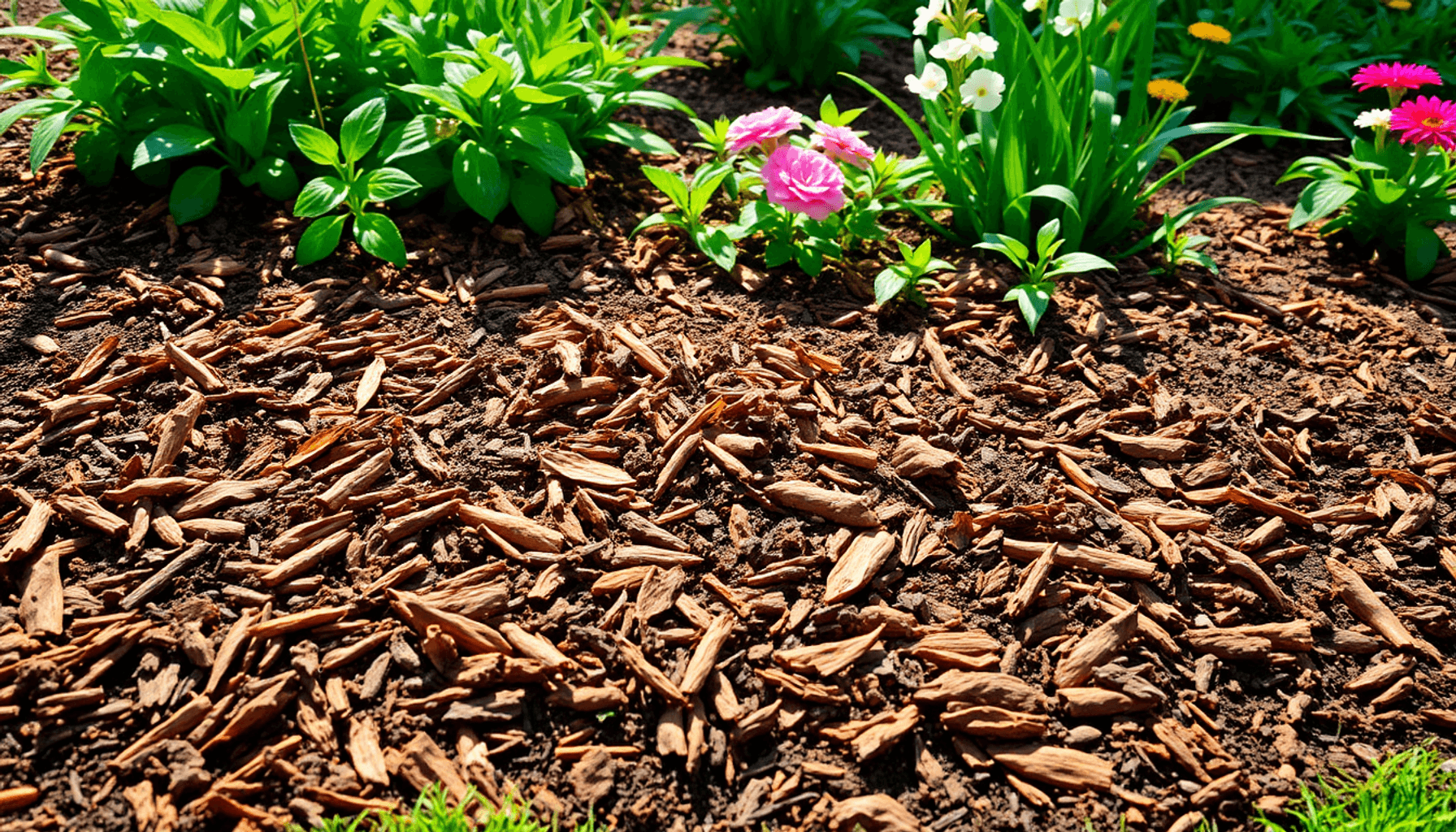

Mulching is a simple yet powerful gardening technique that involves applying a layer of material over the soil surface around plants. Its primary role is to protect and enhance the growing environment, creating optimal conditions for healthy plant development.
What is mulching? At its core, mulching acts as a protective blanket for your garden beds. This practice helps regulate factors that directly affect plant health and soil quality.
Key benefits of mulching include:
- Weed suppression: Mulch blocks sunlight from reaching weed seeds, reducing their ability to germinate and grow.
- Moisture retention: By slowing evaporation, mulch keeps soil consistently moist, reducing the need for frequent watering.
- Soil temperature regulation: Mulch insulates the soil, keeping it cooler in summer and warmer in winter, which supports steady root growth.
- Soil fertility improvement: Organic mulches decompose over time, adding valuable nutrients back into the soil.
- Root protection: Mulch shields plant roots from extreme weather fluctuations and physical damage.
- Attraction of beneficial organisms: Certain mulches encourage earthworms, beetles, and microbes that improve soil structure and nutrient cycling.
Understanding these benefits will help you appreciate why mulching is a fundamental practice in sustainable gardening. It not only supports plant health but also reduces maintenance efforts and conserves resources.
Understanding Mulch: Definition and Purpose
Mulching is the practice of applying a layer of material directly over the soil surface around plants. This layer, known as mulch, can consist of various organic or inorganic substances that serve multiple functions in the garden.
Definition of mulching centers on this simple act—covering soil with a protective blanket. The purpose of mulch extends beyond mere decoration; it acts as a physical barrier that shields the soil from environmental stressors such as wind and intense sunlight. By doing so, mulch reduces evaporation, helping the soil retain moisture essential for plant roots.
Key roles mulch plays include:
- Protection against wind: Wind can dry out topsoil quickly, making it difficult for plants to access water. Mulch minimizes this effect by covering exposed soil.
- Shield from sun: Direct sunlight heats the soil surface and accelerates moisture loss. A mulch layer helps regulate temperature, keeping the soil cooler during hot weather.
- Barrier to erosion: Mulch prevents rainwater from washing away valuable topsoil by reducing the impact of raindrops.
- Improvement of soil conditions: Over time, organic mulches break down and enrich the soil, enhancing its structure and fertility.
Mulching creates a microenvironment at the base of plants that supports healthier growth by moderating harsh external factors. This method forms a crucial part of sustainable gardening practices aimed at conserving water and maintaining soil health.
Types of Mulch
1. Organic Mulches
Organic mulch materials come from natural sources that break down over time, enriching the soil and improving its structure. These types of mulch supply nutrients back into the earth as they decompose, supporting healthy plant growth and enhancing soil fertility.
Common organic mulch materials include:
- Compost: Rich in nutrients, compost improves soil texture and encourages beneficial microbial activity.
- Leaves: Fallen leaves create a loose, airy layer that retains moisture while slowly decomposing to add organic matter.
- Bark: Shredded bark or bark chips provide longer-lasting coverage and help suppress weeds effectively.
- Grass Clippings: Fresh grass clippings offer quick moisture retention but should be applied in thin layers to avoid matting.
- Woodchips: Coarser than bark, woodchips break down more slowly and are ideal for pathways or around trees.
- Straw: Straw mulches are light and allow air circulation while protecting soil from erosion.
- Leaf Mould: A well-decomposed leaf product that improves moisture retention and soil crumb structure.
Benefits of using organic mulches:
- Nutrient Enrichment: As these materials decompose, they release essential nutrients like nitrogen, phosphorus, and potassium back into the soil.
- Moisture Retention: Organic mulches reduce evaporation by shielding the soil surface, keeping roots hydrated longer during dry spells.
- Soil Improvement: They enhance soil aeration and drainage by increasing organic content.
- Temperature Regulation: Organic layers buffer against extreme heat or cold, maintaining stable root zone conditions.
- Encouraging Beneficial Organisms: Earthworms, beetles, and microbes flourish under organic mulches, contributing to nutrient cycling and healthier soils.
Using organic mulch materials requires periodic replenishment since these mulches gradually break down. Applying a fresh layer annually or as needed ensures continued benefits without suffocating plants or causing excessive moisture buildup. Properly applied organic mulch supports a dynamic and fertile garden environment that promotes plant vigor naturally.
2. Inorganic Mulches
Inorganic mulches are different from organic mulches in that they are made from non-biodegradable materials and do not break down over time. While organic mulches improve the soil as they decompose, inorganic mulches primarily serve as a physical barrier against weeds and provide protection to the soil.
Common Inorganic Mulch Materials
Some common examples of inorganic mulch materials include:
- Rocks and gravel: These provide a natural look and excellent durability. Gravel allows water to penetrate while preventing weed growth effectively.
- Plastic sheeting: Often black or clear, plastic sheeting creates a strong barrier that blocks weeds and conserves soil moisture by reducing evaporation.
- Landscape fabric: Made from woven or non-woven synthetic fibers, landscape fabric allows water and air to reach the soil but keeps weeds at bay.
Benefits of Inorganic Mulches
The benefits of using inorganic mulches include:
- Long-term weed suppression: Since they don’t decompose, inorganic mulches maintain their effectiveness for years without needing frequent replacement.
- Reduced watering frequency: By limiting evaporation, they help retain soil moisture.
- Minimal maintenance: They require little upkeep compared to organic alternatives that must be replenished regularly.
Considerations When Using Inorganic Mulches
When using inorganic mulches, it is important to consider the following factors:
- Heat buildup: Materials like black plastic or dark-colored stones can absorb and hold heat, raising soil temperature excessively during hot weather. This can stress plants sensitive to heat.
- Lack of nutrient contribution: Because they don’t break down, inorganic mulches do not improve soil fertility or structure.
- Potential chemical leaching: Some plastics may degrade over time, releasing chemicals into the soil.
- Water runoff concerns: Impermeable surfaces such as plastic sheeting can increase surface runoff if not installed properly.
Inorganic mulches are suitable for gardens where long-lasting coverage is desired without altering soil composition. They work well in pathways, rock gardens, or around plants that prefer drier conditions. The choice between organic mulch materials and inorganic options depends on your garden’s needs for nourishment versus durability and maintenance levels.
Applying Mulch Effectively
Knowing how to apply mulch correctly can maximize the benefits it offers to your garden. Timing and preparation are key factors for success.
Best Time to Mulch
- Mid to late spring is ideal, once the soil has warmed up but before summer heat sets in.
- Autumn works well too, especially for perennial beds and fruit trees. Mulching then helps protect roots from winter cold and reduces weed growth in spring.
Applying mulch during these seasons supports healthy plant development by conserving moisture when needed most and regulating soil temperature through temperature extremes.
Preparation Steps Before Mulching
- Remove existing weeds thoroughly to prevent competition for nutrients and moisture.
- Water the soil well so moisture is already present beneath the mulch layer.
- Clear any debris or dead leaves that may harbor pests or diseases.
- Check soil condition — if compacted, consider light aeration before mulching.
Preparing the garden bed carefully ensures that mulch performs its functions effectively without causing problems such as mold or root rot.
Mulching Techniques for Different Plants
Mulching Bulbs and Perennials
- Apply a thin layer of mulch (2-3 cm) over bulbs after planting to conserve moisture but avoid smothering them.
- For established perennials, spread mulch evenly around the base, keeping it a few centimeters away from stems to prevent rot.
- Mulching helps suppress weeds competing with young shoots emerging in spring.
- Organic mulches like shredded leaves or compost work best since they improve soil fertility as they break down.
Fruit Tree Mulching Tips
- Extend mulch outwards to cover the tree’s root zone, typically reaching beyond the canopy drip line.
- Use a thicker layer (5–7 cm) of organic mulch such as wood chips or straw for long-lasting moisture retention.
- Keep mulch several inches away from the trunk to minimize risk of fungal infections or rodent damage.
- Refresh mulch annually or as needed to maintain adequate coverage without piling too thickly.
Applying these specific mulching methods tailored to plant type helps maintain healthy growth while preventing common issues like stem rot or pest infestations.
Mastering what is mulching, combined with correct timing and application techniques, empowers you to create a thriving garden environment that supports plants through seasonal changes.
Benefits of Mulching for Various Soil Types
Benefits of Mulching for Clay Soils
Mulching clay soil benefits gardeners by significantly improving soil aeration. Heavy clay soils tend to compact easily, restricting air flow and root growth. Applying a layer of organic mulch helps break up the dense surface, allowing oxygen to penetrate deeper. This creates a more favorable environment for beneficial microbes and earthworms, which further enhance soil structure.
- Enhances aeration and root penetration: The organic mulch breaks up the compacted clay, allowing air and roots to move freely.
- Prevents surface crusting and compaction: Mulch acts as a barrier, preventing the clay from hardening and compacting.
- Improves drainage and reduces waterlogging: The improved aeration reduces waterlogging issues common in clay soils by encouraging better drainage.
- Adds organic matter improving nutrient retention: As the organic mulch decomposes, it adds humus to the soil, increasing its ability to retain nutrients while maintaining a crumbly texture.
"Mulch is like a superhero for clay soils - it swoops in to save the day by making them breathable, drainable, and nutrient-rich!"
Benefits of Mulching for Sandy Soils
Sandy soil moisture retention improves dramatically with mulching. Sandy soils drain quickly because of their large particle size and loose structure, causing water to evaporate rapidly and leaving plants vulnerable to drought stress. Mulch forms a barrier that slows evaporation, keeping moisture locked in the root zone longer. This reduces the frequency of watering required and supports steady plant growth.
- Reduces moisture evaporation significantly: The mulch acts as a protective layer, preventing water from escaping too quickly.
- Stabilizes soil temperature for consistent root health: By shading the sandy soil surface, mulch moderates temperature fluctuations that can stress roots.
- Provides slow nutrient release when using organic mulch: As organic mulches break down, they gradually release nutrients into the soil.
- Helps maintain a more balanced moisture level: The combination of reduced evaporation and improved moisture retention leads to a more consistent level of moisture in sandy soils.
"Think of mulch as an insulation blanket for your sandy soils - it keeps them cozy by reducing evaporation and stabilizing temperatures!"
Understanding these effects allows you to select appropriate mulch types tailored to your soil challenges, optimizing plant health through better moisture management and soil condition improvement. For instance, it's important to note the role of soil texture on water management when choosing your mulching strategy.
Common Problems with Mulching and Solutions
Mulching problems often come from using the wrong materials or applying it incorrectly. By identifying these issues, you can create a better environment for your garden.
Common Mulching Problems:
1. Excessively thick mulch layers
Thick mulch can suffocate plant roots by limiting oxygen exchange and trapping excess moisture. This creates an environment prone to root rot and fungal diseases.
2. Mulch piled against plant stems
Direct contact between mulch and stems invites decay and pest infestations. It encourages rodents and insects to damage the plant base.
3. Poor drainage or waterlogging
Heavy organic mulches that do not break down quickly, combined with thick layering, can retain too much water, leading to soggy soil conditions harmful to roots.
4. Heat buildup under inorganic mulches
Materials like black plastic or dark gravel absorb heat during sunny days, potentially overheating roots and stressing plants.
5. Attracting unwanted pests
Certain mulches (e.g., woodchips) can harbor termites or slugs if placed improperly or kept too moist.
Recommendations for Proper Mulch Maintenance:
- Apply mulch in a layer approximately 5cm (2 inches) thick. This thickness balances moisture retention and aeration without causing suffocation.
- Keep mulch at least a few centimeters away from plant stems and tree trunks to prevent stem rot and pest access.
- Regularly inspect mulch layers for compaction or excessive moisture. Fluff or thin the mulch using a rake if it becomes dense or soggy.
- Replace or replenish organic mulches annually as they decompose to maintain effective coverage and nutrient supply.
- When using inorganic mulches, select light-colored materials or add shade during hot seasons to reduce heat stress on roots.
Proper mulching practices avoid common pitfalls that stunt plant growth. Maintaining correct thickness and placement ensures you reap the full benefits of mulching without inviting problems.
Conclusion
Mulching is a powerful way to enhance your garden’s health and productivity. By applying different types of mulch, you can:
- Suppress weeds naturally, reducing time spent on maintenance.
- Retain soil moisture, which saves water and supports plant growth.
- Regulate soil temperature, protecting roots from extreme heat or cold.
- Improve soil fertility through nutrient release from organic mulches.
- Protect roots from damage caused by wind and sun exposure.
- Encourage beneficial organisms like earthworms that boost soil life.
Trying out a variety of mulches helps you discover what works best for your specific garden conditions and plant types. Organic mulches enrich the soil while breaking down, whereas inorganic mulches offer long-lasting weed control and structural benefits.
You might find that compost or leaf mould suits vegetable beds perfectly, while gravel or rubber mulch fits ornamental borders better. Experiment with thickness and timing of application to optimize results.
What has been your experience with mulching?
Do you prefer organic or inorganic materials? Have certain mulches helped your plants thrive more than others? Share your tips and insights — your feedback can help fellow gardeners make informed choices about mulching techniques.
Mulching is a simple yet effective strategy that complements other gardening practices to create a healthier, more sustainable growing environment. Engage with this practice actively, and watch how it transforms your garden over time.
FAQs (Frequently Asked Questions)
What is mulching and why is it important in gardening?
Mulching is the practice of applying a layer of material over soil to act as a barrier against wind and sun. It plays a vital role in gardening by suppressing weeds, retaining moisture, regulating soil temperature, improving soil fertility, protecting roots, and attracting beneficial organisms.
What are the main types of mulch and their differences?
There are two main types of mulch: organic and inorganic. Organic mulches include materials like compost, leaves, bark, and grass clippings that decompose to enrich soil nutrients and improve moisture retention. Inorganic mulches consist of materials such as rocks, gravel, plastic sheeting, or landscape fabric that do not decompose but offer long-term weed suppression.
How should I apply mulch effectively in my garden?
The best time to apply mulch is during mid to late spring or autumn. Preparation involves removing weeds and watering the soil before mulching. Specific techniques vary for different plants; for example, spring bulbs and perennials require careful mulching practices, as do fruit bushes and trees to ensure optimal growth and health.
How does mulching benefit different soil types like clay and sandy soils?
Mulching improves aeration in heavy clay soils by preventing compaction and enhances moisture retention in sandy soils by reducing water evaporation. This leads to healthier plant roots and better overall soil structure across various soil types.
What common problems can occur with mulching and how can they be solved?
Common issues include applying overly thick mulch layers which cause poor aeration or excessive moisture around plant roots. To avoid these problems, maintain proper mulch thickness according to plant needs and ensure good soil drainage before application.
Can you share tips for mulching specific plants such as bulbs, perennials, and fruit trees?
For spring bulbs and perennials, apply mulch after planting to protect them during growth cycles without smothering. Fruit bushes and trees benefit from a thicker mulch layer around the root zone to conserve moisture and suppress weeds but avoid piling mulch against tree trunks to prevent rot.