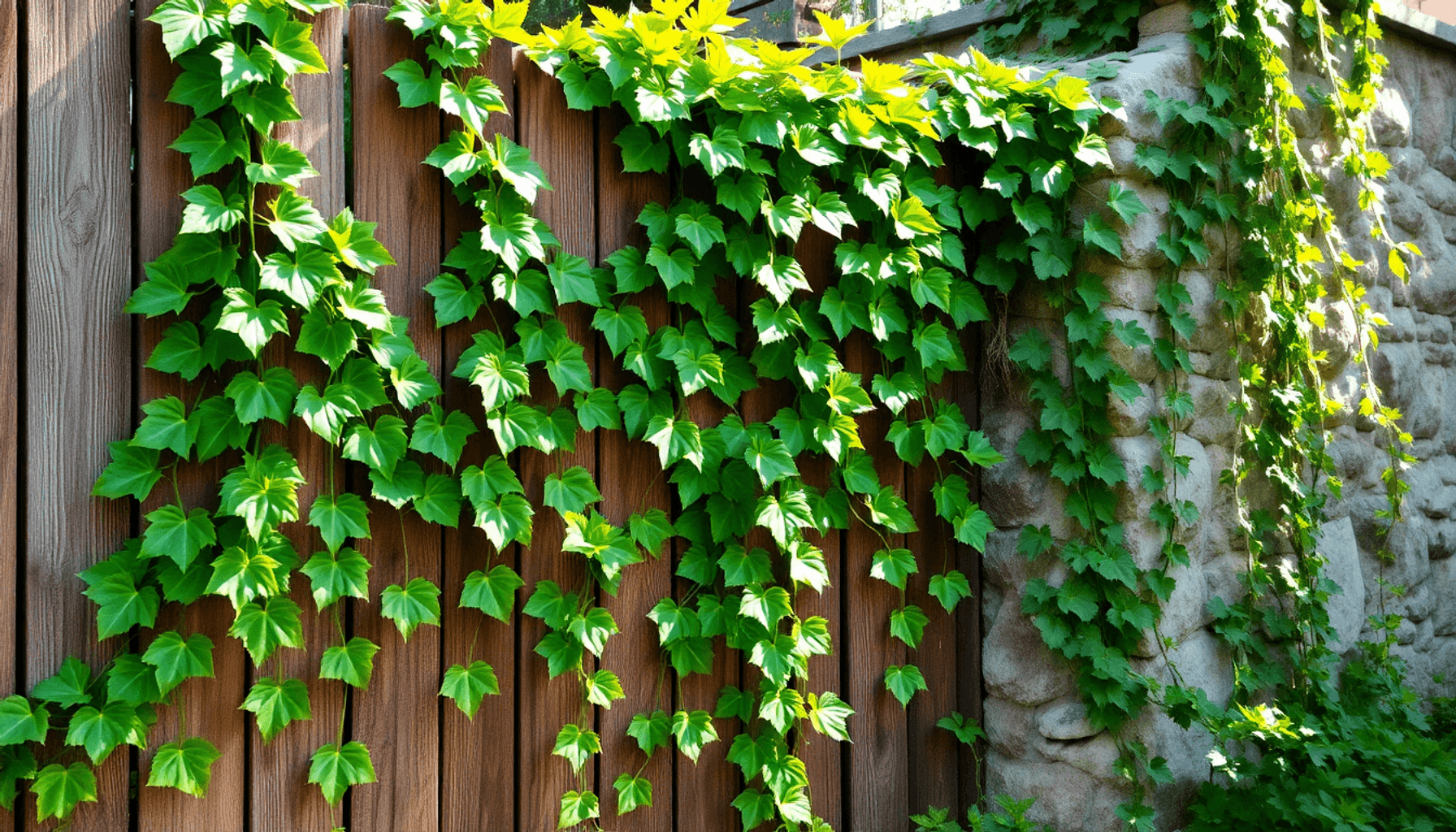

Ivy is a vigorous evergreen climber known for its ability to cover walls and fences with lush, green foliage year-round. Its fast-growing nature and attractive appearance make it a popular choice for gardeners and homeowners who want to add natural beauty and privacy to their outdoor spaces.
Growing ivy on a wall or fence offers several advantages:
- Provides a dense green cover that can soften hard surfaces.
- Adapts well to various light conditions, thriving in both shade and partial sun.
- Requires minimal maintenance once established.
This article guides you on how to grow ivy on a wall or fence effectively. You will learn about ivy’s growth habits, benefits, planting techniques, and how to manage it safely. Understanding these factors helps you enjoy the aesthetic and environmental perks of ivy while preventing common problems associated with uncontrolled growth.
Understanding Ivy Growth Characteristics
Ivy has two main growth stages that affect how it grows on walls or fences. Knowing these stages is important for managing ivy and keeping it looking good.
Ivy Growth Stages
1. Juvenile Stage (Climbing Phase)
During this stage, ivy focuses on climbing and spreading. It does this by producing small, dark green leaves with a classic lobed shape and using fast-growing stems that extend outward and upward. The juvenile phase is characterized by vigorous growth as the plant seeks new surfaces to attach itself to.
2. Mature Stage (Non-Climbing Phase)
After reaching a certain height or when left unpruned, ivy enters the mature stage. In this phase, the leaves become larger, heart-shaped, and less glossy. Flowering can also occur during this time, typically between September and November, resulting in yellow-green flower clusters followed by black berries. Unlike the juvenile stage, mature ivy tends to lose its climbing habit and instead spreads horizontally or thickens its coverage.
Role of Aerial Roots in Attachment
Ivy's ability to cling tightly to vertical surfaces is largely due to its aerial roots. These tiny roots grow along the stems and release a sticky substance that acts like natural glue. This mechanism allows the plant to:
- Securely attach itself to rough textures such as brickwork or wooden fences
- Climb vertically without needing additional support structures
- Spread rapidly along walls or fence panels by rooting along extended stems
It's important to note that while aerial roots provide strong anchorage, they do not penetrate solid masonry deeply but instead latch onto surface irregularities.
Typical Growth Height and Speed on Walls or Fences
Under optimal conditions, ivy can grow up to 30 meters (about 98 feet). When planted at the base of a wall or fence, it usually takes around 15 to 20 years for ivy to reach the top of a typical two-storey building. The speed at which it grows depends on factors such as:
- Sunlight availability (ivy tolerates shade well but grows faster with some sun)
- Soil quality and moisture levels
- Pruning practices which influence whether it remains in the juvenile climbing stage
You will notice fast-growing stems that root along their length, allowing ivy not only to climb vertically but also spread sideways across multiple fence panels quickly.
Understanding these growth characteristics helps you anticipate how ivy will behave in your garden and plan appropriate care measures accordingly.
Benefits of Growing Ivy on Walls or Fences
Growing ivy on walls or fences offers a range of practical and ecological advantages that enhance both your property and the surrounding environment.
Cooling Effect and Insulation
- Cooling buildings in summer: Ivy’s dense foliage shades exterior surfaces, reducing surface temperatures by more than 5°C. This natural cooling effect lowers indoor temperatures and can reduce reliance on air conditioning.
- Insulating in winter: The thick evergreen cover acts as an insulating layer, trapping heat close to the building walls. This reduces heat loss and can contribute to lower heating costs during colder months.
Environmental Protection
- Rain shedding: Ivy’s overlapping leaves create a protective barrier that helps shed rainwater away from walls and fences. This reduces the direct impact of heavy rain on building materials, potentially extending their longevity.
- Pollution trapping: Leaves capture airborne dust, particulates, and some pollutants, improving local air quality around your home.
- Noise reduction: The dense growth of ivy dampens sound waves, helping to reduce noise pollution from busy streets or neighboring properties.
Wildlife Habitat and Food Source
- Support for insects: Ivy flowers in autumn provide nectar for late-season pollinators such as bees and hoverflies when few other plants are blooming.
- Shelter for birds and mammals: The thick evergreen foliage offers nesting sites and protection from predators for small birds. It also provides habitat for small mammals like hedgehogs or squirrels.
- Food source: Black berries formed after flowering feed birds through the winter months when other food is scarce.
The benefits of ivy extend beyond aesthetics, contributing to energy savings, environmental health, and biodiversity. Understanding these can help you appreciate why ivy remains a popular choice for covering walls or fences while supporting urban wildlife.
Preparing to Grow Ivy on a Wall or Fence
Successful planting ivy begins with careful location selection. Ivy tolerates a wide range of light conditions, thriving both in full shade and partial sun. When choosing a spot:
- Consider the amount of sunlight: Ivy grows vigorously in shaded areas but can also adapt to sunny locations if watered adequately.
- Avoid overly exposed sites where strong winds might damage young plants or dry out soil rapidly.
Soil conditions at the base of your wall or fence play a crucial role in healthy ivy establishment. To prepare the soil:
- Clear away weeds and debris to reduce competition.
- Loosen compacted soil to improve drainage and root penetration.
- Amend heavy clay soils with organic matter, such as compost, to enhance aeration and moisture retention.
- Ensure the soil is neither waterlogged nor excessively dry.
Spacing young ivy plants correctly affects how well they cover surfaces and how manageable the growth will be. For multiple plantings:
- Space individual plants about 12 inches (30 cm) apart.
- This distance encourages even coverage without overcrowding, which can lead to poor air circulation and disease problems.
Selecting the appropriate ivy species is critical, especially if you want to avoid invasive behavior. Some varieties spread aggressively beyond intended areas and may become difficult to control. Look for:
- Non-invasive cultivars suited for your region.
- Native species where possible, since they integrate better with local ecosystems.
- Varieties known for manageable growth habits if maintenance time is limited.
Taking these steps ensures your ivy has the best start for vibrant growth on walls or fences while minimizing risks associated with planting vigor and spread. Proper planning here sets the foundation for successful long-term coverage and manageable upkeep.
Planting Ivy Successfully
Planting techniques are crucial for establishing healthy young ivy plants on your wall or fence. Follow these steps for optimal root establishment and vigorous growth:
Steps to Plant Young Ivy Close to the Wall or Fence
- Dig a hole slightly larger than the root ball of each young ivy plant.
- Position the plant so that its root ball sits firmly against the base of the wall or fence, allowing the stems easy access to climb.
- Backfill carefully with soil, ensuring no air pockets remain around the roots.
- Firm the soil gently around the base to stabilize the plant without compacting it too much.
Ensuring Good Root Contact with Soil
Good contact between roots and soil encourages rapid establishment. After planting:
- Press soil firmly around roots to eliminate gaps.
- Mulch lightly with organic matter like compost or shredded bark to retain moisture.
- Avoid covering stems with mulch to prevent rot.
Watering Tips During Establishment Phase
Young ivy plants need consistent moisture until their roots spread well:
- Water immediately after planting to settle soil.
- Maintain moist but not waterlogged conditions for at least 4–6 weeks.
- In dry spells, water deeply once or twice weekly rather than frequent shallow watering.
- Reduce watering gradually as plants establish and become drought-tolerant.
Fast-Growing Stems Root Along Their Length to Spread Coverage
Ivy’s ability to root along its fast-growing stems helps it cover walls and fences efficiently:
- As stems grow horizontally or vertically, small aerial roots form at nodes where they touch soil or rough surfaces.
- These roots anchor new sections of stem, creating a dense mat of foliage over time.
- Regular watering during early growth supports this rooting process.
- Encouraging this natural layering speeds up coverage without needing additional planting.
Successful planting sets the stage for robust ivy growth that clings securely and spreads evenly along your chosen structure. Managing these early stages ensures your ivy develops into an attractive evergreen cover offering both beauty and practical benefits.
Managing Ivy Growth to Prevent Damage and Risks
Managing ivy growth requires consistent attention to avoid structural damage and maintain a healthy plant. Pruning ivy plays a crucial role in keeping the vine manageable and ensuring it remains in its juvenile climbing phase, which is less likely to flower or produce berries. When ivy flowers, it enters the mature non-climbing stage, which can change its appearance and growth habits.
Why Regular Pruning Matters
- Encourages juvenile climbing phase: Frequent trimming stops the plant from maturing, maintaining its glossy, dark green leaves and vigorous climbing habit.
- Controls size and spread: Ivy can extend rapidly if unchecked. Pruning restricts overgrowth that might overwhelm your wall or fence.
- Prevents flowering: If you want to avoid the yellow-green flower clusters and black berries (which can attract unwanted wildlife), regular cutting back is essential.
Controlling Ivy on Wooden Fences
Wooden fences are particularly vulnerable to damage caused by uncontrolled ivy growth. The plant’s fast-growing stems can:
- Grow into gaps between slats or panels, wedging them apart.
- Trap moisture against wood surfaces, accelerating rot.
- Add weight that stresses fence joints and posts.
To protect wooden fences:
- Inspect ivy growth regularly for stems pushing through cracks.
- Cut back any shoots invading narrow spaces.
- Avoid letting ivy become dense enough to block airflow around the wood.
Risks of Ivy Invading Building Features
Ivy can cause significant problems when it grows into sensitive areas such as gutters, windows, and roofs:
- Gutters: Stems can clog gutters with leaves and debris, causing water overflow that damages walls or foundations.
- Windows: Ivy may block natural light or grow under window frames, potentially compromising seals and allowing damp ingress.
- Roofs: Ivy roots may lift roof slates or tiles. Its weight combined with wind pressure can loosen masonry or roofing materials.
These issues also create potential entry points for pests or intruders. Dense ivy cover offers shelter for mice, rats, or insects and may conceal weak spots in your property’s exterior.
For more detailed insights on ivy's impact on building features and how to manage ivy on walls, it's essential to consider professional advice tailored to your specific situation.
Tips for Managing Potential Damage
- Keep ivy trimmed well below gutters and rooflines.
- Remove any shoots growing close to windows or slipping beneath sills.
- Monitor the base of walls for overly thick ivy mats that trap moisture against masonry.
Regular pruning combined with vigilant inspection minimizes risks linked to ivy’s vigorous nature while preserving its aesthetic and environmental benefits.
Considerations for Different Structures When Growing Ivy
Ivy behaves differently depending on the type of structure it grows on. Understanding these differences helps you make informed decisions about how to grow ivy on a wall or fence safely and effectively.
Masonry Walls
Here are some key considerations for growing ivy on masonry walls:
- Resistance to Damage: Sound masonry walls typically resist damage from ivy. This is because ivy's aerial roots do not bore into solid surfaces like brick or stone. Instead, they cling to tiny surface irregularities without penetrating the material.
- Weight Considerations: While the roots don’t damage masonry, dense ivy growth adds weight to the wall. On strong, well-maintained masonry, this extra weight usually poses no problem.
- Potential Risks: Problems arise if the masonry is already cracked or loose. Ivy can exploit these weaknesses by growing into gaps, potentially worsening structural issues over time. In such cases, using a stucco paint designed for water intrusion issues may help protect the surface.
- Surface Protection: Some homeowners use barriers such as anti-graffiti coatings or metal sheets on vulnerable sections to prevent ivy attachment and facilitate easier maintenance.
Wooden Fences
Here are some key considerations for growing ivy on wooden fences:
- Vulnerability to Invasive Growth: Wooden fences are more susceptible to damage from ivy’s vigorous stems. Ivy can grow into gaps between slats or panels, forcing them apart as stems thicken.
- Moisture Retention: Ivy’s dense foliage traps moisture against wood surfaces, increasing the risk of rot and fungal decay.
- Structural Stress: Over time, thick ivy mats may add significant weight and stress to wooden fences, potentially causing leaning or collapse if the fence is weak or poorly installed.
- Maintenance Demands: You must monitor ivy growth closely on wooden fences and prune regularly to prevent invasive stems from causing damage.
Choosing Your Structure Wisely
When deciding how to grow ivy on a wall or fence, consider:
- The condition and material of your existing structure
- Whether it is sound enough to support vigorous climbers
- Your willingness to commit time for regular maintenance and inspection
Matching ivy with suitable structures minimizes risks while maximizing aesthetic and ecological benefits.
Maintenance Tips for Healthy Ivy Growth and Safe Removal if Needed
Maintaining ivy on your wall or fence requires a consistent approach to ensure healthy growth while preventing damage. A well-planned pruning schedule is essential. Aim to prune ivy at least twice a year—once in early spring and again in late summer. This keeps the plant in its juvenile climbing phase, controls excessive spread, and reduces the risk of flowering if you want to avoid berries that attract unwanted wildlife.
Pruning Techniques
- Use clean, sharp garden shears or loppers to make precise cuts.
- Focus on cutting back overly long stems and removing any dead or damaged growth.
- Trim around gutters, windows, and rooflines to prevent ivy from invading these vulnerable areas.
- Regular pruning encourages denser foliage closer to the wall or fence, improving coverage without letting the plant become invasive.
Inspection for Pests and Wildlife
Ivy can harbor pests like aphids or spider mites, as well as provide nesting sites for birds or mice. Conduct regular inspections:
- Look for signs of pest infestation such as discolored leaves, sticky residue, or webs.
- Check for bird nests or small mammals hiding within dense ivy patches before pruning or removal.
- Use non-invasive pest control methods whenever possible to protect beneficial insects.
Controlling Spread Without Harming Ivy
To prevent ivy from overtaking surrounding plants or structures:
- Install physical barriers such as metal edging at ground level.
- Remove any runners that extend beyond the desired growing area promptly.
- Avoid herbicides which can damage the entire plant; manual removal is safer and more sustainable.
Ivy Removal Methods
Sometimes you may need to remove established ivy due to structural concerns or aesthetic reasons. Follow these steps for safe and effective removal:
- Check for Nesting Wildlife: Before starting, inspect thoroughly for birds or other animals. Delaying removal during nesting seasons is advisable.
- Cut Back Stems Regularly: Gradually reduce ivy density by cutting stems close to their attachment points over several weeks. This weakens root systems without sudden shock.
- Remove Roots Carefully: Once stems are trimmed back sufficiently, gently pull out roots without damaging the wall or fence surface. Use hand tools rather than heavy machinery.
- Avoid Chemical Herbicides: Chemicals can seep into masonry and harm other plants nearby. Manual removal combined with consistent monitoring is safer long-term.
- Dispose of Removed Material Properly: Bag pruned stems and roots to prevent accidental re-rooting elsewhere on your property.
Maintaining a balance between vigorous growth and controlled spread will keep your ivy-covered wall or fence attractive and healthy. Applying these maintenance tips will help you master How to Grow Ivy on a Wall or Fence responsibly while preserving the integrity of your structures and local ecosystem.
FAQs (Frequently Asked Questions)
What are the growth stages of ivy when growing on walls or fences?
Ivy has two main growth stages: the juvenile climbing stage, where it uses aerial roots to attach and climb surfaces like walls or fences, and the mature non-climbing stage, where it stops climbing and may flower. Understanding these stages helps in managing its growth effectively.
What benefits does growing ivy on walls or fences provide?
Growing ivy on walls or fences offers several benefits including natural insulation by cooling buildings in summer and providing warmth in winter, shedding rainwater, trapping pollution, reducing noise, and creating habitats for wildlife such as insects, birds, and small mammals.
How should I prepare my wall or fence area before planting ivy?
Select an appropriate location considering sun and shade tolerance of the ivy species. Prepare the soil at the base of your wall or fence ensuring good drainage and fertility. When planting multiple young ivy plants, space them about 12 inches apart to allow healthy growth and coverage.
What are the best practices for planting and establishing young ivy plants?
Plant young ivy close to the wall or fence ensuring good root contact with soil. Water consistently during the establishment phase to encourage root development. Ivy stems grow fast and root along their length, helping spread coverage efficiently over time.
How can I manage ivy growth to prevent damage to my walls or fences?
Regular pruning is essential to keep ivy manageable and encourage it to stay in the juvenile climbing phase. Prevent flowering unless desired, control growth to avoid invasive stems damaging wooden fences by growing into gaps, and watch out for risks such as ivy infiltrating gutters, windows, roofs which can cause structural damage or provide access for intruders.
What maintenance tips ensure healthy ivy growth and safe removal if needed?
Maintain a regular pruning schedule and inspect frequently for pests or unwanted wildlife nesting like birds or mice. Control spread carefully without harming the plant. For safe removal, check for nesting animals first, cut back stems regularly before removing roots, and avoid chemical herbicides where possible to protect surrounding plants and environment.