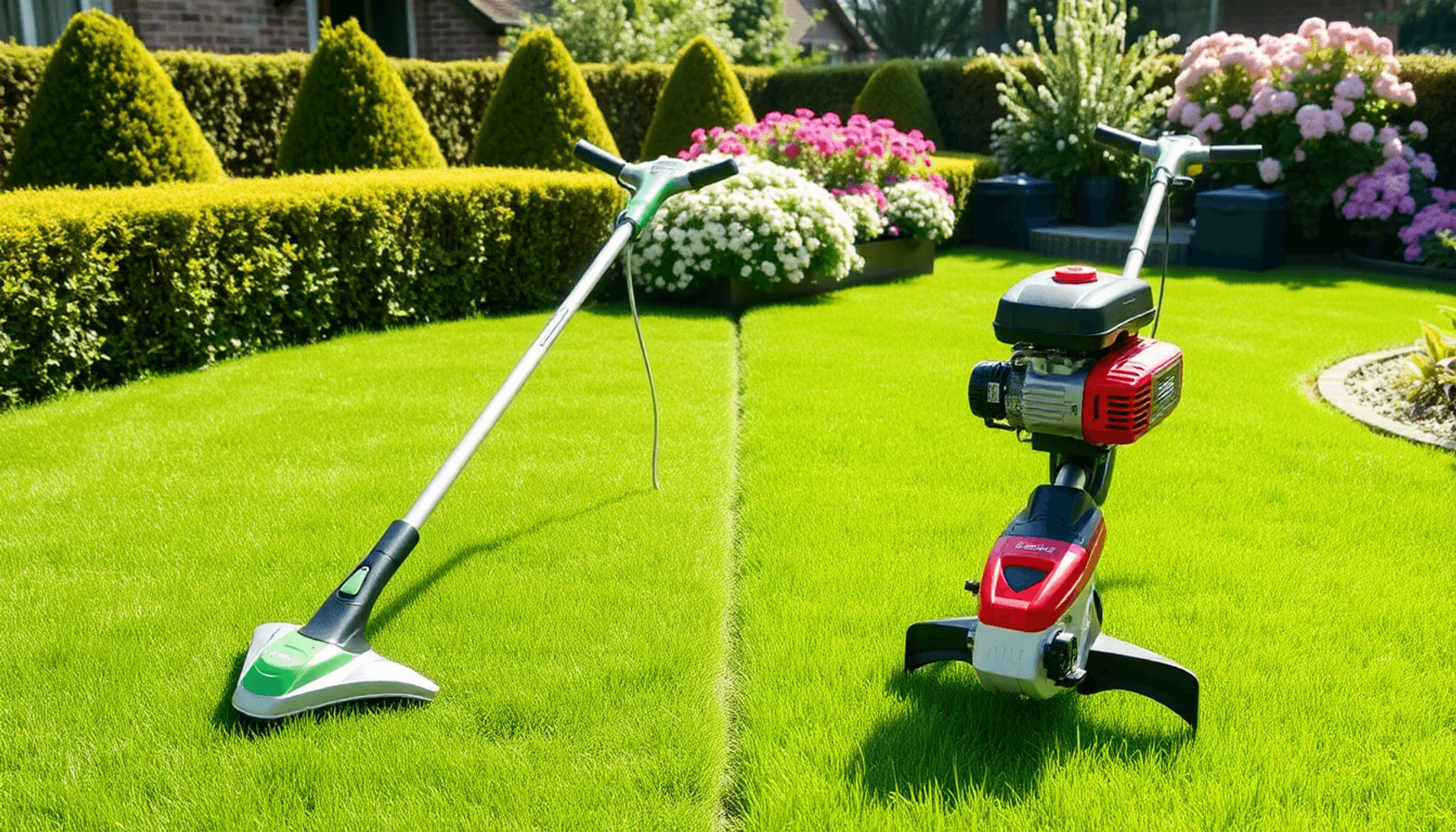

Grass trimmers, often called strimmers, are essential garden tools designed to tackle areas that lawn mowers cannot reach. Their primary function is to trim edges and tidy up spots around trees, fences, and garden beds, ensuring a neat and well-maintained lawn.
Two main types dominate the market:
- Cordless (battery-powered) strimmers
- Petrol-powered strimmers
Understanding the differences between these two types is crucial when deciding which tool fits your gardening needs best.
This article explores the cordless vs petrol strimmer debate by providing a detailed grass trimmers comparison. You will gain insights into their features, performance, environmental impact, cost considerations, and suitability for different garden sizes. Armed with this knowledge, you can make an informed choice about the right garden tool for you.
Understanding Grass Trimmers and Their Alternatives
When choosing tools for trimming your garden, it's important to understand the difference between grass trimmers and lawn edgers. While both serve specific purposes, they have significant differences in design and function.
Grass Trimmers
Grass trimmers have a flexible, adjustable cutting head that usually comes with a nylon line. They are designed for trimming uneven edges, around trees, shrubs, flower beds, and other obstacles. One of the main advantages of grass trimmers is their ability to maneuver easily and reach areas where traditional lawn mowers cannot. Depending on the model's power, they can also handle various grass heights and thicknesses.
Lawn Edgers
On the other hand, lawn edgers are equipped with a vertically mounted blade instead of a flexible line. Their main focus is on creating precise, clean-cut edges along hard surfaces like driveways, sidewalks, or garden paths. To maintain straight edging lines, lawn edgers usually have a fixed wheel for guidance. However, they are less versatile when it comes to maneuvering around irregular shapes or vegetation.
Versatility of Grass Trimmers
Grass trimmers offer more versatility compared to lawn edgers. Many models come with adjustable heads that allow you to change the angle and position for different cutting tasks. This means you can use them not only for trimming grass but also for various other gardening activities.
Some common attachments that can be used with grass trimmers include:
- Polesaws: These attachments are useful for pruning higher branches without the need for ladders.
- Blowers: Blowers can efficiently clear leaves and garden debris.
- Hedge trimmers: These attachments are handy for shaping hedges and bushes.
- Dethatchers or brushes: Dethatchers or brushes help maintain lawn health by removing dead grass or moss.
These attachments transform a single tool into a multifunctional garden maintenance device, adding value and convenience.
Why Understanding These Differences Matters
Choosing between a grass trimmer and a lawn edger depends on your garden's needs:
- If your priority is precise edging along hard surfaces, a dedicated lawn edger provides cleaner results.
- For general trimming around plants, fences, and irregular borders, a grass trimmer offers more flexibility.
Recognizing this distinction helps you avoid investing in the wrong tool and ensures efficient maintenance. Additionally, awareness of available attachments can influence your choice if you seek an all-in-one solution rather than multiple separate tools.
Key Features of Cordless (Battery-Powered) Strimmers
Cordless grass trimmers have transformed garden maintenance by offering several distinct advantages that cater to convenience and environmental awareness.
Quieter Operation and Reduced Noise Pollution
One of the biggest cordless grass trimmer benefits is their quiet operation. Unlike petrol models, battery-powered strimmers produce minimal noise, making them ideal for use in noise-sensitive residential areas or early mornings when neighbors are still resting. This reduction in noise pollution enhances user comfort and community harmony.
No Emissions and Environmental Advantages
Battery-powered strimmers run without exhaust fumes, offering a cleaner alternative to petrol-powered tools. This lack of emissions contributes positively to air quality around your garden and aligns with eco-friendly gardening practices. Choosing a cordless strimmer supports efforts to reduce your carbon footprint without sacrificing functionality.
Ease of Starting with Push-Button Ignition
Starting a cordless strimmer is simple and hassle-free. A push-button ignition eliminates the need for priming or pull-start cords common in petrol models. This feature reduces startup frustration, especially for users who might find traditional starting mechanisms difficult or physically demanding.
Improved Balance and Lighter Weight Aiding User Comfort
Lithium battery technology enables the production of lightweight strimmers that are well-balanced, reducing fatigue during extended use. The absence of heavy fuel tanks and engines means these tools are easier to maneuver around garden obstacles, making them accessible even for users with less upper body strength or those who prefer lighter equipment.
Advancements in Lithium Batteries Improving Power Output and Runtime
Recent developments in lithium-ion batteries have significantly boosted power output and runtime for cordless trimmers. Modern batteries provide up to an hour of continuous use on a single charge, depending on the model and battery capacity. Higher voltage options (such as 40V) now rival some petrol-powered models in cutting power, making cordless strimmers suitable for tougher trimming tasks within their capacity range.
Suitability for Small to Medium Lawns
Cordless strimmers excel in gardens where trimming demands are moderate. Their runtime and power comfortably handle regular grass cutting tasks on small to medium-sized lawns. For larger properties, multiple batteries or higher-capacity units may be necessary but are often manageable thanks to modular battery systems.
Cost-Saving Potential via Battery Sharing Among Tools
Many cordless grass trimmer brands design their batteries for compatibility across a range of garden tools like hedge trimmers, leaf blowers, and lawn mowers. This battery sharing capability allows you to invest once in high-quality batteries and chargers, reducing overall costs while increasing convenience. It also minimizes clutter by limiting the number of separate batteries needed for different devices.
Choosing a cordless grass trimmer leverages quieter operation, environmental benefits, ease of use, and improved battery technology—all factors that enhance your gardening experience without compromising performance.
Key Features of Petrol Strimmers
Petrol strimmers deliver higher power levels, making them the go-to choice for tackling thick brush, dense weeds, and overgrown vegetation that require robust cutting force. The petrol strimmer power often surpasses that of battery-powered models, providing the muscle needed for demanding garden jobs. This is largely due to the inherent advantages of gasoline-powered appliances, which include higher energy density and longer operational time.
Key advantages include:
- Long runtime strimmer capabilities allow continuous operation without interruptions for recharging batteries. This feature is essential when working on large properties or extensive landscaping projects where stopping to recharge can be impractical.
- Fuel-based engines generate consistent torque and speed, maintaining cutting performance even under heavy loads. This reliability ensures effective trimming through tough patches of grass or woody stems without bogging down.
- Petrol strimmers suit professional garden tools categories, favored by landscapers and groundskeepers who require durability and sustained power. Their build quality often supports extended use in various weather conditions.
- Larger fuel tanks mean fewer refills during work sessions compared to managing battery life, improving workflow efficiency on bigger gardens.
- Design elements like ergonomic grips and balanced weight distribution assist in handling powerful petrol engines despite their generally heavier construction.
Choosing a petrol model fits gardeners with expansive yards, areas prone to rapid vegetation growth, or those needing a machine capable of heavy-duty clearing tasks. The ruggedness and stamina of these machines make them indispensable where cordless options might struggle to keep pace.
Comparing Performance and Usability
When evaluating strimmer performance comparison, power output and runtime stand out as critical factors distinguishing cordless from petrol models.
Power Output
Petrol strimmers typically generate higher power levels. This makes them capable of cutting through thick brush, dense weeds, and overgrown vegetation with less effort. Cordless strimmers have made significant advancements in battery technology, especially with lithium-ion cells, but their power still tends to be lower than petrol equivalents. Higher voltage cordless models (e.g., 40V) can approach petrol-like performance but rarely match the sustained torque of a petrol engine during heavy-duty tasks.
Runtime
Petrol units run continuously as long as there is fuel in the tank. This allows for extended work sessions without interruption. Cordless models depend on battery charge capacity; typical runtimes range from 20 to 60 minutes per battery charge. To extend usage, you need spare batteries or a break for recharging, which may not suit large properties or prolonged jobs.
User ergonomics play an essential role in daily usability and comfort:
Weight and Balance
Cordless strimmers tend to be lighter due to the absence of a heavy engine and fuel tank. The reduced weight improves handling and decreases fatigue, especially for users with less upper body strength or those who prefer lighter tools. Balance also benefits since batteries are often positioned closer to the handle area. Petrol strimmers weigh more, sometimes significantly so, which can make maneuvering more challenging over longer periods.
Ease of Use
Starting a cordless strimmer usually involves a simple push-button ignition—no choke or pull cords needed. This simplicity appeals to beginners or those who dislike fussing with mechanical starts. Petrol units require manual starting methods that may demand physical effort or technique.
Convenience factors influence user experience during garden maintenance:
Cordless Freedom
Without cords or fuel lines, cordless strimmers offer unrestricted movement around the garden. You won’t worry about extension cords snagging on obstacles or limited reach. Battery-powered tools enable quick startup and shutdown without dealing with fuel spills or mixing oil.
Fuel Refilling
Petrol models require careful handling of fuel mixtures (in two-stroke engines) and periodic refilling during use. This adds steps before and during operation, including storage considerations for flammable liquids.
Understanding these differences helps align your choice of strimmer with your gardening style, physical comfort needs, and task demands while factoring in how much time you spend trimming versus other garden activities.
Environmental and Noise Considerations
When deciding between a cordless and petrol strimmer, it's important to consider the environmental impact and noise pollution—two critical factors for many gardeners today who seek eco-friendly garden tools.
Environmental Impact
Petrol strimmers run on gasoline, producing exhaust fumes that contribute to air pollution. These emissions include carbon monoxide, nitrogen oxides, and hydrocarbons, which negatively affect local air quality. Using petrol-powered equipment adds to your garden’s carbon footprint and can be a concern in environmentally sensitive areas.
Cordless strimmers operate on rechargeable lithium-ion batteries and emit no direct exhaust fumes. This emission-free operation makes them an attractive choice if you want to minimize your environmental impact. Battery recycling programs and advancements in battery technology further support sustainability goals when using cordless tools.
Noise Pollution
Noise is another important factor to consider when choosing gardening equipment. Petrol engines typically generate high decibel levels, often exceeding 90 dB, which can disturb neighbors and wildlife. The loud operation of petrol strimmers sometimes limits their use during certain hours or in noise-restricted communities.
Cordless models are notably quieter, producing sound levels closer to 60-70 dB. This reduction in noise makes cordless strimmers ideal for residential areas where noise pollution gardening equipment restrictions apply or where you simply want a more peaceful gardening experience.
Tip: If your neighborhood has noise ordinances or if you prefer working early mornings or late evenings without disturbing others, a cordless strimmer is usually the better choice.
Selecting a quieter, emission-free tool aligns with growing trends favoring sustainable gardening practices while respecting community comfort.
Cost Analysis: Initial Investment and Ongoing Expenses
Understanding the strimmer cost comparison between cordless and petrol models helps you plan your budget effectively. The upfront purchase price can vary significantly based on brand, power, and included features.
Initial Purchase Price
- Cordless strimmers generally have a lower starting price for basic models, often ranging from $100 to $250. Higher voltage or brushless motor versions with longer battery life may push prices above $300.
- Petrol strimmers typically start around $150 to $300 for consumer-grade models but can climb to $500 or more for professional-grade units with larger engines and durability enhancements.
Ongoing expenses influence the total cost of ownership beyond the initial purchase.
Ongoing Expenses
- Petrol models require regular fuel purchases, usually a mixture of petrol and oil. Depending on garden size and frequency of use, fuel expenses can add up quickly. You also need to budget for spark plugs, air filters, and occasional engine servicing.
- Cordless strimmers eliminate fuel costs but involve battery replacement costs over time. Lithium-ion batteries degrade gradually and may need replacement after 2-4 years depending on use. Extra batteries can be purchased to extend runtime without waiting for charging, which adds to the expense.
An important factor reducing costs with cordless tools is battery sharing.
If you own multiple cordless gardening tools from the same brand—such as a lawn mower, hedge trimmer, or leaf blower—you can use the same battery system across devices. This reduces the need to buy multiple batteries and chargers, making cordless options more economical in a multi-tool setup.
Charging electricity costs are minimal compared to fuel expenses but should still be considered if you run multiple batteries frequently.
Maintenance costs also differ:
- Petrol strimmers demand periodic maintenance including cleaning carburetors, replacing spark plugs, and ensuring proper fuel storage.
- Cordless units require less mechanical maintenance but benefit from proper battery care practices like avoiding deep discharges and storing batteries at recommended temperatures.
Focusing on your gardening patterns will clarify which model offers better value:
- Small to medium lawns trimmed regularly may lean towards cordless options due to lower ongoing fuel expenses and simpler upkeep.
- Large gardens with dense vegetation might justify petrol strimmers despite higher fuel costs because of superior power and longer continuous operation.
Budget planning requires balancing upfront investment against long-term operating costs while considering convenience factors unique to each type of strimmer.
Choosing Based on Garden Size and Vegetation Type
Selecting the best strimmer for garden size depends heavily on the scale of your outdoor space and the type of vegetation you need to manage. Making an informed choice ensures efficient lawn maintenance and reduces unnecessary effort or expense.
Small to Medium-Sized Lawns: Cordless Strimmers
Cordless strimmers are ideal for small to medium-sized lawns where regular grass trimming is required. Here are some key features that make them suitable for this type of garden:
- Precision and Ease of Use: Cordless strimmers offer precise cutting capabilities, allowing you to trim grass edges and maintain a neat appearance with minimal effort.
- Sufficient Power for Typical Lawn Grasses: These models are designed to provide enough power to tackle common types of grass found in residential gardens without being excessively noisy or heavy.
- Lightweight Design: The lightweight construction of cordless strimmers makes them easy to handle, reducing physical strain during extended use.
- Battery Operation: With battery-powered operation, you won't have to worry about finding storage space for fuel or dealing with harmful emissions. This feature makes cordless strimmers an environmentally friendly choice, perfect for suburban or closely spaced gardens.
- Maneuverability Around Obstacles: If your garden has flower beds, garden ornaments, or tight corners, cordless strimmers excel in maneuverability, allowing you to navigate these areas effortlessly.
- Quick Startup and Hassle-Free Handling: If your gardening routine involves frequent but shorter sessions, cordless options provide quick startup times and hassle-free handling.
Large Gardens and Dense Vegetation: Petrol Strimmers
Petrol strimmers are specifically designed to handle tougher jobs such as thick brush trimming tools and overgrown patches. Here are some reasons why they are suitable for large gardens and areas with dense vegetation:
- High Power Output: Petrol-powered strimmers deliver a high level of power needed to cut through coarse weeds, brambles, and woody stems effectively.
- Extended Runtime: These models have longer running times compared to battery-powered alternatives, allowing you to work continuously across expansive grounds without having to stop frequently for recharging.
- Rugged Terrain Capability: Petrol strimmers are built to withstand rough terrain conditions commonly found in larger properties or semi-wild areas.
- Cutting Efficiency in Dense Areas: When dealing with dense thickets or managing wild hedgerows, petrol-powered machines maintain cutting efficiency where battery models might struggle.
Matching Equipment to Your Needs
Choosing between cordless and petrol strimmers is not just about power but also about matching equipment capabilities with your garden's demands:
- For lawn maintenance equipment selection, evaluate how often you trim, the toughness of vegetation, and how much ground you cover.
- Smaller plots with well-kept lawns benefit from quieter, lighter cordless trimmers that support regular upkeep without fuss.
- Larger estates or properties with challenging growth patterns call for petrol-powered tools built to endure prolonged heavy use.
This approach helps avoid underpowered tools that frustrate users or oversized machines that waste resources. Picking the right strimmer based on garden size and vegetation ensures effective trimming performance tailored to your environment.
Recent Trends in Strimmer Technology
The latest cordless strimmer technology reflects significant advancements that are reshaping garden maintenance. Battery-powered models have surged in popularity, driven by their convenience, reduced noise, and improved performance. Users increasingly prefer cordless options as these tools continue to close the gap with petrol-powered strimmers in power and runtime.
High Voltage Battery Strimmers
Two common voltage ratings dominate the cordless strimmer market: 20V and 40V. These voltage levels heavily influence power output and battery life.
- 20V models suit light to moderate trimming tasks, ideal for small gardens or spot trimming.
- 40V models offer increased torque and longer runtimes, approaching the power levels traditionally reserved for petrol machines.
Higher voltage units can handle tougher vegetation and larger areas without frequent recharging. Brands investing in high voltage battery strimmers target users who want the strength of petrol equipment but without the hassle of fuel mixing or exhaust emissions.
Innovative Features Enhancing Usability
Several innovative garden tools integrate features that improve precision and ease of use:
- Wheels on cordless strimmers help maintain consistent cutting height and improve edge trimming accuracy along paths or driveways.
- Adjustable shafts and ergonomic designs reduce user fatigue during extended use.
- Interchangeable battery systems allow one battery to power multiple tools from the same manufacturer, enhancing cost efficiency.
Manufacturers focus on combining power with user-friendly design elements to appeal to a broader range of gardeners, including those less experienced with heavy-duty equipment.
Impact on Garden Tool Choices
The rise of high voltage cordless models challenges traditional preferences for petrol strimmers in both residential and professional settings. You gain quieter operation and eco-friendliness without sacrificing much in terms of cutting ability or runtime. These advances reflect a broader trend towards innovative garden tools that balance performance with sustainability and convenience.
Conclusion
Choosing between cordless and petrol strimmer comes down to matching the tool with your specific gardening needs. Both options offer distinct advantages and limitations, shaping the best garden tool decision guide for every gardener.
Cordless Strimmers:
- Quieter operation reduces noise pollution, ideal for residential or noise-sensitive areas.
- Emission-free running supports environmentally conscious gardening.
- Lightweight design enhances physical comfort, especially for users with less upper body strength.
- Simplicity in use with easy start and no fuel handling.
- Best suited for small to medium-sized gardens with regular grass trimming tasks.
- Battery technology improvements bring power closer to petrol models but limited by runtime and battery capacity.
- Potential cost savings when sharing batteries across multiple cordless tools.
Petrol Strimmers:
- Superior power output tackles thick brush and dense vegetation effectively.
- Longer continuous runtime without interruptions for recharging.
- Favoured for large gardens or professional landscaping requiring heavy-duty performance.
- Heavier weight may affect ease of use and physical comfort during extended periods.
- Ongoing fuel costs and maintenance add to overall expenses.
Key decision factors include:
- Power Needs: Choose petrol if you face tough vegetation; cordless suffices for lighter trimming.
- Garden Size: Smaller lawns fit cordless tools better; large expanses benefit from petrol strimmers’ endurance.
- Environmental Concerns: Cordless models produce no exhaust fumes, reducing environmental impact.
- Noise Tolerance: Cordless units provide quieter operation, important in shared neighborhoods.
- Physical Comfort: Lighter cordless machines help reduce fatigue, crucial if you have limited strength or mobility.
- Budget Constraints: Consider upfront costs plus ongoing expenses like fuel or battery replacements.
Assess your garden’s size, vegetation density, noise restrictions, environmental values, physical capacity, and budget before deciding. The right choice between a cordless vs petrol strimmer empowers you to maintain your garden efficiently while matching your lifestyle and preferences.
FAQs (Frequently Asked Questions)
What are the main differences between cordless and petrol strimmers?
Cordless strimmers are battery-powered, offering quieter operation, no emissions, lightweight design, and ease of use with push-button ignition. They are ideal for small to medium lawns. Petrol strimmers provide higher power levels suitable for thick brush and overgrown vegetation, longer continuous operation without recharge interruptions, and are preferred for large gardens or professional landscaping requiring heavy-duty use.
How do grass trimmers compare to lawn edgers and what attachments can enhance their versatility?
Grass trimmers (strimmers) are designed primarily for trimming grass and weeds in areas that mowers can't reach, while lawn edgers create clean edges along driveways and flower beds. Many grass trimmers feature adjustable heads and can accept attachments like polesaws or blowers, enhancing their versatility for various garden maintenance tasks.
What environmental and noise considerations should I keep in mind when choosing between cordless and petrol strimmers?
Cordless strimmers produce no exhaust emissions, making them eco-friendly options that reduce environmental impact. They also operate more quietly, which is beneficial in noise-sensitive residential areas. Petrol strimmers emit exhaust fumes contributing to pollution and tend to be noisier during operation.
How do the costs of cordless and petrol strimmers compare in terms of initial investment and ongoing expenses?
Cordless strimmers generally have a higher upfront cost due to battery technology but can offer cost savings through battery sharing across multiple tools. Ongoing expenses may include occasional battery replacements or additional batteries. Petrol strimmers typically have lower initial prices but incur ongoing fuel costs and more frequent maintenance expenses.
Which type of strimmer is best suited for different garden sizes and vegetation types?
For small to medium-sized lawns with regular grass trimming needs, cordless strimmers are recommended due to their convenience and sufficient power. For large gardens or areas with dense brush requiring powerful cutting ability, petrol strimmers are more suitable because of their higher power output and longer runtime.
What recent technological advancements have improved cordless strimmer performance?
Recent trends in cordless strimmer technology include the development of high-voltage lithium batteries (commonly 20V to 40V), which deliver power outputs comparable to some petrol models. Innovations such as wheeled designs assist with edge trimming precision, enhancing user control and efficiency.