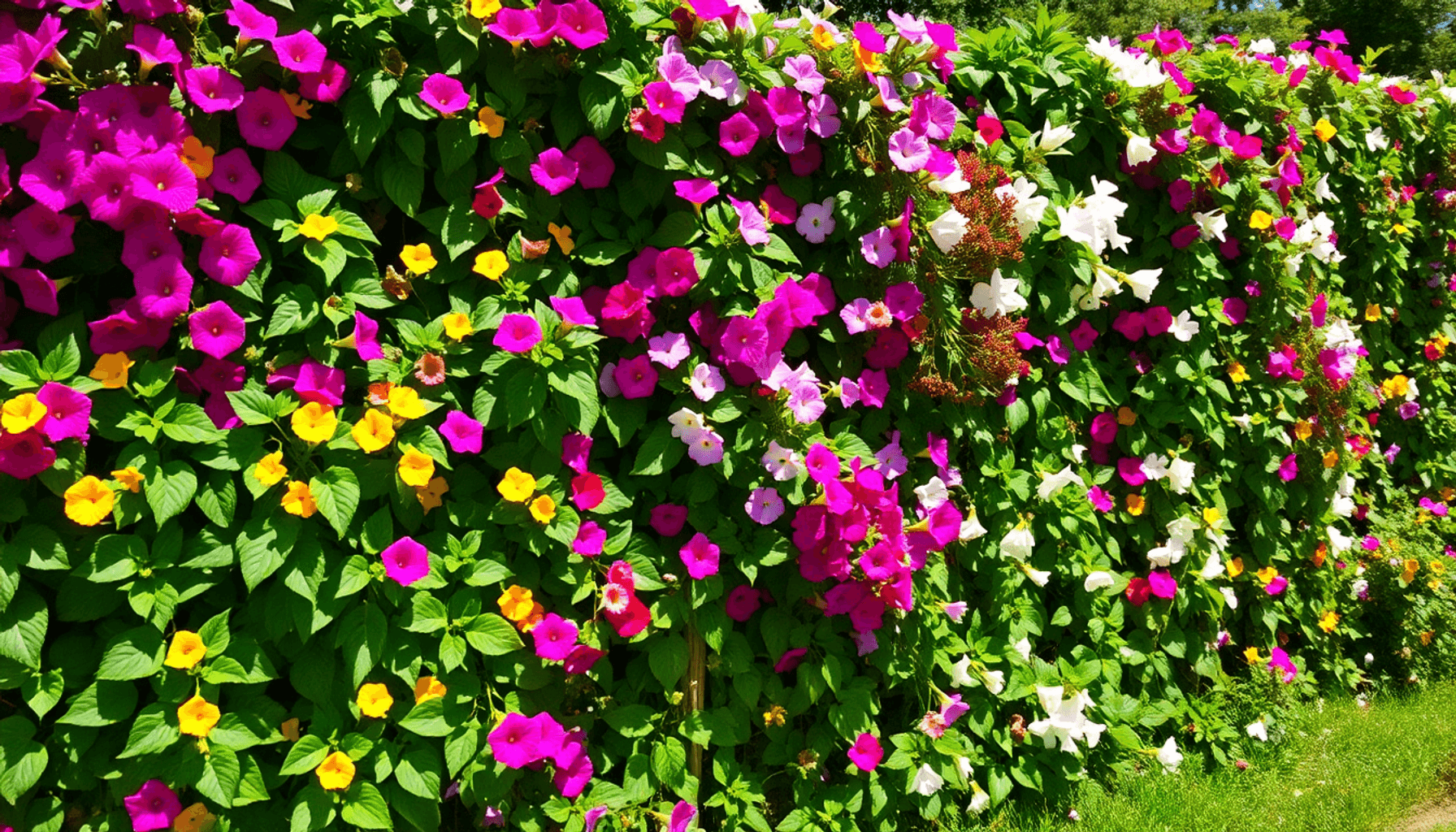

Selecting the best climbing plants for garden fences transforms ordinary barriers into living, breathing features that enhance your outdoor space. Climbing plants for garden fences are a versatile category of greenery uniquely suited to vertical gardening, offering multiple practical and aesthetic advantages.
These plants grow vertically by attaching themselves to structures such as fences, trellises, or walls. Their adaptability makes them ideal for small gardens or urban spaces where ground space is limited but vertical surfaces abound.
Benefits of Climbing Plants
- Privacy: Dense foliage creates natural screens, blocking unwanted views.
- Beautification: Vibrant flowers, lush leaves, and seasonal changes add visual interest.
- Space-saving: Vertical growth conserves precious ground area in compact gardens.
- Wildlife habitats: Flowers and dense cover attract pollinators, birds, and beneficial insects.
Understanding climbing plants involves recognizing their varied types and how they attach to supports. Some rely on tendrils or twining stems that coil around wires or lattice. Others use adhesive pads or stem roots to cling directly to surfaces without additional support.
Climbers can be broadly divided into:
- Plants that grow upward needing sturdy frameworks like trellises.
- Wall shrubs trained closely against flat surfaces for a neat appearance.
Choosing the right climber depends on your fence type, location conditions, and desired effect. This guide explores popular options tailored to different needs and offers insight into their growth habits and care requirements.
Understanding Climbing Plants and Their Growth Habits
Climbing plants come in many types and have different ways of growing. These differences affect how they interact with garden fences and other vertical structures. By understanding these variations, you can choose the right plant for your specific fence or wall.
Main Types of Climbing Plants
There are two main categories of climbing plants based on their growth habits: upward climbers and wall shrubs.
1. Upward Climbers
Upward climbers are plants that rely on external supports such as trellises, wires, or stakes to grow vertically. They often need guidance or tying in during their early stages to establish their path. Examples of upward climbers include clematis and sweet peas.
2. Wall Shrubs (Surface Climbers)
Wall shrubs, also known as surface climbers, are trained closely against walls or fences. Unlike upward climbers, they cling directly without any additional support systems. These plants have specialized attachment methods that allow them to grip surfaces firmly. Boston ivy and climbing hydrangea fall into this category.
Attachment Mechanisms
Climbing plants have evolved various physical adaptations to secure themselves as they grow:
- Tendrils: Thin, coiling structures that wrap around supports. Tendrils are commonly found in sweet peas and passionflowers.
- Twining Stems: The stem itself wraps around a support as it grows. Morning glory is a classic example of a twining climber.
- Stem Roots: Small roots grow from the stems and attach directly to surfaces like brick or wood. Boston ivy uses this method effectively.
- Sticky Pads: Some climbers secrete adhesive pads at the end of rootlets, allowing them to cling tightly to flat surfaces without causing damage. Climbing hydrangea employs sticky pads for attachment.
Evergreen vs Deciduous Climbers
Both evergreen and deciduous climbing plants offer distinct advantages depending on your garden goals:
- Evergreen Climbers: Provide year-round coverage, ideal for privacy screens or hiding unsightly fences through all seasons. They maintain foliage even in winter, supporting continuous wildlife shelter and garden structure interest.
- Deciduous Climbers: Shed leaves seasonally, giving a different aesthetic by revealing structural elements of the fence during dormant months. Often prized for their seasonal blooms or autumn foliage colors that enhance garden diversity throughout the year.
Knowing whether you want continuous greenery or seasonal variation will guide your choice between evergreen climbers like star jasmine and deciduous options like wisteria.
Understanding climbing plant types, their attachment methods, and leaf retention habits equips you to select species that fit your fence’s function and look perfectly. This knowledge also informs maintenance approaches tied to each growth habit.
Factors to Consider When Choosing Climbing Plants for Garden Fences
Choosing climbing plants for your garden fence requires careful thought about several key factors. These influence how well the plant will thrive, how it will look throughout the seasons, and how much effort you’ll need to invest in maintenance.
Assessing Location Conditions: Sun/Shade Preferences and Soil Preparation
- Sun Exposure: Most climbing plants have specific sun requirements. Some, like morning glory and sweet peas, flourish in full sun, needing at least 6 hours of direct sunlight daily to bloom profusely. Others, such as winter jasmine or climbing hydrangea, can tolerate partial shade or even full shade conditions. Understanding the sun exposure of your fence area helps narrow down suitable species.
- Soil Type and Preparation: Well-drained soil is essential for most climbers. Heavy clay or poor soils may require amendment with organic matter to improve drainage and fertility. Some plants prefer slightly acidic soil (like clematis), while others are more adaptable. Testing soil pH and texture before planting allows you to tailor soil preparation accordingly.
Desired Growth Rate and Coverage Speed Considerations
- Fast growers such as black-eyed Susan vine and Boston ivy quickly cover fences, providing rapid screening and visual impact. However, they may require more frequent pruning to control their spread.
- Slow-growing climbers like climbing hydrangea offer a more measured pace but build substantial structure and dense coverage over time.
- Deciding how quickly you want your fence covered influences your choice between vigorous annuals and more deliberate perennial climbers.
Flower Preferences and Evergreen or Deciduous Nature Based on Aesthetic Goals
- Flowering climbers bring seasonal color bursts; for instance, Chinese wisteria dazzles with cascading flowers in spring, while climbing roses provide repeated bloom cycles through summer.
- Evergreen climbers like English ivy or star jasmine maintain year-round greenery, excellent for constant privacy and visual interest even in winter.
- Deciduous species lose leaves seasonally but often offer attractive autumn foliage colors (e.g., Boston ivy).
- Your aesthetic goals—whether prioritizing floral display, continuous greenery, or seasonal changes—will guide the selection.
Maintenance Requirements Including Watering Needs and Pruning Willingness
- Some climbers demand regular watering especially during establishment phases; drought-tolerant species reduce irrigation needs once mature.
- Pruning frequency varies widely: climbing roses require annual pruning to encourage blooms and control shape; fast-growing vines might need frequent trimming to keep them from overwhelming fences or neighboring plants.
- Consider your willingness to perform these tasks when picking plants to avoid frustration later.
- Some self-clinging climbers attach strongly via sticky pads or aerial roots (e.g., Boston ivy) which can damage delicate surfaces if removed improperly; this impacts maintenance decisions regarding where you plant them.
Choosing climbing plants involves balancing these factors against your garden’s unique conditions. Making informed decisions ensures your garden fence becomes a thriving, attractive feature with manageable upkeep demands.
Popular Annual Climbing Plants for Garden Fences
1. Morning Glory (Ipomoea Tricolor)
Description
Morning Glory is a vibrant annual climbing plant known for its trumpet-shaped flowers that open in the morning and fade by afternoon. Its blooms range from deep blues to purples, pinks, and whites, adding a splash of color to garden fences. The plant grows rapidly and produces heart-shaped leaves that create a lush green backdrop.
Growth Habit and Attachment Method
This climber uses twining stems to coil around supports such as fences, trellises, or wires. It can reach heights of 10 to 15 feet within a single growing season, making it an excellent choice for quick coverage.
Sun Exposure and Soil Requirements
Morning Glory thrives in full sun, needing at least six hours of direct sunlight daily. Well-drained soil enriched with organic matter supports its vigorous growth. While adaptable to various soil types, it performs best in moderately fertile conditions with consistent moisture.
Maintenance Needs
Care requirements are minimal but include regular watering during dry spells to sustain flowering. Deadheading spent blooms encourages prolonged blooming periods. The plant is generally pest-resistant but may require occasional monitoring for aphids or spider mites. Morning Glory’s fast growth means you may need to guide new shoots onto supports to maintain an attractive shape on your garden fence.
This annual climbing plant suits those seeking bright floral displays combined with swift vertical coverage on fences, especially when seasonal renewal each year fits your gardening style. Morning Glory remains a top contender among the best climbing plants for garden fences due to its vivid flowers and ease of care.
2. Sweet Pea (Lathyrus Odoratus)
Sweet pea stands out among annual climbing plants for garden fences due to its charming, fragrant blooms and delicate tendrils. This plant is a favorite when considering the Best Climbing Plants for Garden Fences, especially alongside morning glory, because it adds both color and scent to vertical spaces.
Description of the plant:
- Features slender stems covered in soft, pinnate leaves.
- Produces clusters of flowers in a variety of colors including violet, pink, red, and white.
- Flowers emit a sweet fragrance that enhances garden ambiance.
- Typically grows up to 6–8 feet tall within a single growing season.
Growth habit and attachment method:
- Uses twining stems to climb supports such as trellises or garden fences.
- Requires nearby structures or wires to wrap around for vertical growth.
- Rapid grower during warm months, quickly covering fence surfaces.
Sun exposure and soil requirements:
- Prefers full sun but tolerates light shade; flowering is best with ample sunlight.
- Thrives in well-drained, fertile soil enriched with organic matter.
- Soil should be kept moist but not waterlogged to encourage healthy growth.
Maintenance needs:
- Regular watering is necessary during dry spells to maintain flower production.
- Deadheading spent flowers promotes continuous blooming throughout the season.
- Supports like trellises or netting must be installed early to guide climbing stems.
- Generally low-maintenance but benefits from occasional feeding with balanced fertilizer.
Sweet pea offers a blend of visual appeal and delightful fragrance that complements other annual climbers like morning glory. Its fast growth and attractive blossoms make it an excellent choice if you want quick, seasonal coverage on your garden fences.
3. Black-Eyed Susan Vine (Thunbergia Alata)
The black-eyed Susan vine is a popular choice among annual climbing plants for garden fences. It features vibrant, trumpet-shaped flowers that range from yellow to orange, each with a distinctive dark center resembling an eye. This striking contrast adds bold color and visual interest to any fence or trellis.
Growth Habit and Attachment Method
This vine is a fast grower, capable of reaching heights of 6 to 10 feet within a single growing season. It climbs by twining its slender stems around supports, making it ideal for trellises, wires, or fences where it can latch on securely. Unlike some climbers that require specialized attachments, the black-eyed Susan vine naturally wraps itself around structures as it grows.
Sun Exposure and Soil Requirements
Prefers full sun but can tolerate light shade without significant loss of vigor or flowering. Thrives best in well-drained soil enriched with organic matter. While it performs well in average garden soils, adding compost during planting encourages healthier growth and more prolific blooms.
Maintenance Needs
Maintenance is relatively low for this annual climber. Regular watering is necessary during dry spells to keep the soil consistently moist but not waterlogged. Deadheading spent flowers promotes continuous blooming throughout the growing season. Fertilizing every few weeks with a balanced liquid feed supports vigorous growth and abundant flower production.
This section about the black-eyed Susan vine complements earlier discussions on morning glory and sweet pea, expanding your options among top-rated annual climbing plants for garden fences. Each has unique qualities that suit different garden styles and maintenance preferences while contributing color and texture to vertical spaces.
Best Perennial Climbers for Year-Round Interest
1. Winter Jasmine (Jasminum Nudiflorum)
Description of the plant
Winter jasmine is a hardy, deciduous climber prized for its early bloom of bright yellow flowers during the late winter and early spring months. Unlike many flowering climbers that wait until warmer weather, winter jasmine adds a splash of color when most plants are still dormant. Its arching stems create an elegant, cascading effect that can soften the appearance of garden fences and walls.
Growth habit and attachment method
This plant grows as a sprawling shrub or climber reaching up to 3 meters in length. It does not cling by tendrils or sticky pads but requires training onto supports such as wires or trellises along fences. The flexible stems can be gently tied to encourage upward growth and fuller coverage. Its growth is moderately vigorous with the ability to fill gaps over seasons without becoming invasive.
Sun exposure and soil requirements
Winter jasmine thrives in full sun to partial shade, making it adaptable for various garden fence positions. It prefers well-drained soil enriched with organic matter but tolerates poorer soils once established. The plant’s tolerance for shade allows it to brighten darker fence areas where other flowering climbers may struggle.
Maintenance needs
Maintenance is straightforward with winter jasmine requiring minimal pruning beyond occasional shaping after flowering. Pruning older stems encourages fresh growth and more abundant blooms the following season. Watering should be consistent during dry spells, especially in its first year after planting, but mature plants are relatively drought tolerant. Fertilizing in early spring supports healthy flowering and overall vigor.
Winter jasmine stands out among perennial climbers for fences by combining early-season floral interest with ease of care and adaptability to different garden conditions. Its bright yellow flowers contrast well with greenery, offering year-round structural appeal even when not in bloom.
2. Clematis
Clematis stands out among perennial climbers for fences due to its remarkable variety and spectacular floral display. This genus includes numerous cultivars that produce flowers in a wide range of colors—purples, blues, pinks, reds, and whites—offering vibrant color throughout the growing season. Clematis can bloom from late spring into autumn depending on the variety you select.
Growth Habit and Attachment Method
Clematis climbs by twining its leaf stalks around supports, making it well-suited for trellises, wires, or garden fences. It can reach heights of up to 10 meters (about 30 feet) if given adequate support and space. The plant’s vigorous growth requires sturdy structures to prevent damage and support full development.
Sun Exposure and Soil Requirements
Most clematis varieties thrive in full sun to partial shade. They prefer their roots to stay cool and shaded while their foliage enjoys sunlight—planting ground cover or mulch at the base helps achieve this balance. Clematis favors fertile, well-draining soil with consistent moisture but does not tolerate waterlogged conditions.
Maintenance Needs
Pruning clematis is essential for healthy growth and abundant flowering but varies by group (early-flowering, large-flowered hybrids, late-flowering). Knowing your clematis type will guide timing and pruning technique. Regular watering during dry spells supports vigorous flowering, while applying a balanced fertilizer in spring promotes robust growth. Protecting the base of the plant from extreme heat or cold improves longevity.
Among the best perennial climbers for year-round interest—alongside winter jasmine—clematis offers a dynamic combination of height, color, and extended bloom periods that make it an excellent choice when selecting the Best Climbing Plants for Garden Fences.
3. Boston Ivy (Parthenocissus Tricuspidata)
Boston Ivy is a robust and fast-growing perennial climber for fences, well-known for its ability to transform plain garden boundaries into dynamic, living tapestries. This deciduous vine stands out with its lush green foliage that dramatically turns brilliant shades of red and orange in autumn, adding seasonal interest to your garden fence.
Growth Habit and Attachment Method
- Boston Ivy climbs vigorously using adhesive discs located at the tips of its tendrils.
- These sticky pads allow it to cling securely to vertical surfaces without additional support.
- It can reach heights of up to 10 meters, quickly covering fences, walls, or trellises.
- The dense leaf coverage provides excellent screening and privacy.
Sun Exposure and Soil Requirements
- Thrives best in full sun to partial shade conditions.
- Prefers well-drained soils but adapts well to a range of soil types including clay, loam, and sandy soils.
- Performs well in urban environments, tolerating pollution and varying moisture levels.
Maintenance Needs
- Minimal maintenance once established; Boston Ivy is drought-tolerant but benefits from occasional watering during dry spells.
- Pruning is recommended annually to manage growth and prevent overextension beyond desired areas.
- Prune in late winter or early spring before new growth begins to maintain shape and encourage dense foliage.
- Few pest or disease issues make it a low-maintenance choice for gardeners seeking year-round interest alongside other perennial climbers for fences like winter jasmine.
Boston Ivy complements plants such as winter jasmine by providing rich autumn color and dense summer cover. Its vigorous growth habit suits gardeners looking for quick fence coverage combined with seasonal visual appeal.
4. Climbing Hydrangea (Hydrangea Anomala Ssp. Petiolaris)
Climbing hydrangea stands out among perennial climbers for fences due to its robust growth and striking floral display. This deciduous vine is known for its large, lacecap white flower clusters that appear in early summer, providing a delicate yet bold feature on any garden fence or wall.
Growth Habit and Attachment Method
Climbing hydrangea adheres to surfaces using small aerial rootlets rather than twining stems or tendrils. This natural gripping ability allows it to cling tightly to brickwork, wood, or stone without additional support structures. It can grow vigorously up to 30 feet high but remains manageable with regular pruning.
Sun Exposure and Soil Requirements
Prefers partial shade but tolerates full sun if soil remains moist. Thrives best in rich, well-drained soil with consistent moisture levels. Ideal for north or east-facing fences where direct afternoon sun is limited.
Maintenance Needs
Requires moderate maintenance: prune after flowering to control size and shape. Feeding annually with balanced fertilizer encourages healthy blooms and foliage. Water thoroughly during dry spells, especially when newly established. Resistant to most pests and diseases, making it a low-hassle choice for gardeners seeking year-round interest alongside winter jasmine and other perennial climbers for fences.
Climbing hydrangea complements plants like winter jasmine by providing lush green coverage in summer and a stunning floral spectacle, enhancing your garden fence with texture and seasonal charm.
Show-Stopping Flowering Climbers for Garden Fences
1. Climbing Roses
Climbing roses are one of the most popular flowering climbers for fences. They are loved for their abundant and fragrant blooms that create an elegant vertical display. Unlike bush roses, climbing roses develop long, flexible canes that can be trained along trellises, wires, or fences to cover large areas with vibrant color.
Description
Climbing roses come in various colors and flower forms, ranging from single to densely petaled blossoms. Many varieties bloom repeatedly throughout the growing season, providing continuous interest. Their flowers attract pollinators like bees and butterflies, adding life to your garden fence.
Growth Habit and Attachment
These roses don't cling by themselves; they require support structures such as sturdy trellises or wires fixed to fences. You train the canes horizontally or diagonally to encourage more flower production. The rose canes grow vigorously and may reach heights between 8 to 15 feet depending on the variety.
Sun Exposure and Soil Requirements
- Prefer full sun for at least six hours daily to maximize flowering.
- Thrive in well-draining soil rich in organic matter.
- Soil pH should ideally be slightly acidic to neutral (around 6.0–7.0).
Climbing Roses Care
Pruning
Pruning is essential to maintain shape, remove dead wood, and promote vigorous blooming. Prune in late winter or early spring before new growth starts.
- Remove weak or crossing stems to improve air circulation.
- Cut back older canes to encourage new shoots that produce flowers.
- Train young canes horizontally when tying them to supports, as horizontal orientation encourages more lateral flowering shoots.
Fertilization
Feed climbing roses regularly during the growing season with a balanced fertilizer formulated for roses or flowering shrubs.
- Apply a slow-release fertilizer in early spring as new growth emerges.
- Supplement with liquid feedings every four to six weeks during active growth and blooming periods.
Watering
Keep soil consistently moist but not waterlogged, especially during dry spells. Deep watering encourages strong root development which supports healthy flowering.
Pest and Disease Management
Common issues include black spot, powdery mildew, aphids, and spider mites. Regular inspection and early treatment with appropriate fungicides or insecticidal soaps help maintain plant health.
Choosing climbing roses for garden fences adds a classic charm combined with vibrant bursts of color across seasons. Their care requirements are moderate but rewarding when you commit time to pruning and feeding routines that sustain healthy blooms year after year.
2. Chinese Wisteria (Wisteria Sinensis)
Chinese Wisteria is a standout among flowering climbers for fences thanks to its striking display of cascading flowers. This vigorous climber produces long pendulous racemes of fragrant blossoms in shades of blue, purple, pink, or white during the spring bloom period. The visual impact of these Chinese wisteria flowers creates a show-stopping effect that elevates any garden fence.
Characteristics
- Growth habit: Twining stems wrap around supports such as sturdy fences, trellises, or pergolas. It requires strong anchorage due to its weight and rapid growth.
- Flowering: Blooms appear in dense clusters up to 12 inches long, offering an impressive floral curtain.
- Sun exposure: Prefers full sun for optimal flowering but tolerates light shade.
- Soil requirements: Thrives in well-drained, fertile soil with regular watering during establishment.
- Maintenance: Requires annual pruning to control size and encourage flower production. Pruning takes place twice yearly—once in summer after flowering and again in winter to shape the plant.
- Longevity: A perennial climber that can live for decades with proper care.
Chinese Wisteria pairs well with other Best Climbing Plants for Garden Fences, such as climbing roses, providing contrasting textures and extended seasonal interest. Its spectacular floral display rivals the elegance of climbing roses while adding a unique architectural form to vertical garden spaces.
Care considerations align somewhat with climbing roses care, particularly regarding pruning discipline and nutrient feeding to maintain vigorous growth and abundant blooms. Unlike climbing roses, however, Chinese Wisteria demands robust support structures because of its woody stems and dense foliage.
Gardeners seeking show-stopping flowering climbers for garden fences will find Chinese Wisteria an excellent choice when aiming to combine dramatic floral beauty with structural presence on fences.
Evergreen Shrubs Ideal for Screening, Wildlife Attraction, And Fence Coverage
Evergreen shrubs provide reliable, year-round coverage for garden fences. They are essential when you want consistent privacy and a lush backdrop regardless of the season. Many evergreen climbers also attract wildlife, enhancing your garden’s ecosystem while offering visual appeal.
Key evergreen screening plants to consider:
1. Firethorn (Pyracantha)
Known for its dense growth and thorny branches, firethorn is excellent for security and screening.
Firethorn berries birds find irresistible, making it a magnet for local wildlife during autumn and winter.
White blossoms in spring precede bright orange or red berries that add vibrant color to your fence.
Thrives in full sun to partial shade with well-drained soil.
Maintenance involves occasional pruning to control shape and encourage berry production.
2. Star Jasmine (Trachelospermum jasminoides)
A vigorous evergreen climber with glossy leaves that create a lush green screen.
Famous for its intensely sweet star jasmine fragrance, which fills the air in warmer months.
Attaches via twining stems; ideal for fencing or trellis support.
Prefers full sun but tolerates light shade, thriving in fertile, well-drained soil.
Low maintenance; occasional trimming keeps growth tidy and promotes flowering.
3. English Ivy (Hedera helix)
Classic choice for evergreen fence coverage; attaches using sticky pads on stems.
Fast-growing and dense foliage provides excellent privacy year-round.
Tolerant of shade and various soil types, making it adaptable to many garden conditions.
Requires regular checks as it can become invasive if left unchecked.
4. Euonymus 'Silver Queen'
Offers variegated evergreen leaves adding texture and color contrast on fences.
Moderate growth rate suitable for smaller spaces needing subtle screening.
Grows well in sun to partial shade; prefers well-draining soil.
Prune lightly to maintain desired shape without compromising foliage density.
5. Silk Tassel Bush (Garrya elliptica)
Evergreen shrub with long catkin-like flowers providing unique seasonal interest.
Dense foliage acts as an effective privacy screen on fences or walls.
Prefers sheltered spots with well-drained soil; tolerates coastal conditions better than many others.
Choosing the right evergreen climber depends on your garden’s specific needs:
- If you want vibrant color and bird-friendly berries, firethorn stands out among Best Climbing Plants for Garden Fences.
- For fragrant blooms combined with dense green coverage, star jasmine offers a sensory delight.
- English ivy suits those seeking rapid coverage in shaded areas but requires vigilance to prevent overgrowth.
Evergreen shrubs combine beauty and function by enhancing privacy while supporting garden wildlife. Selecting one that matches your site’s conditions and your maintenance willingness will ensure a thriving vertical display all year long.
FAQs (Frequently Asked Questions)
What are the benefits of using climbing plants for garden fences?
Climbing plants offer numerous benefits for garden fences including enhancing privacy, beautifying the space, saving ground space through vertical gardening, and providing habitats that attract wildlife.
How do climbing plants attach themselves to garden fences?
Climbing plants use various attachment methods such as tendrils, twining stems, stem roots, and sticky pads to climb and secure themselves on garden fences and other vertical supports.
What factors should I consider when choosing climbing plants for my garden fence?
When selecting climbing plants for your garden fence, consider sun exposure (full sun or shade), soil type and preparation, desired growth speed and coverage density, flower preferences, evergreen or deciduous nature for seasonal interest, and maintenance requirements like watering and pruning.
Which annual climbing plants are best suited for garden fences?
Popular annual climbers for garden fences include Morning Glory (Ipomoea Tricolor), Sweet Pea (Lathyrus Odoratus), and Black-Eyed Susan Vine (Thunbergia Alata). These plants offer vibrant blooms and fast growth but complete their life cycle within a year.
Can you recommend some perennial climbers that provide year-round interest on garden fences?
Yes, excellent perennial climbers for year-round interest include Winter Jasmine (Jasminum Nudiflorum), Clematis, Boston Ivy (Parthenocissus Tricuspidata), and Climbing Hydrangea (Hydrangea Anomala Ssp. Petiolaris). These plants offer seasonal flowers or attractive foliage throughout the year.
What are some show-stopping flowering climbers ideal for enhancing garden fences?
Show-stopping flowering climbers perfect for garden fences include Climbing Roses, known for their fragrant blooms requiring regular pruning and fertilization, and Chinese Wisteria (Wisteria Sinensis), famous for its spectacular cascading flowers during the bloom period.