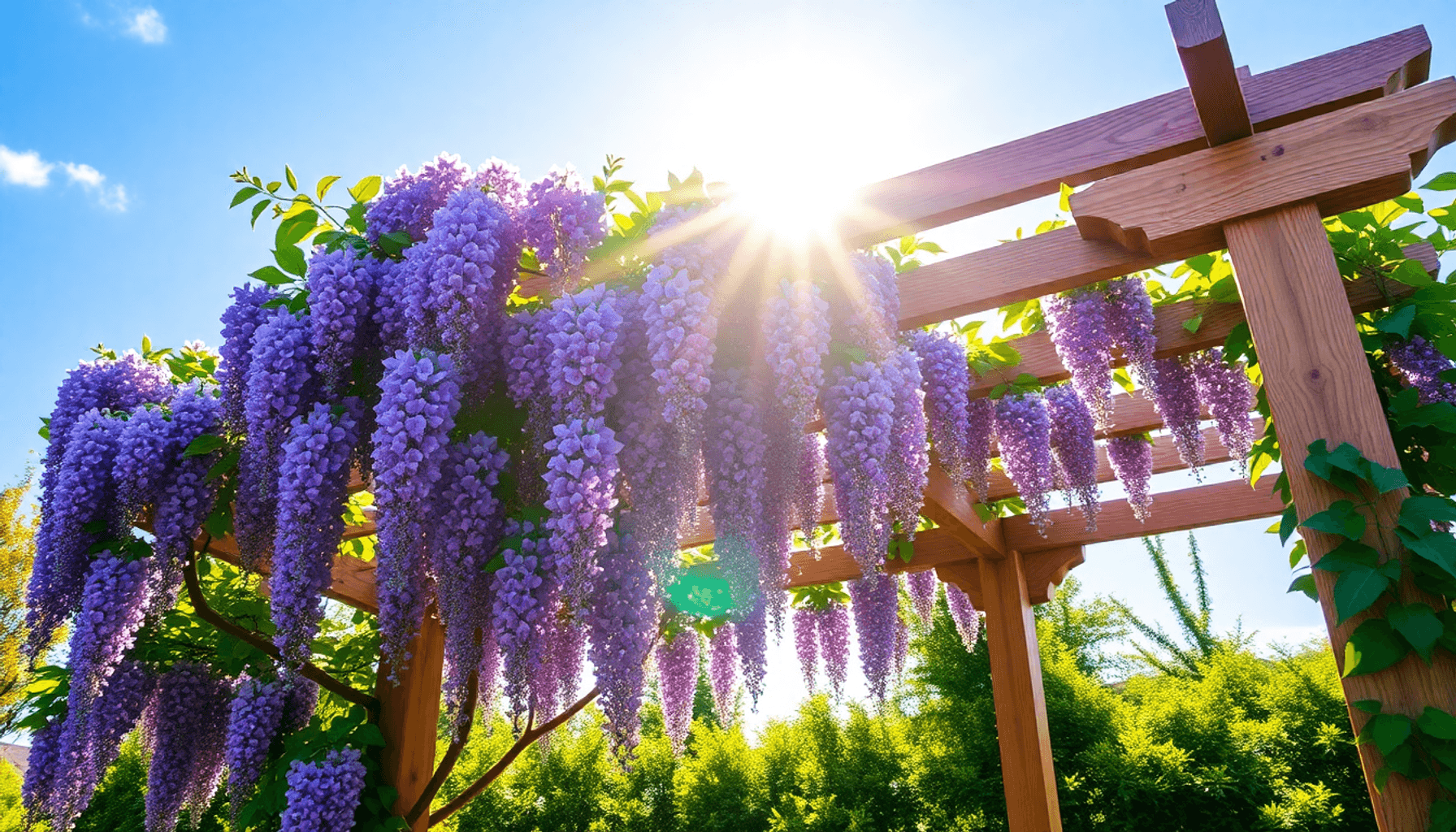

Wisteria is a popular climbing shrub admired for its distinctive fragrant cascading flowers that create stunning displays in gardens and outdoor spaces. Known for its vigorous growth and eye-catching blooms, wisteria adds both beauty and charm to pergolas, walls, fences, and trellises.
If you're interested in how to grow wisteria, this guide covers everything you need to know about successful wisteria cultivation. You will learn about:
- Different wisteria varieties and their unique characteristics
- Ideal locations and planting times to ensure healthy growth
- Effective support methods to manage vigorous vines
- Pruning techniques that promote abundant flowering and control size
- Feeding strategies tailored to encourage blooms
- Common challenges and how to tackle them
- Propagation methods to multiply your plants
- Selecting suitable varieties based on your garden’s needs and protecting buds from frost damage
This comprehensive wisteria growing guide is designed to help you nurture these beautiful climbers with confidence and achieve spectacular results year after year. However, it's important to note that wisteria isn't the only climbing plant that can enhance your garden's aesthetics. For instance, the Bougainvillea is another stunning option known for its vibrant colors and ability to thrive in various conditions.
Understanding Different Wisteria Varieties
Wisteria species bring unique characteristics that influence your choice depending on garden conditions and aesthetic preferences. The main types you will encounter include Chinese wisteria (Wisteria sinensis), Japanese wisteria (Wisteria floribunda), and several American native species such as Wisteria frutescens and Wisteria macrostachya.
Chinese Wisteria (Wisteria sinensis)
- Growth habit: Twines anticlockwise around supports.
- Flower characteristics: Produces fragrant, dense clusters of bluish-purple flowers.
- Bloom timing: Flowers appear before the leaves in spring.
- Additional notes: Vigorous grower, often reaching impressive sizes; requires strong support.
Japanese Wisteria (Wisteria floribunda)
- Growth habit: Twines clockwise, opposite to Chinese wisteria.
- Flower characteristics: Known for the longest flower racemes among wisterias, with colors ranging from white to pink and deep purple.
- Bloom timing: Blooms slightly later than Chinese wisteria, with flowers emerging alongside new foliage.
- Additional notes: Slightly more delicate flower clusters but equally vigorous in growth.
American Native Wisterias
American species offer alternatives better suited for certain climates or smaller spaces.
Wisteria frutescens
- Growth habit: Less aggressive twining compared to Asian species.
- Flower characteristics: Smaller flower clusters with a more subtle fragrance.
- Bloom timing: Blooms later in the season, sometimes extending into summer.
- Additional notes: More tolerant of wet soils and colder temperatures; ideal for gardeners seeking a less invasive option.
Wisteria macrostachya (Kentucky wisteria)
- Growth habit: Similar to W. frutescens but typically forms longer flower clusters.
- Flower characteristics: Fragrant blooms with pale lilac hues.
- Bloom timing: Late spring to early summer bloom period.
- Additional notes: Hardy in USDA zones 5–9; suitable for colder regions where Asian varieties might struggle.
Key Differences in Growth and Flowering
| Species | Twining Direction | Bloom Timing | Flower Length | Fragrance |
| Chinese wisteria | Anticlockwise | Early spring before leaves | Medium clusters | Strong |
| Japanese wisteria | Clockwise | Spring with leaves | Longest racemes | Moderate to strong |
| W. frutescens (American) | Anticlockwise | Late spring to summer | Shorter clusters | Mild |
| W. macrostachya (American) | Anticlockwise | Late spring | Medium-long clusters | Moderate |
Understanding these differences helps you select a variety that matches your garden’s climate, space constraints, and flowering expectations. Choosing between vigorous Asian species and more restrained American natives affects maintenance needs and support structures required.
Choosing the Right Location and Planting Time for Wisteria
Selecting the best location for wisteria is crucial to achieve vigorous growth and abundant flowering. Wisterias thrive in areas that receive full sun exposure, ideally positioned on a south- or west-facing wall or open space. This maximizes sunlight, which directly influences flowering intensity and overall plant health.
Sunlight Requirements for Wisteria
Wisteria plants have specific sunlight needs to thrive and produce beautiful blooms:
- They require at least 6 hours of direct sunlight daily.
- Partial shade can reduce the number and quality of blooms.
- Morning sun with some afternoon shade may be tolerated but is less ideal.
Planting Site Selection
Due to wisteria's vigorous woody stems and twining habit, strong, durable support structures become essential. Here are some options to consider:
- Pergolas: Provide ample overhead space for cascading flowers and strong framework.
- Walls: Especially south- or west-facing brick or stone walls absorb heat, benefiting root development.
- Trellises or fences: Must be reinforced to handle weight; lightweight fences often fail under mature wisteria's load.
Soil should be fertile, well-drained but moisture-retentive. Avoid waterlogged or heavy clay soils without amendment.
Best Time to Plant Wisteria
The ideal planting window spans from October through April. This period allows roots to establish before the growing season begins.
Ground Planting
- Dig a hole twice as wide as the root ball.
- Mix native soil with organic matter such as compost.
- Position the plant with roots spread evenly.
- Water thoroughly after planting.
Container Plants
- Can be planted any time of year, but best during dormant months.
- Ensure regular watering, especially in warm weather.
- Use a high-quality potting mix and good drainage.
Planting during colder months encourages root growth while minimizing transplant shock. Avoid planting in extreme heat or drought conditions as this stresses young plants.
Choosing a site with both adequate sunlight and strong support ensures your wisteria will have the foundation needed for healthy growth and spectacular floral displays.
Supporting Your Wisteria’s Growth with Proper Trellising Techniques
Supporting wisteria growth is essential due to the plant’s vigorous woody stems and rapid climbing habit. Without a strong framework, wisteria can become unruly, heavy, and potentially damage weaker supports like simple fences or trellises not designed for its weight.
Key elements for creating an effective trellis for wisteria include:
- Material choice: Use galvanized steel wires or sturdy metal trellis systems that resist rust and corrosion. These materials provide long-lasting support capable of bearing the substantial weight of mature wisteria vines.
- Structural strength: The framework must be fixed securely to a robust structure such as a brick wall, solid pergola, or timber posts anchored deep into the ground. This prevents sagging or collapse under the weight of dense woody stems and cascading flower clusters.
- Spacing and layout: Arrange wires or trellis panels horizontally at intervals about 12–18 inches apart vertically. This spacing allows you to train and tie young shoots easily while supporting older, thicker branches as they mature.
- Training techniques: When how to grow wisteria includes training new growth along these supports early in the season, it encourages better flowering and controls size. Tie shoots loosely with soft garden ties or twine to avoid damaging tender stems.
- Maintenance: Inspect trellis connections regularly, tightening wires if needed. Replace any worn or damaged components before the growing season intensifies.
Using proper trellising techniques maximizes your wisteria’s potential for healthy growth and abundant flowering. The right support system accommodates the plant’s natural tendencies while providing a visually appealing framework for its spectacular floral display.
Pruning Techniques for Healthy Growth, Flowering, and Size Management in Wisteria Plants
Pruning wisteria correctly is essential to maintain its health, promote abundant flowering, and control its vigorous growth. Understanding when and how to prune can make the difference between a tangled mess and a spectacular floral display.
Twice Yearly Pruning Schedule
August Pruning (Training New Growth)
Focus on cutting back the long, whippy shoots that have grown during the summer to about 6 inches (15 cm). This step trains the plant by controlling excessive growth and encouraging lateral branches where flowers will form next season. It helps keep the shape tidy and prevents the plant from becoming overgrown.
February Pruning (Cutting Back Shoots to Short Spurs)
In late winter, before new growth begins, cut back these lateral branches further to 2 or 3 buds from their base. This severe pruning stimulates flower production because wisterias bloom on short spurs formed on older wood. Removing excess shoots allows more energy to be directed toward flower buds rather than excessive foliage.
Why Prune Wisteria?
- Encourages more prolific flowering by focusing energy on flower bud development.
- Controls size; wisterias can become very large with woody stems resembling small trees.
- Prevents the plant from overwhelming nearby structures or spilling into unwanted areas.
- Maintains an attractive shape, especially important if growing on pergolas or walls.
Size Management and Structural Considerations
Wisterias are notorious for their vigorous growth and strong woody stems. Left unchecked, they can reach considerable sizes — sometimes developing trunks several inches thick. These robust stems help support heavy floral clusters but also mean:
- Unsupported fences are not ideal: The weight and strength of mature wisteria can damage or pull down weak fencing. Stronger supports like pergolas, arbors, or reinforced walls are recommended.
- Regular pruning prevents the plant from becoming tree-like and unmanageable.
- Proper pruning ensures that your wisteria remains a climbing shrub rather than turning into an uncontrollable woody mass.
Practical Tips for Pruning Wisteria Correctly
- Use sharp garden secateurs or loppers for clean cuts to avoid damaging the plant.
- Remove any dead or diseased wood during pruning sessions.
- Always prune above a bud facing outward to encourage healthy branch direction.
- Keep tools disinfected especially if you notice signs of fungal infections.
Mastering how to prune wisteria correctly means you will enjoy vibrant blooms year after year while keeping this vigorous climber in check. Regular, timely pruning supports both its stunning floral display and manageable size.
Feeding, Fertilizing, and Managing Common Problems in Wisteria Cultivation
Proper feeding is essential to maximize the flowering potential of your wisteria. When fertilizing wisteria, focus on nutrients that support blooming rather than just foliage growth. The best fertilizer for wisteria is one high in potassium (potash), as potassium promotes strong flower development and enhances overall plant health.
Why Potassium-Rich Fertilizers Matter
Potassium encourages robust flower buds and vibrant blooms. It helps plants withstand stress from drought or disease. A balanced NPK formula with higher potassium (for example, 5-10-15) works well. Avoid excessive nitrogen fertilizers; too much nitrogen leads to lush green growth but fewer flowers.
Apply fertilizer in early spring as new growth begins and again after the first flush of flowers to support continued blooming. Organic options like wood ash or seaweed meal also provide potassium naturally.
Common Problems: Delayed Flowering and How to Address It
Delayed flowering is a frequent frustration among gardeners growing wisteria. Two main causes stand out:
- Youth of the Plant: Young wisteria plants often take several years to mature enough to bloom. Grafted plants may flower within 3–4 years, but seed-grown ones can take up to 20 years.
- Improper Pruning: Incorrect pruning reduces flower production because wisterias bloom on new short spurs formed from last year’s growth. Cutting too much or at the wrong time disrupts this cycle.
Additional factors contributing to poor flowering include:
- Insufficient sunlight; wisterias need full sun.
- Over-fertilization with nitrogen-rich feeds.
- Poor soil drainage leading to root stress.
Managing Other Common Issues
Wisterias are generally hardy but can face occasional problems:
- Powdery mildew appears as white powder on leaves; treat with fungicides if severe.
- Scale insects and aphids sap plant vigor; control with insecticidal soap or horticultural oil.
- Root diseases such as honey fungus require careful site selection and removing infected material promptly.
Keeping your wisteria healthy involves regular feeding with the right nutrients, timely pruning, monitoring for pests and diseases, and ensuring good growing conditions. This approach supports vigorous growth and abundant floral displays year after year.
Propagating Wisterias: Exploring Different Methods Explained in Detail
Propagating wisteria allows you to expand your garden or share this stunning climber with others. One of the most reliable and accessible techniques is softwood cuttings propagation. This method involves taking young, flexible shoots from a healthy parent plant during mid-spring, when the new growth is tender but starting to firm up.
How to Take Softwood Cuttings
- Select non-flowering shoots about 4 to 6 inches long.
- Cut just below a leaf node using clean, sharp pruners.
- Remove the lower leaves, leaving only two or three at the top to reduce moisture loss.
- Optional: Dip the base of the cutting in rooting hormone powder to encourage root development.
Preparing and Planting Cuttings
- Use a well-draining propagation medium such as a mix of perlite and peat moss or coarse sand.
- Insert the cuttings about 1 to 2 inches deep into the medium.
- Maintain high humidity around the cuttings by covering them with a clear plastic bag or placing them in a propagator.
- Keep the medium moist but not waterlogged, and place cuttings in bright, indirect light.
Rooting Time and Aftercare
Roots typically develop within 4 to 6 weeks. Once established, gradually acclimatize young plants to outdoor conditions by removing humidity covers during warmer parts of the day. When roots are strong enough, transplant into individual pots or directly into your garden.
Alternative Propagation Methods
- Layering: Bending a low-growing stem to the ground and covering part of it with soil until roots form. This method is slower but has a high success rate.
- Grafting: Joining a wisteria scion onto rootstock produces faster flowering plants but requires more skill and experience.
Using softwood cuttings for propagating wisteria lets you maintain desirable traits of your original plant. It’s an effective way to produce multiple plants that will eventually fill your garden with those iconic cascading blooms.
Recommended Varieties Based on Garden Needs with Protection Tips Against Frost Damage in Wisterias' Buds During Winter Care Periods
Choosing the best varieties of wisteria depends largely on your garden space and aesthetic preferences. Here are some popular options tailored to different needs:
-
Wisteria sinensis 'Alba'
White flowers create a classic, elegant look. Ideal for gardens where you want a lighter floral display. It grows vigorously and produces blooms before leaves appear. -
Wisteria floribunda 'Multijuga'
Known for its exceptionally long flower clusters—some of the longest among wisterias. Perfect if you want dramatic, cascading floral displays. -
Wisteria floribunda 'Kuchi-beni'
Offers mauve-pink flowers with a softer color palette. Suitable for gardeners who prefer something less traditional than purple or white. -
Wisteria frutescens 'Longwood Purple'
Less vigorous and produces shorter racemes. Good choice if space is limited or you want to grow wisteria in containers.
Selecting the right variety influences not just appearance but also growth habit and maintenance requirements. Consider how much room you have, whether your support structure can handle vigorous growth, and the flower colors that appeal to you.
Protecting Early Flower Buds from Frost
Spring blooms depend heavily on the health of flower buds formed during the previous growing season. These buds are vulnerable to damage from late frosts, which can drastically reduce flowering:
“Safeguarding early flower buds is crucial to ensure a vibrant spring display.”
Key protection strategies include:
-
Covering buds during cold snaps: Use horticultural fleece or frost cloths overnight when frost is predicted. Remove coverings during the day to allow sunlight and air circulation.
-
Site selection: Plant wisteria in locations less prone to frost pockets, such as sheltered south-facing walls.
-
Mulching: Apply organic mulch around the base in late autumn to moderate soil temperature fluctuations.
Damage from frost results in fewer or no flowers despite healthy foliage growth, so proactive winter care pays off in bloom success.
Taking these steps helps you get the most from your wisteria plants while avoiding common pitfalls related to climate challenges.
If you keep these tips in mind along with choosing a suitable variety, you'll be well on your way to growing stunning wisterias that enhance your garden year after year.
FAQs (Frequently Asked Questions)
What are the main species of wisteria and how do they differ?
The main species of wisteria include Chinese wisteria (Wisteria sinensis), Japanese wisteria (Wisteria floribunda), and American native species such as W. frutescens and W. macrostachya. They differ in growth habits, with some twining clockwise and others anticlockwise, as well as in flower characteristics and bloom timing.
What is the best location and time to plant wisteria for optimal growth?
Wisteria thrives best in full sun exposure, ideally on south or west-facing sites, with sturdy support structures like pergolas or walls. The ideal planting period is between October and April, suitable for both ground and container planting.
How should I support my wisteria's growth effectively?
Due to wisteria's vigorous woody stems, strong support is essential. Using galvanized wires or trellis systems provides durable support that helps the climbing shrub grow healthily and maintain its structure.
What pruning techniques encourage healthy growth and abundant flowering in wisteria?
Pruning twice yearly—once in August to train new growth and again in February to cut back shoots to short spurs—promotes blooming. Regular pruning also manages size since mature wisterias can develop strong woody stems resembling small trees.
Which fertilizers are best for promoting flowering in wisteria plants?
Potassium-rich (high potash) fertilizers are recommended to enhance flower development in climbing shrubs like wisterias. Proper feeding supports vibrant blooms and overall plant health.
How can I protect my wisteria’s flower buds from frost damage during winter?
Protecting early flower buds from late frosts is crucial to ensure spring blooms. This can be done by providing winter care measures such as covering buds during cold snaps or selecting frost-resistant varieties suited to your garden's climate.