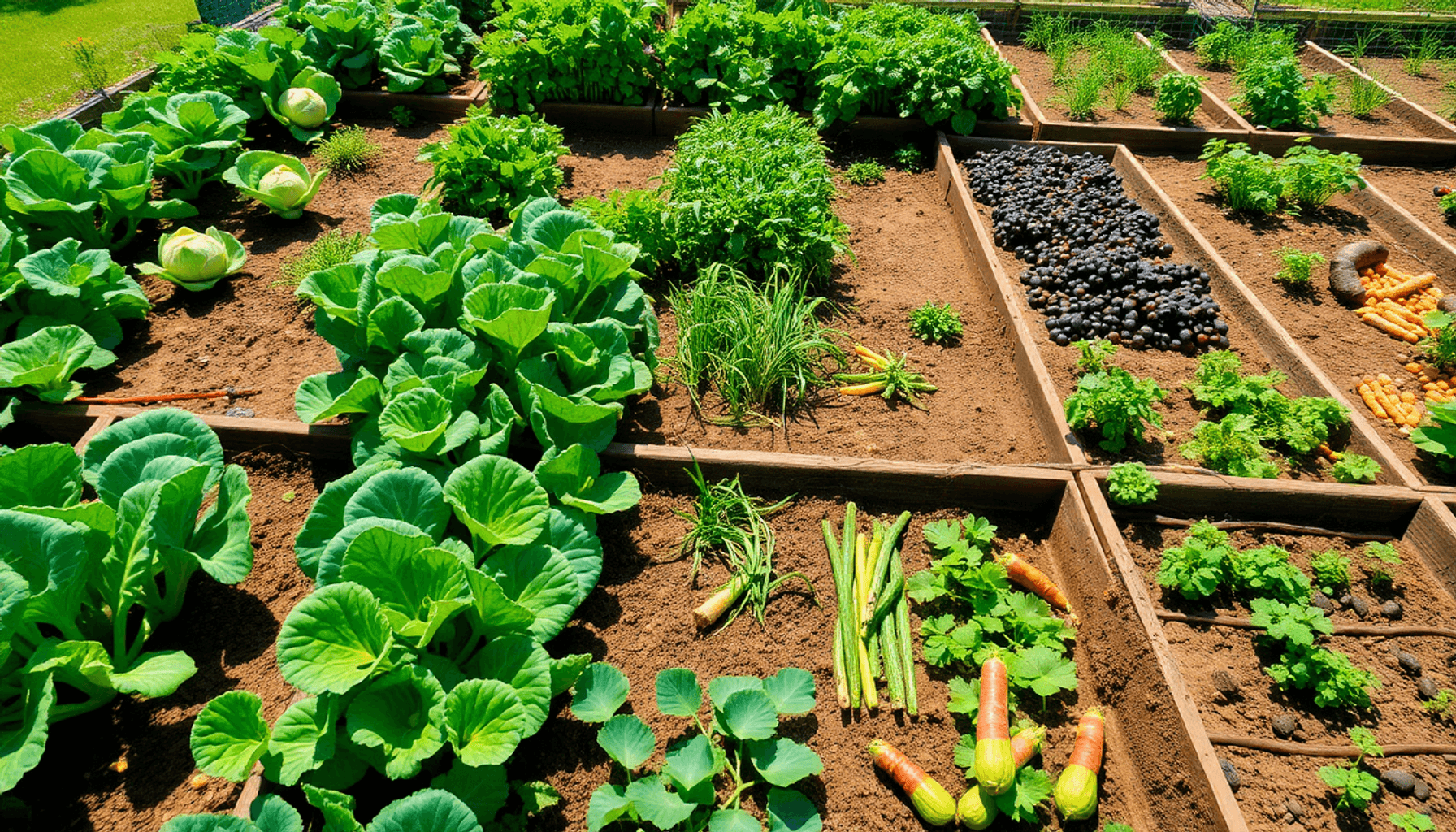

Crop rotation is a tried-and-true method that is essential for successful vegetable gardening throughout the UK. By regularly changing the types of crops grown in specific garden beds each year, you can protect and improve your soil instead of depleting it. This approach promotes long-term soil health, which UK gardeners depend on for abundant harvests.
In this guide, we will explore two popular crop rotation systems designed specifically for home vegetable gardens: the 3 bed and 4 bed systems. These methods divide your garden into separate sections or beds where different plant families are rotated on an annual basis. We will explain how these layouts function, which crops should be grouped together, and how rotating them from year to year keeps your garden thriving.
Implementing crop rotation offers numerous benefits for your garden:
- Maintains nutrient balance by preventing excessive use of soil resources
- Reduces the likelihood of pests and diseases targeting specific vegetable families
- Improves soil structure and fertility naturally
- Helps control weeds through strategic crop placement
Whether you have a small allotment or a larger vegetable patch, understanding and applying these systems will enable you to cultivate healthier plants with less effort. This guide provides practical steps to enhance your garden's resilience while maximizing your growing space.
Understanding Crop Rotation
Crop rotation is a fundamental gardening technique that involves growing different types of vegetables in a planned sequence on the same plot of land. The core idea behind this practice is to avoid planting the same vegetable family repeatedly in the same soil, which helps maintain soil fertility and reduces the risk of pests and diseases.
Historically, crop rotation has been used by gardeners and farmers for centuries as a natural way to sustain productive soil without relying heavily on artificial fertilizers or pesticides. By rotating crops, you allow the soil to recover and rebalance its nutrients, since different vegetable families draw upon or replenish specific minerals differently.
Dividing Your Garden into Beds for Rotation
To implement crop rotation effectively, gardeners often divide their vegetable patch into separate beds. These beds act as distinct sections where specific groups of crops are grown each season before moving to another bed in subsequent years. This structured approach makes it easy to follow a rotation schedule and track what was planted where.
For example, in a simple three-bed system, you would assign each bed to a particular group of vegetables—such as brassicas in one bed, legumes in another, and root vegetables combined with onions in the third. Each year, these groups shift to a different bed according to the rotation plan. This prevents nutrient depletion because no single bed is overworked with the same type of crop repeatedly.
Why Avoid Planting the Same Crop Family Repeatedly?
Vegetables belong to different families based on their botanical characteristics. These families share similar nutrient needs and are susceptible to many of the same pests and diseases. When you plant members of the same family repeatedly in one spot, several problems arise:
- Nutrient Imbalance: Certain crops may heavily deplete specific nutrients from the soil, leading to poor growth over time.
- Pest Build-up: Soil-dwelling pests that target a particular crop family multiply if their preferred host is always available nearby.
- Disease Risk: Diseases like clubroot (affecting brassicas) or white rot (affecting onions) can accumulate in soil when their host plants return year after year.
Rotation breaks this cycle by interrupting pest lifecycles and reducing disease pressure while allowing soil nutrients time to recover.
“Crop rotation isn’t just about moving plants around; it’s about understanding vegetable families and balancing their needs with soil health.”
This approach ensures that your garden remains fertile and productive season after season without excessive chemical inputs. Keeping track of vegetable families and planning which crop goes where can seem complex at first but becomes intuitive once you see how each group influences soil conditions differently.
Key Crop Groups for Rotation in the UK
Crop rotation depends on grouping vegetables with similar nutrient needs and pest vulnerabilities. In UK gardens, five main crop groups form the foundation of effective rotation plans.
1. Brassicas
Brassicas are heavy feeders requiring rich soil. They share susceptibility to clubroot disease, making rotation essential to prevent soil-borne problems.
Common brassicas grown in the UK include:
- Brussels sprouts
- Cabbage
- Cauliflower
- Kale
- Kohl-rabi
- Oriental greens
- Radish
- Swede
- Turnips
These crops thrive in cooler seasons and benefit from following nitrogen-fixing legumes in a rotation cycle.
2. Legumes
Legumes improve soil fertility by fixing atmospheric nitrogen through root nodules. This natural nutrient boost supports subsequent crops.
Typical legumes for UK gardens:
- Peas (garden and sugar snap)
- Broad beans
- French beans
- Runner beans
Including legumes in your rotation helps reduce dependence on synthetic fertilisers and supports overall soil health.
3. Onions
Onion family crops are moderate feeders but vulnerable to white rot and onion fly infestations. Rotating them away from their own family limits disease build-up.
Key onion group vegetables:
- Onion (red, white, brown)
- Garlic
- Shallot
- Leek
These bulbs prefer well-drained soil and do well following crops that don't harbour their pathogens.
4. Potato Family Crops
This group includes potatoes and related nightshades known for their high nutrient demands and susceptibility to blight and other diseases. Crop rotation disrupts pest cycles effectively.
Potato family examples:
- Potato
- Tomato (including aubergine, pepper—often grown under cover but part of this group)
These crops can also help suppress weeds due to their dense foliage when planted strategically within a rotation.
5. Roots
Root vegetables demand balanced soil conditions with good structure for healthy tuber development. They can be vulnerable to pests like carrot root fly or other soil-borne diseases if planted repeatedly in the same spot.
Common root vegetables suited to the UK climate include:
- Beetroot
- Carrot
- Celeriac
- Celery
- Fennel
- Parsley
- Parsnip
Incorporating roots into your crop rotation maintains diverse nutrient uptake patterns and supports soil aeration.
Understanding these distinct groups allows you to design a thoughtful rotation plan that protects soil fertility, controls pests, and maximises vegetable yields throughout your garden. Each group’s unique characteristics dictate how they fit together within three or four-bed systems, shaping effective yearly sequences for sustainable gardening success.
Benefits of Crop Rotation for UK Gardeners
Crop rotation offers significant soil fertility benefits that are essential for maintaining productive vegetable gardens in the UK. Different crop groups extract and replenish varying nutrients in the soil. Rotating crops ensures that no single nutrient is excessively depleted, helping to maintain a balanced soil profile. For example:
- Legumes (peas, beans) fix atmospheric nitrogen into the soil, enriching fertility naturally.
- Brassicas (cabbage, kale) tend to consume higher levels of nitrogen and other minerals.
- Root vegetables (carrots, beetroot) access nutrients deeper down, aiding overall soil structure.
This nutrient cycling prevents soil exhaustion and reduces the need for artificial fertilizers.
Pest Control
Pest control gardening UK relies heavily on crop rotation to disrupt pest life cycles. Many pests specialize in certain plant families and will build up if their preferred host is planted continuously in the same spot. Rotating crops breaks these cycles by removing their food source temporarily. Examples include:
- Clubroot fungus affecting brassicas can be managed by avoiding planting brassicas in the same bed year after year.
- Potato cyst nematodes thrive where potatoes or related crops are grown repeatedly but decline when rotated out.
Weed Suppression
Natural weed suppression is another benefit achieved through strategic crop placement within rotation systems. Crops like potatoes with dense foliage create heavy shade that limits weed germination and growth. Including such crops in rotation beds can reduce the weed seed bank over time without relying solely on manual or chemical methods.
Disease Prevention
Disease prevention crops form an integral part of managing garden health through rotation. Many diseases are crop-family specific, meaning they persist in soil where susceptible plants grow repeatedly. By rotating through different families, you reduce pathogen build-up significantly.
Key takeaways for pest and disease reduction include:
- Avoiding repeated planting of brassicas prevents clubroot.
- Rotating onions and related alliums helps prevent white rot buildup.
- Cycling legumes reduces risk of root diseases common in bean and pea crops.
The Crop Rotation Guide for UK Gardeners: 3 and 4 Bed Systems leverages these principles to design simple yet effective rotations that balance nutrient demands, suppress weeds naturally, and minimize pests and diseases linked to vegetable families common in UK gardens.
Moreover, these sustainable gardening practices not only enhance plant health and yield but also contribute positively to the local ecosystem. For instance, maintaining a diverse range of crops can support various species including bats which play a crucial role in our food economy by controlling insect populations and pollinating plants.
The Three-Bed Crop Rotation System Explained
The three-bed system gardening method is a straightforward and efficient way to manage vegetable bed rotation in the UK. It involves dividing your garden into three distinct beds, each dedicated to a specific group of crops each year. This system rotates crop families through these beds over a three-year cycle, reducing soil depletion and breaking pest and disease cycles.
Layout and Yearly Rotation Cycle
You start by assigning three beds, each home to a different crop group: Bed 1 holds potatoes and related crops, Bed 2 holds legumes, onions, and roots, and Bed 3 holds brassicas. Each year, the crops shift to the next bed in sequence, ensuring no plant family returns to the same soil too soon.
Year-by-Year Crop Planting Pattern
Year One
- Bed 1: Potatoes
- Bed 2: Legumes (peas, beans), onions (onions, garlic), and root vegetables (carrots, beetroot)
- Bed 3: Brassicas (cabbage, kale, cauliflower)
Year Two
- Bed 1: Legumes, onions & roots
- Bed 2: Brassicas
- Bed 3: Potatoes
Year Three
- Bed 1: Brassicas
- Bed 2: Potatoes
- Bed 3: Legumes, onions & roots
This pattern repeats every three years, maintaining soil health while providing variety in your vegetable production.
Advantages for Small to Medium-Sized Gardens
- Simplicity: The three-bed system is easy to understand and manage without complicated planning tools.
- Space efficiency: Ideal for gardens with limited space where dividing into more than three beds isn't practical.
- Balanced nutrient use: Rotating nitrogen-fixing legumes with heavy feeders like brassicas and potatoes helps maintain fertility.
- Pest and disease control: Regularly moving crop families disrupts pest life cycles specific to certain vegetables.
- Flexibility: Allows inclusion of flexible crops such as salads or courgettes in any bed without disrupting the main rotation.
This system serves as an excellent foundation for UK gardeners aiming for sustainable vegetable growing with manageable effort. It offers a clear structure that supports healthy soil and productive harvests year after year.
The Four-Bed Crop Rotation System Explained
The four-bed system gardening method extends traditional crop rotation by dividing your vegetable garden into four distinct beds. This approach allows you to include a greater variety of crops, particularly by separating legumes and onions/roots into their own dedicated beds. It provides a more detailed structure for managing soil nutrients and pest control over a longer period.
Structure of the Four-Bed System
By allocating specific beds for legumes and onions/roots separately, you can:
- Maximise nitrogen fixation benefits from legumes by giving them a full bed.
- Reduce disease pressure on sensitive root crops by isolating them.
- Allow for more varied planting options and extended crop diversity.
This system fits well with extended crop rotation UK practices, offering more flexibility in planning your vegetable garden.
Four-Year Rotation Schedule
Each year, the four beds host different crop groups according to this cycle:
| Year | Bed 1 | Bed 2 | Bed 3 | Bed 4 |
| 1 | Legumes | Brassicas | Potatoes | Onions & Roots |
| 2 | Brassicas | Potatoes | Onions & Roots | Legumes |
| 3 | Potatoes | Onions & Roots | Legumes | Brassicas |
| 4 | Onions & Roots | Legumes | Brassicas | Potatoes |
- Bed 1: Starts with legumes such as peas and broad beans, which enrich the soil with nitrogen.
- Bed 2: Hosts brassicas like cabbage and cauliflower, benefiting from the nitrogen fixed previously.
- Bed 3: Allocated to potatoes, which help suppress weeds due to their dense foliage.
- Bed 4: Reserved for onions and root vegetables including carrots, parsnips, and leeks.
Each subsequent year, crops rotate clockwise through the beds. This cycle prevents plant families from occupying the same soil consecutively, reducing disease build-up and nutrient depletion.
Who Benefits from the Four-Bed System?
The four-bed system is ideal if you:
- Manage a larger garden that can accommodate four separate growing areas.
- Grow a higher quantity or variety of legumes and onions/roots than typical small plots allow.
- Want to implement a more detailed rotation plan that further improves soil health over multiple years.
This setup suits gardeners aiming for diversification in their vegetable garden planning while maintaining precise control over soil fertility and pest management. The separation of key crop groups into individual beds makes it easier to tailor amendments and care specific to each group’s needs.
Adopting this system means you can take full advantage of natural nutrient cycles, especially the nitrogen-fixing power of legumes, while keeping common pests and diseases at bay through thoughtful spatial planning.
Flexible Crops and Exceptions in Crop Rotation
Certain crops in UK gardens offer more flexibility when it comes to crop rotation. These include courgettes, salad crops (lettuce, rocket, spinach), sweetcorn, and cucumbers. Unlike the main crop groups that require strict rotation due to their nutrient demands or susceptibility to pests, these flexible crops can be grown in various beds throughout the garden. However, they still require mindful placement to maintain soil health and avoid disease build-up.
Why Are These Crops Considered Flexible?
Courgettes are vigorous growers with high nutrient uptake. They can thrive in different locations year to year, but repeated planting in the same spot risks soil depletion and increased pest pressure. Cucumbers behave similarly, growing quickly and adapting well across different parts of a rotation plan, provided drainage is reliable.
Salad crops such as lettuce, rocket, and spinach have shallow roots and short growing cycles, making them easy to place almost anywhere in the garden. Despite this, avoid returning them to the same bed each season. Sweetcorn is a heavy feeder and benefits most from rotating with legumes or lighter feeders to prevent soil exhaustion.
Integrating Flexible Crops into Your Rotation Plan
Avoid Yearly Repetition in the Same Bed
Even though flexible crops can be planted almost anywhere, avoid growing them in the exact same bed every year. Rotating their position helps prevent soil fatigue and reduces disease risk.
Use Them as Fillers or Intercrops
Salad crops and courgettes work well as gap-fillers alongside main crops. Lettuce sown between rows of brassicas maximises space and suppresses weeds. Courgettes can be added at the edge of beds after early harvests from root crops.
Alternate Heavy Feeders with Legumes
Sweetcorn and courgettes are nutrient-demanding. Follow these with a legume bed of peas or beans, which fix nitrogen in the soil and help restore fertility naturally.
Consider a No-Dig Approach
Flexible crops suit no-dig methods well. They require minimal soil disturbance and can be moved across beds annually without complex planning.
Match Crops to Drainage Conditions
Cucumbers and courgettes need consistent moisture but dislike waterlogged conditions. Place them where drainage is reliable and irrigation is accessible.
Courgette Planting Tips for Rotation
- Sow seeds indoors early for a longer growing season, or direct sow once the soil has warmed.
- Plant in well-prepared beds enriched with compost, ideally after legumes or onions and roots have been harvested.
- Space plants generously to promote air circulation and reduce mildew risk.
- Avoid planting near potatoes, as both share some common pests including blight.
Managing Salad Crops Within Crop Rotation
- Use successive sowing for continuous harvests throughout the season.
- Alternate fast-growing salad greens with slower-maturing varieties to balance workload.
- Sow salad seeds after heavy feeders have been removed to take advantage of residual nutrients without stressing the soil.
This approach to growing flexible crops ensures maximum productivity while respecting the principles of crop rotation outlined in the Crop Rotation Guide for UK Gardeners: 3 and 4 Bed Systems. The key lies in balancing flexibility with careful planning to sustain long-term soil health.
Crop Rotation in Organic and No-Dig Gardening Approaches
Crop rotation plays a vital role in organic gardening UK and no-dig garden crop rotation systems. These methods heavily depend on natural processes to uphold soil health and fertility, steering clear of synthetic chemicals or deep disruption of soil structure.
Importance for Organic and No-Dig Gardeners
Soil health is central to organic and no-dig practices. Regularly rotating crops prevents the buildup of pests, diseases, and nutrient imbalances without chemical intervention. In a no-dig garden, where the soil surface is left largely undisturbed to protect beneficial organisms and retain moisture, crop rotation helps distribute nutrient demands evenly. This prevents depletion in any one section of the bed. Crop rotation reduces the risk of disease carryover between seasons. Since organic gardeners avoid synthetic pesticides, managing plant families with different susceptibilities becomes essential.
Maintaining Healthy Soil Ecosystems Naturally
Rotating legumes into beds enriches soil nitrogen naturally through their association with nitrogen-fixing bacteria. This supports subsequent crops that require high nitrogen levels without artificial fertilisers. Root structures of different crops vary in depth and nutrient uptake patterns. Alternating deep-rooted crops like parsnips or carrots with shallow-rooted brassicas or onions encourages balanced nutrient extraction. Diverse rotations foster a vibrant soil microbiome by supplying varied root exudates, which feed beneficial fungi and bacteria critical to soil structure and plant health.
"In no-dig gardens, minimal disturbance combined with diverse rotations creates an environment where earthworms and microbes thrive, improving aeration and organic matter breakdown."
Complementary Organic Practices
Several organic gardening techniques work hand-in-hand with crop rotation to enhance sustainability:
- Green manures and cover crops: Planted during off-seasons, these help fix nitrogen, prevent erosion, and add organic matter. They fit naturally into rotation schedules.
- Composting: Applying well-made compost replenishes nutrients removed by crops and supports beneficial microorganisms.
- Mulching: Organic mulches conserve moisture, suppress weeds (complementing crop-based weed control), and slowly release nutrients.
- Biological pest control: Using companion planting or attracting predatory insects complements rotational strategies that break pest life cycles.
Adopting a considered crop rotation system within organic or no-dig gardening frameworks maximizes these benefits. The synergy between minimal soil disturbance and planned crop diversity sustains a resilient garden ecosystem tuned to the UK’s climate and growing conditions.
Tools and Resources for Planning Your Crop Rotation
Planning an effective crop rotation schedule can be simplified using various garden planning tools online designed specifically for UK gardeners. These digital resources help you visualize your garden layout, track crop groups, and ensure rotations are correctly spaced over multiple years.
Online Crop Rotation Planners for UK Gardens
Here are some online crop rotation planners that can help UK gardeners:
- Garden Planner by GrowVeg: This user-friendly tool allows you to design your vegetable garden beds digitally, drag-and-drop crops into place, and automatically suggests rotation plans. It includes a database tailored to UK climate conditions, making it easier to plan a three or four-year cycle without repeating crop families in the same bed.
- Smart Gardener: Although based primarily in the US, Smart Gardener offers customizable garden mapping features that work well for UK users. Its crop rotation module helps schedule different vegetable families across beds, with reminders and tips on maintaining soil health.
- Rototiller Crop Rotation Planner (Mobile Apps): Several mobile apps like Rototiller focus on crop rotation by providing easy-to-use interfaces where you input your garden size and crop groups. They generate tailored plans considering your local environment, which is crucial for successful vegetable growing in the UK’s variable weather.
Features to Look For in a Crop Rotation Planner UK
When selecting a planner, consider these essential features:
- Local Climate Adaptation: The planner should account for the UK's seasonal variations and typical pests/diseases.
- Bed-Based Layouts: Ability to divide your garden into three or four beds, mapping crops accordingly.
- Crop Family Grouping: Automatic grouping of vegetables into brassicas, legumes, roots, onions, and potato family.
- Multi-Year Scheduling: Supports at least a three to four-year rotation cycle with clear visual timelines.
- Flexibility for Exceptions: Options to include flexible crops like courgettes or salads without disrupting the main rotation.
Additional Resources for Vegetable Garden Mapping
Besides dedicated planners, some gardeners use more general garden design software or spreadsheets adapted for crop rotation:
- Microsoft Excel or Google Sheets Templates: Customizable templates allow you to create grids representing beds and years. Colour-coding crops by family helps avoid planting conflicts. Many templates are available free online with instructions tailored to UK gardening.
- Online Community Forums & Blogs: Websites such as Gardeners’ World or RHS provide downloadable rotation charts and interactive forums where you can ask experienced gardeners about best practices and local adaptations.
Using these tools will bring structure and clarity to your crop planning process. They reduce guesswork while helping maintain soil health through systematic rotations tailored specifically for the UK's unique growing conditions.
Final Tips for Successful Crop Rotation
Implementing a structured crop rotation system in your UK garden brings tangible benefits. Use these successful crop rotation tips UK gardeners rely on to enhance vegetable garden productivity:
- Plan ahead: Map out your 3 or 4 bed rotation before planting. Keep a journal or digital record of what crops go where each year.
- Stick to crop families: Avoid planting the same family in the same bed consecutively to reduce disease and nutrient depletion.
- Use cover crops: Between main crops, sow green manures like clover or mustard to improve soil fertility and structure.
- Amend soil as needed: Even with rotation, top up beds annually with well-rotted compost or organic matter to maintain nutrients.
- Practice good hygiene: Remove plant debris promptly to minimise pest and disease carryover.
- Stay flexible: Some crops can be exceptions but avoid repeatedly planting them in the same spots to keep soil balanced.
- Observe and adapt: Monitor your garden’s health yearly. Adjust your rotation plan if certain pests or diseases persist.
Adopting this traditional practice enriches soil life, curbs pests naturally, and sustains high yields season after season. Many UK gardeners find that once they commit to a system like those in this Crop Rotation Guide for UK Gardeners: 3 and 4 Bed Systems, their vegetable garden productivity improves noticeably.
Your commitment today plants the seed for healthier, more productive gardens tomorrow.
FAQs (Frequently Asked Questions)
What is crop rotation and why is it important for UK gardeners?
Crop rotation is the practice of dividing your garden into beds and rotating different vegetable families through these beds each year to avoid planting the same crops repeatedly in the same soil. For UK gardeners, this method is crucial as it maintains soil fertility, reduces pests and diseases, and promotes healthier vegetable growth.
What are the main crop groups used in UK crop rotation systems?
The key crop groups for rotation in the UK include Brassicas (such as cabbage and broccoli), Legumes (like peas and beans), Onions, Potato family crops, and Root vegetables. Rotating these groups helps balance soil nutrients and prevents disease build-up specific to each family.
How does a three-bed crop rotation system work for UK vegetable gardens?
In a three-bed system, the garden is divided into three separate beds with a yearly rotation cycle where each bed grows a different crop group annually. Over three years, crops rotate through all beds, which is ideal for small to medium-sized UK gardens to maintain soil health and productivity.
What are the benefits of adopting a four-bed crop rotation system in larger UK gardens?
The four-bed system extends the rotation cycle to four years by including more legumes and an additional bed for onions or root vegetables. This system benefits larger gardens or those growing a wider variety of crops by improving nutrient management and further reducing pests and diseases.
Can flexible crops like courgettes or salad greens be included in crop rotations?
Yes, flexible crops such as courgettes, salads, sweetcorn, and cucumbers can be grown anywhere but should not be planted repeatedly in the same spot every year. Integrating them thoughtfully within your rotation plan helps maintain soil health without disrupting established nutrient cycles.
How does crop rotation support organic and no-dig gardening practices in the UK?
Crop rotation is especially important for organic or no-dig gardeners as it naturally maintains healthy soil ecosystems without relying on synthetic inputs. It complements sustainable practices by enhancing soil fertility, suppressing weeds naturally, and reducing pest and disease pressure in line with organic principles.