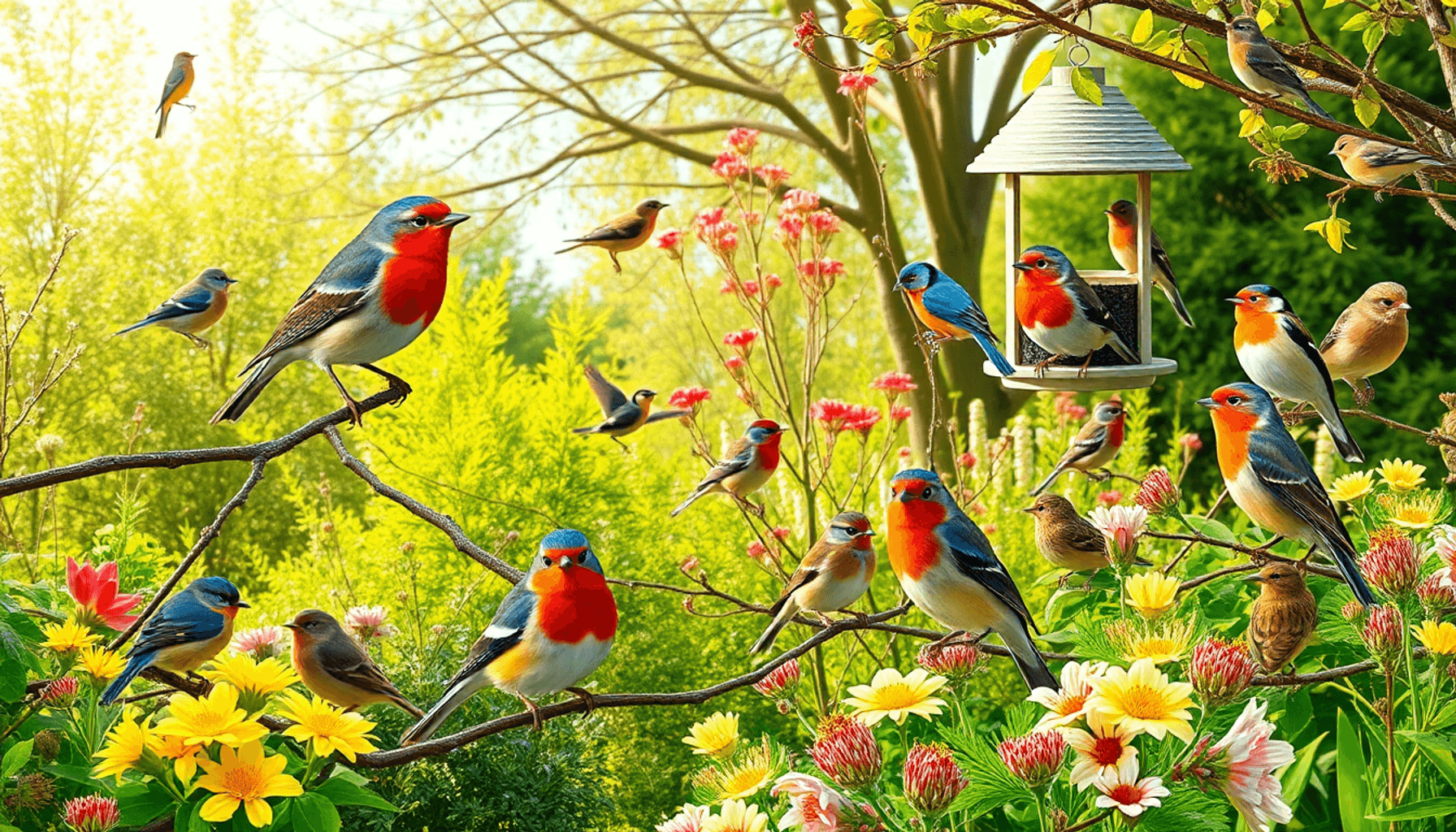

British gardens are important habitats for many species of birds. These green spaces provide food, shelter, and water, making them ideal places for birds to thrive year-round. Gardens are not just beautiful; they also play a crucial role in supporting local wildlife and maintaining healthy bird populations.
UK garden birds come in various colors, behaviors, and calls. Some common visitors include the curious Robin with its bright red chest, the vibrant Blue Tit, and the striking Goldfinch. Gardens also attract less obvious species like the shy Dunnock or the bold Magpie, each contributing to the unique charm of British garden wildlife.
This comprehensive UK Garden Birds: A Complete Identification Guide aims to help you:
- Recognize common and notable bird species found in UK gardens
- Understand key identification features including plumage, size, behavior, and calls
- Appreciate seasonal variations in bird presence and activity
- Enhance your enjoyment and knowledge of garden birdwatching
Whether you're new to birdwatching or have been enjoying it for years, this guide offers practical information to help you identify the various birds that visit British gardens. Using this guide will deepen your connection to nature right outside your home.
To make your garden more inviting for these feathered friends, you might want to explore some bird-friendly gardening tips which can enhance your gardening experience while also supporting local wildlife.
Understanding UK Garden Bird Habitats
Creating a bird-friendly garden means offering essential resources that support bird life year-round. British gardens serve as vital habitats by providing three key elements for birds: food, shelter, and water.
Food Sources Throughout the Seasons
Birds rely heavily on the availability of food in your garden habitat. This varies with the seasons:
- Spring and Summer: Abundant insects, caterpillars, and spiders become primary food sources for many species feeding their young. Flowering plants attract insects, making insect-rich gardens excellent for breeding birds.
- Autumn: Seeds and berries gain importance as insects become less plentiful. Seed-bearing flowers like teasel, sunflower, and knapweed offer natural nourishment.
- Winter: Birds depend more on seeds, nuts, and suet from feeders or garden plants. Evergreens with cones or berry-laden shrubs such as holly and rowan provide critical sustenance.
Shelter: Trees, Shrubs, and Nesting Sites
Plants play a crucial role in attracting birds by offering shelter from predators and harsh weather conditions:
- Dense evergreen shrubs create safe hiding spots during colder months.
- Deciduous trees with thick canopies provide nesting opportunities in spring.
- Planting a mix of tree heights encourages diverse bird species to visit — from ground feeders to canopy dwellers.
- Dead wood or brush piles are valuable for insects that birds feed on and can also act as cover.
Water Availability
Water sources are essential for drinking and bathing:
- A simple birdbath or shallow dish filled regularly supports hygiene and hydration.
- Ponds or small water features attract more species but require maintenance to prevent stagnation.
- Moving water, such as from drippers or fountains, is especially enticing because it signals safety from predators.
Seasonal Changes Affecting Bird Presence and Behavior
Bird populations in gardens fluctuate due to migration patterns and breeding cycles:
- Spring sees an influx of nesting birds actively searching for food-rich habitats.
- Summer tends to be quieter as fledglings grow independent.
- Autumn brings visiting migrants refueling before continuing their journeys south.
- Winter attracts hardy residents supplemented by garden feeders where natural food is scarce.
Understanding these dynamics helps you tailor your garden habitat to support different bird species all year long. Plant diversity combined with consistent provision of water and food makes your garden a sanctuary attractive to both common visitors like robins and tits, as well as less frequent guests.
Common UK Garden Birds: Identification and Characteristics
Robins and Tits Group
British gardens attract a variety of common UK garden birds whose distinctive features make bird identification straightforward once you know what to look for. This section focuses on the charming robins and tits, highlighting their key characteristics.
1. Robin (Erithacus rubecula)
Recognizable by its bright red chest, the robin is arguably the most beloved British bird. Its curious nature often leads it to approach gardeners closely, making robin identification easy even for beginners. Robins hold a special place in UK culture, frequently featured in folklore and seasonal imagery. The bird’s plump body, brown upperparts, and distinctive orange-red face set it apart from other species visiting your garden.
2. Great Tit (Parus major)
Easily distinguished by its striking black head and white cheeks, the great tit is larger than many other tits found in UK gardens. Its bold markings include a broad black stripe running down the chest and belly. Great tits exhibit varied vocalizations and are known for their adaptability to different environments, which explains their common presence at feeders and nesting boxes.
3. Blue Tit (Cyanistes caeruleus)
Among garden birds, the blue tit stands out with its vibrant plumage. The combination of blue cap, yellow breast, and greenish back creates a vivid palette that catches the eye. Detailed observation reveals white cheeks bordered with dark blue lines around the eyes. Blue tits are agile foragers, often hanging upside down on branches or feeders to access food.
4. Coal Tit (Periparus ater)
Smaller than the great tit but similar in shape, the coal tit has a more subdued grey-black coloration. A key identifying feature is its distinctive white neck patch or 'neck mark,' which contrasts sharply against its darker head. Its call is high-pitched and sharp compared to other tits. Coal tits prefer coniferous trees but frequently visit gardens with suitable shelter.
5. Long-tailed Tit (Aegithalos caudatus)
One of the tiniest UK birds, the long-tailed tit’s defining characteristic is its disproportionately large tail relative to its body size. Typically seen in small lively groups, these social birds move through shrubs and tree branches with rapid movements. Their soft pinkish-white underparts contrast with black-and-white head markings. Long-tailed tits build elaborate communal nests using moss and feathers.
These species represent some of the most familiar faces in British gardens. Knowing their distinguishing features improves your ability to engage in accurate bird identification while enjoying daily wildlife observation.
Bird watchers frequently note differences not just in color but also behavior—robins’ boldness contrasts with long-tailed tits’ group dynamics, while great tits show territorial calls unlike coal tits’ subtle vocalizations. Recognizing these nuances enriches your understanding of UK garden birds' lives beyond simple visual cues.
Finches and Sparrows Group
This group of common UK garden birds offers distinct features that make identification easier, even for beginners in birdwatching. Each species has unique colors and markings to look out for.
1. Goldfinch
Recognizable by its striking red face, the goldfinch also sports bright yellow patches on its wings. These vivid colors contrast with a black-and-white head pattern and buff-colored body. Its cheerful, twittering song often accompanies sightings near thistle feeders or seed heads in gardens.
2. Greenfinch
The greenfinch displays an olive-green body with notable yellow streaks on its wings and tail edges. This chunky finch is often seen in small groups, feeding on seeds or visiting garden feeders. Its stout bill is well adapted to cracking open tough seeds.
3. Chaffinch
Male and female chaffinches differ significantly in coloration, aiding bird identification near feeders. Males boast reddish-brown underparts and a blue-grey cap, while females are more subdued with browner tones all over. Both sexes have distinctive white wing bars visible during flight or perching.
4. House Sparrow
Easily spotted by its small size and stout shape, the house sparrow has a chestnut back combined with black patterning on the head and throat in males. Females tend to be plainer, mostly brown and grey without the bold markings. These noisy birds thrive around human habitation and are frequent visitors to garden feeders.
The characteristics of these finches and sparrows complement those of robins, tits, and other British birds featured earlier in this guide. Understanding their plumage differences and behaviors enhances your ability to recognize common UK garden birds during various seasons.
Thrushes, Wrens, and Dunnocks Group
British gardens are home to a variety of thrushes, wrens, and dunnocks. These birds bring unique colors, behaviors, and sounds to our outdoor spaces. They are often spotted searching for food in bushes or near shrubs. Each species has its own identifying characteristics that are important for birdwatchers to know.
1. Blackbird (Turdus merula)
Male blackbirds have sleek black plumage paired with a striking yellow-orange beak and eye-ring. Females display a more subdued brown color with subtle spotting on the breast. Blackbirds are typically found rummaging through leaf litter or low bushes in search of worms and insects. Their melodious song fills gardens especially during early mornings and evenings, making them a familiar sight in British gardens.
2. Wren (Troglodytes troglodytes)
Wrens are exceptionally small birds with compact bodies covered in mottled brown feathers that help them blend into their surroundings. Despite their size, wrens produce surprisingly loud and complex songs that can be heard across garden spaces. These energetic birds often flick their short tails upwards as they hop along branches or shrubbery. Wrens prefer dense vegetation for nesting and are frequently spotted near hedges or flower beds.
3. Dunnock (Prunella modularis)
Dunnocks are solitary and somewhat secretive compared to other garden birds. Their plumage is generally dull brownish-grey with fine streaking on the back, allowing them to blend seamlessly into shrubbery or leaf litter. These birds are often seen skulking near flower beds or around garden borders where they feed on insects and seeds. Unlike the more vocal wrens and blackbirds, dunnocks have a quiet nature.
4. Song Thrush (Turdus philomelos)
Song thrushes have a similar shape to blackbirds but are smaller in size with brown upperparts and cream underparts patterned with dark spots. This species is known for its rich song featuring repeated musical phrases—a distinctive characteristic among UK garden birds highlighted in UK Garden Birds: A Complete Identification Guide. Song thrushes prefer woodland edges, gardens with dense shrubs, and lawns where they hunt snails by smashing shells against stones.
These birds play an important role in British gardens by adding vibrant colors, unique calls, and diverse behaviors that make birdwatching easier. Observing how they interact around feeders, water sources, or natural garden features helps us understand local wildlife better.
Larger Birds and Pigeons Group
British gardens attract several larger birds and pigeons that stand out due to their size, distinctive calls, and striking plumage. Recognizing these species enhances your ability to identify common UK garden birds with confidence.
1. Collared Dove
Identified by its pale pink-grey coloration, the Collared Dove features a clear black collar around the neck, setting it apart from other doves. Its soft cooing is a familiar sound in many British gardens. This bird’s subtle but elegant appearance makes it easy to spot when perched on fences or rooftops.
2. Wood Pigeon
The largest common pigeon in UK gardens, the Wood Pigeon is notable for its grey body complemented by white patches on the neck and wings. Its size and distinctive wing markings make it an unmistakable presence. Wood Pigeons often feed on seeds and grains scattered on lawns and can be seen in flight with their broad wings flapping steadily.
3. Magpie
One of the most recognizable British birds, the Magpie is known for its loud, noisy calls that echo through urban and rural areas alike. It sports a monochrome black-and-white plumage with iridescent purple-green hues visible on its long tail feathers. This striking coloration combined with its bold behavior makes the Magpie a standout visitor to garden feeders.
4. Carrion Crow
All-black and highly intelligent, the Carrion Crow exhibits problem-solving skills that have fascinated bird watchers. Though often wary of humans, these crows occasionally visit feeders, especially in quieter gardens. Their glossy black feathers and sharp eyes give them an imposing yet intriguing presence.
5. Jay
Less commonly seen than other members of this group but unmistakable when present, the Jay displays a pale pink body contrasted by a vibrant blue wing panel marked with black stripes. Its black facial markings add to its distinctive look. Jays tend to appear regionally across the UK and are known for their loud calls and secretive nature around woodlands adjacent to gardens.
These larger birds contribute diversity to the UK garden bird community by offering unique identification challenges through their size, plumage details, sounds, and behaviors. Recognizing features such as the Collared Dove’s collar or the Jay’s colorful wings allows you to appreciate not just their beauty but also their ecological roles within your garden habitat.
Other Notable Garden Birds in the UK
British gardens occasionally host a few less common but fascinating bird species worth knowing. These birds add diversity beyond the usual garden visitors and offer unique identification challenges.
Marsh Tit
- Small, with a plain brown back and pale underparts.
- Distinguished from similar species like the Willow Tit by its glossy black cap and lack of a white wing panel.
- Prefers wooded areas but can venture into gardens with mature trees and dense shrubs.
- Known for marsh tit ID difficulties due to subtle plumage differences; listening for their distinctive "pitchou" call helps.
Siskin
- A lively finch with streaked yellow-green plumage and a forked tail.
- Males display a bright yellow forehead patch and black cap.
- Often seen in flocks, especially near conifers or feeders offering nyjer seed.
- Siskin range UK includes Scotland and Wales predominantly, although they sometimes wander to southern gardens during winter months.
Bullfinch
- Stands out with its rounded body shape and striking pinkish-red cheeks and chest in males; females display duller coloration.
- Exhibits notably shy behavior, often remaining hidden in thick hedgerows or garden shrubs, making sightings special for patient observers.
- Quiet compared to other garden birds, bullfinches feed mainly on buds and seeds, sometimes causing minor garden damage in early spring.
House Martin
- A migratory swallow species visiting UK gardens primarily in spring and summer months.
- Recognizable by its glossy blue-black upperparts, white rump, and agile flight patterns catching insects mid-air.
- The seasonal presence of house martins is highly anticipated as they build mud nests under eaves or bridges close to human habitation.
- Their cheerful chattering calls often signal warmer weather returning to gardens after winter.
These birds contribute to the rich tapestry of UK garden wildlife, rewarding watchers who explore beyond the common species list. Identifying them sharpens your birding skills while deepening appreciation for seasonal changes and habitat variety in British gardens.
Birds of Prey Occasionally Seen in UK Gardens
Birds of prey add excitement to garden birdwatching in the UK. Although they are not as common as smaller songbirds, these raptors are impressive in both looks and hunting skills.
1. Eurasian Sparrowhawk: Agile Hunter
- Small but fierce predator, perfectly adapted for hunting in woodland edges and gardens.
- Known for Eurasian sparrowhawk hunting tactics: swift, stealthy flights through dense foliage to surprise prey such as tits, finches, and sparrows.
- Short broad wings and long tail enable sharp turns and rapid acceleration, essential for chasing birds among trees and shrubs.
- Often seen darting low across gardens or perched quietly waiting to ambush.
2. Common Buzzard: Soaring Sentinel
- One of the most frequently observed raptors soaring above British countryside and suburban areas.
- Distinctive common buzzard wingshape features broad, rounded wings forming a noticeable V-shape during gliding flight.
- Uses thermal currents to effortlessly circle high overhead while scanning for small mammals, carrion, or reptiles.
- Buzzards occasionally perch in tall garden trees or fence posts when resting or surveying territory.
3. Common Kestrel: Hovering Hunter
- Familiar sight near open spaces including larger gardens with lawns or nearby fields.
- Recognizable by kestrel flight pattern: distinctive ability to hover mid-air using rapid wing beats while scanning the ground below for prey like voles or large insects.
- Wings are pointed and relatively narrow compared to buzzards, aiding its agile hovering and fast dives.
- Perches upright on wires, fences, or tree branches between hunting flights.
4. Hen Harrier: Elusive Beauty with Conservation Concerns
- Slender raptor distinguished by pale plumage in males and mottled brown females; both show a distinctive barred tail pattern useful for identification.
- Hen harrier status UK conservation is precarious; listed as a species of high conservation priority due to habitat loss and illegal persecution.
- Prefers open moorlands but sometimes drifts into garden areas near upland edges during migration seasons.
- Notable for low, graceful flight often just above vegetation height while searching for small birds or mammals.
5. Red Kite: Graceful Reddish Raptor on the Rise
- Characterized by striking red kite appearance: reddish-brown body feathers with forked tail that fans out during soaring.
- Increasing sightings across many parts of the UK thanks to successful reintroduction programs and expanding populations.
- Soars high with slow wing beats, often seen circling over gardens or countryside looking for carrion or scraps left by humans.
- Less aggressive hunter compared to sparrowhawks but impressive scavenger contributing vital ecological role.
Each of these predatory birds brings unique behaviors and features that enrich the diversity of species you might spot visiting your garden—especially if you provide varied habitats attracting their prey species. Observing their flight styles, plumage details, and hunting methods enhances your understanding of the complex food web in British gardens.
Key Identification Features to Observe in Garden Birds
Identifying garden birds accurately depends on keen observation of several key features. These characteristics help distinguish species even when their appearances are similar or when lighting and angles complicate clear views.
Plumage Color Patterns and Seasonal Variations
Bird plumage patterns in the UK often serve as the first clue for identification. Many garden birds change subtly with the seasons:
- Breeding vs Non-breeding Plumage: Some species, like the male Bullfinch, show brighter colors during the breeding season. Outside this period, hues may appear duller.
- Juvenile vs Adult Differences: Young birds often have more muted or streaked feathers compared to adults — the Song Thrush’s spotted chest is an example.
- Molting Effects: Feathers can look patchy or worn during molting, potentially confusing color-based ID.
- Distinctive Markings: Look for unique features such as the Coal Tit’s white neck patch or the Great Tit’s black bib; these usually remain consistent year-round.
Observing these patterns carefully, especially under good light, will improve your chances of identifying species correctly.
Using Size Comparisons to Differentiate Similar Species
Size is a practical tool when plumage alone doesn’t provide a clear answer. Garden birds vary widely in size but some species are close enough that comparisons become essential:
- Relative Size at Feeders: Watch how birds interact at feeders. The Long-tailed Tit is noticeably smaller than Blue Tits and often moves in flocks.
- Silhouette Shapes: Certain birds have characteristic shapes; for instance, Robins appear rounder and more upright compared to the slender Coal Tit.
- Wing and Tail Lengths: The proportion of tail length to body size can be diagnostic, especially for species like the Long-tailed Tit with its disproportionately long tail.
Using a familiar bird as a size reference point helps; if you know a Blackbird’s general size, you can gauge whether another bird nearby is larger or smaller.
Recognizing Birds by Their Unique Songs or Calls
Sound is one of the most reliable identifiers in UK gardens. Many birds have distinctive vocalizations that can be easier to detect than visual cues:
- Robins’ Melodic Song: Known for their rich, warbling tunes heard year-round.
- Great Tit’s Two-note Call: A sharp “teacher-teacher” sound typical of this adaptable garden visitor.
- Wren’s Loud Complex Song: Despite its tiny size, it sings powerfully with rapid trills and rattles.
- Chaffinch’s Descending Flourish: Recognizable by its characteristic falling notes.
- Magpie’s Chatter and Mimicry: Vocal variety including harsh caws and imitations of other species.
Listening carefully to bird song characteristics aids identification even when sightings are brief or obscured by foliage. Recording apps and online libraries can help familiarize you with these sounds.
Mastering these identification features—plumage patterns, size comparisons, and vocalizations—equips you well to recognize many UK garden birds confidently. This foundation enhances enjoyment and understanding as you explore different groups detailed elsewhere in this guide.
Tips for Enhancing Your Birdwatching Experience in UK Gardens
Creating an inviting space for birds requires thoughtful planning and ongoing care. Attracting garden birds UK tips often highlight the importance of habitat variety and resource availability.
Creating a Bird-Friendly Environment
1. Plant Selection
Choose native trees, shrubs, and flowers that produce berries, seeds, or nectar. Species like hawthorn, rowan, holly, and sunflower provide natural food sources throughout the year. Diverse planting supports different bird species by offering shelter, nesting sites, and feeding opportunities.
2. Water Provision
Fresh water attracts birds for drinking and bathing. A shallow birdbath or small pond with gently sloping edges works best. Keep water clean and unfrozen during winter months to maintain accessibility.
3. Shelter and Nesting Sites
Dense shrubs, hedges, and evergreens offer protection from predators and harsh weather. Installing nest boxes tailored to specific species such as robins or tits encourages breeding activity within your garden.
Best Practices for Feeding Garden Birds
1. Choosing Appropriate Feeders
Use a variety of feeders—platforms for ground-feeders like blackbirds; tube feeders for small tits; mesh feeders for finches. Position feeders safely away from potential predator perches.
2. Food Types and Seasonal Adjustments
Provide high-energy foods such as sunflower seeds, peanuts (unsalted), suet cakes, and mealworms especially during colder months when natural food is scarce. In spring and summer, reduce feeding to encourage natural foraging behaviors.
3. Maintaining Hygiene
Regularly clean feeders and birdbaths to prevent disease spread among visiting birds. Remove uneaten food promptly to avoid attracting pests.
4. Avoiding Overfeeding
Excessive feeding may cause dependency or disrupt migration patterns. Monitor bird activity levels to adjust quantities accordingly.
Additional Birdwatching Enhancements
1. Quiet Observation Spots
Designate sheltered viewing areas with seating or hides placed strategically near feeders or planting clusters. Patience in these spots increases chances of close encounters without disturbing the birds.
2. Recording Sightings
Keep a journal or use apps to note species observed, behaviors, and seasonal changes. This practice deepens engagement and helps track local bird population trends.
Attention to these details improves your success in attracting a wider variety of birds while supporting their wellbeing naturally within Britain gardens. Thoughtful bird feeding advice Britain gardens experts recommend balances enjoyment with ecological responsibility to foster thriving garden wildlife communities.
Conclusion
This guide to UK Garden Birds: A Complete Identification Guide is a valuable resource for anyone eager to connect with the natural world right outside their door. British gardens are more than just green spaces—they are vital habitats supporting diverse bird species throughout the year.
Key takeaways to remember:
- Identification relies on multiple features: plumage colors, size, distinctive markings, behavior, and calls all help differentiate species.
- Seasonal variations shape bird presence: some visitors are year-round residents, while others appear only during migration or breeding seasons.
- Creating a welcoming garden environment benefits birds and birdwatchers alike: thoughtful planting and appropriate feeding strategies encourage more frequent and varied visits.
- Recognizing groups of birds—from the curious robins and lively tits to the colorful finches and elusive thrushes—makes spotting easier and more rewarding.
- Notable rarer visitors and birds of prey add excitement: occasional sightings of species like the hen harrier or red kite remind you of the rich biodiversity in UK gardens.
Engaging regularly with your garden’s birdlife sharpens your observation skills and brings new discoveries. Use this comprehensive identification guide as a reference to enrich your experience, contribute to local wildlife appreciation, and support conservation efforts by fostering habitats suitable for these remarkable feathered visitors.
Your garden is a window into the fascinating world of British birds. Keep watching, learning, and enjoying every vibrant flutter.
FAQs (Frequently Asked Questions)
What is the importance of British gardens as habitats for UK garden birds?
British gardens serve as vital habitats providing essential food, shelter, and water sources for a wide variety of bird species throughout the seasons. They support bird-friendly environments through planting trees, shrubs, and seed-bearing flowers that attract and sustain UK garden birds year-round.
How can I identify common UK garden birds like robins and tits?
Robins are identifiable by their bright red chest and curious nature, making them popular in Britain. Great Tits have a distinctive black head with white cheeks, Blue Tits display colorful blue, yellow, and green plumage, Coal Tits feature grey-black coloring with a white neck mark, and Long-tailed Tits are tiny with large tails and exhibit social group behavior.
Which finches and sparrows are commonly found in UK gardens and how do I recognize them?
Common finches include the Goldfinch with its red face and yellow wing patches, Greenfinch known for its olive-green body with yellow streaks on wings and tail, and Chaffinch which shows male vs female coloration differences near feeders. The House Sparrow is small with a chestnut back and black patterning.
What are the key characteristics of thrushes, wrens, and dunnocks in UK gardens?
Male Blackbirds differ from females in plumage and typically forage in bushes or on the ground. Wrens have small brown bodies but produce loud vocalizations relative to their size. Dunnocks are solitary birds near flower beds or shrubs with brownish-grey coloring. The Song Thrush is another notable thrush species often observed in gardens.
Can you describe larger birds and pigeons commonly seen in UK gardens?
Collared Doves feature pale pink-grey color with a black collar and distinctive cooing sounds. Wood Pigeons are the largest common pigeons with grey bodies accented by white neck and wing details. Magpies are recognized by noisy calls and monochrome plumage with purple-green tail hues. Carrion Crows display all-black intelligent behavior and occasionally visit feeders. Jays have a colorful appearance with pale pink bodies and blue wing panels distributed regionally.
Are there other notable but less common garden birds in the UK?
Yes, species such as Marsh Tits, Siskins (noted for their range in the UK), Bullfinches known for shy behavior, and House Martins which have seasonal presence are interesting yet less frequently seen garden birds deserving attention from enthusiasts.