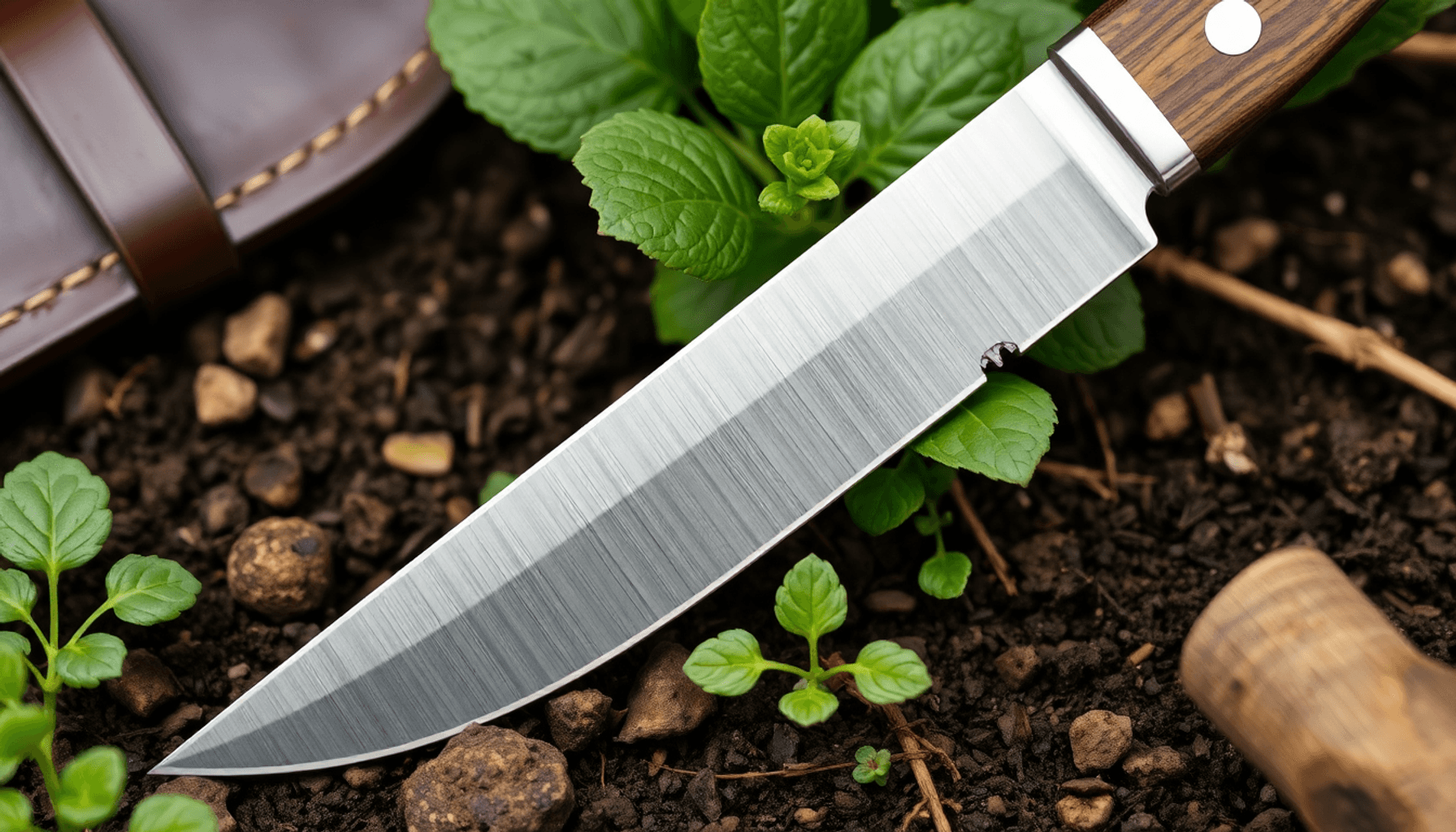

You might be asking, What is a Hori Hori? Simply put, a Hori Hori is a Japanese gardening knife that has become a favorite tool among gardeners worldwide. It originated in Japan and combines the functions of several gardening tools into one compact, efficient design.
Key features include:
- Multifunctional use: It serves as a trowel for digging, a knife for cutting, and a saw for slicing through tough roots.
- Versatility: Perfect for planting, weeding, cutting roots or twine, and even dividing perennials.
- Durability: Crafted to withstand heavy-duty gardening tasks without compromising precision.
This unique combination makes the Hori Hori an essential addition to your collection of gardening tools. If you want to enhance your gardening experience with a single tool that offers efficiency and versatility, the Hori Hori is designed for you.
The History and Cultural Significance of the Hori Hori Knife in Japanese Gardening
The term Hori Hori translates directly to "dig-dig" in Japanese, which perfectly captures the essence of this tool’s primary function—digging. Rooted deeply in traditional Japanese gardening culture, the Hori Hori knife reflects a thoughtful blend of utility and craftsmanship, designed to meet the precise needs of gardeners tending to delicate plants and compact spaces.
Origin and Traditional Use
The Hori Hori originated as a practical hand tool used by Japanese gardeners, farmers, and landscapers for centuries.
- Traditionally crafted from high-quality steel with wooden handles, it was essential for planting rice seedlings, cultivating flower beds, and maintaining bonsai gardens.
- Its dual-purpose blade—combining slicing and digging capabilities—allowed gardeners to perform multiple tasks without switching tools.
- The pointed tip and concave shape made it ideal for working in tight soil spaces and removing stubborn roots or weeds, a necessity in meticulous Japanese garden maintenance.
Role in Japanese Gardening Practices
The Hori Hori became integral to Japan’s gardening philosophy, which emphasizes harmony between nature and human intervention.
- Gardeners relied on it not just for physical labor but as an extension of their care for plants—precise enough to avoid damaging roots while robust enough to handle tough soil.
- It facilitated tasks like transplanting delicate seedlings or dividing perennials, activities that require both finesse and strength.
- This tool embodies the principle of "mottainai," a Japanese concept valuing minimal waste and efficient use of resources; by merging several tools into one, the Hori Hori minimized clutter and maximized function.
Evolution and Global Spread
Originally confined to Japanese horticultural circles, the Hori Hori began gaining international attention as global interest in Japanese gardening aesthetics increased.
- Gardeners worldwide embraced its multifunctionality, durability, and ergonomic design.
- Modern iterations maintain traditional elements but often incorporate stainless steel blades or synthetic handles to suit various preferences.
- Today’s global gardening communities recognize the Hori Hori not only as a practical tool but also as a symbol of cultural heritage and craftsmanship passed down through generations.
This historical background enriches your understanding of why the Hori Hori stands out among traditional gardening tools. Its deep roots in Japanese culture inform its unmatched functionality—a trait that continues to captivate gardeners everywhere.
Understanding the Design and Features That Make the Hori Hori Knife Unique
The Hori Hori knife stands out because of its thoughtfully engineered blade design and carefully selected materials, which come together to create a tool that is both practical and durable.
1. Blade Size and Shape
The blade typically measures about 17 cm (6.7 inches) in length and 4 cm (1.5 inches) in width. This size strikes a balance—large enough for efficient digging yet compact enough to maneuver in tight garden spaces. Its shape is slightly concave, resembling a shallow scoop, with a sharply pointed tip. This pointed tip is critical for piercing tough soil or penetrating root systems without damaging surrounding plants.
2. Dual Edges and Serrated Side
One defining feature is the dual sharp edges on either side of the blade. Both edges are honed to cut cleanly through soil and plant material. On one side, you'll find a serrated edge specifically designed for sawing through stubborn roots and fibrous twine. This serration can slice through tough underground obstacles that would slow down or damage other tools. The other edge remains smooth for precise cutting tasks such as dividing plants or trimming.
3. Blade Material: Carbon Steel Blade
High-quality carbon steel is the preferred material for most traditional Hori Hori knives. Carbon steel excels in maintaining sharpness longer than stainless steel, making it ideal for repeated cutting and digging. It’s tough but requires regular maintenance to prevent rusting, which is why care routines are essential. The carbon steel blade’s rigidity also adds strength, allowing you to pry or dig aggressively without bending or breaking.
4. Handle Materials
Handles are usually crafted from durable hardwoods like rosewood or walnut, offering a natural grip that ages well with use. Some modern versions employ sturdy synthetic materials such as reinforced nylon or thermoplastic rubber to enhance grip comfort and resistance to moisture—a handy feature when working in wet soil conditions. The handle design focuses on ergonomics, giving you control while minimizing hand fatigue during extended tasks.
5. Protective Sheath
A protective sheath made from canvas or leather accompanies most Hori Hori knives. This sheath serves multiple purposes: safeguarding the blade from damage when not in use, protecting you from accidental cuts during transport, and ensuring safe storage in your gardening toolkit. Many sheaths include belt loops or clips so you can carry your knife hands-free while moving through your garden.
Each of these design elements contributes to the unique identity of the Hori Hori knife—a tool engineered to be multifunctional, reliable, and comfortable throughout countless gardening projects.
Exploring the Versatile Uses of the Hori Hori Knife in Gardening Tasks
The Hori Hori knife stands out as a multifunctional tool that enhances efficiency and precision during various gardening tasks. Its unique design allows it to perform roles traditionally handled by multiple separate tools.
1. Digging Holes for Planting
The slightly concave blade excels at scooping soil, making it perfect for digging small to medium-sized holes. Whether you are planting seedlings or bulbs, the sharp tip penetrates soil easily, even in compacted or clay-heavy ground.
2. Transplanting Seedlings
When moving seedlings into larger pots or garden beds, the Hori Hori acts as both a trowel and a knife. You can gently loosen roots without damaging them and create clean-cut edges in the soil for better root establishment.
3. Weeding Tool for Deep-Rooted Weeds
Removing stubborn weeds with deep roots becomes simpler. The knife’s serrated edge cuts through tough roots while the pointed tip pries out the entire weed. This combination reduces the risk of regrowth by extracting roots thoroughly.
4. Cutting Roots and Twine
Thick roots and twine that bind plants or garden structures can be sliced with one edge of the blade. The sharpness ensures clean cuts, which is essential for preventing damage to surrounding plants or materials.
5. Dividing Perennials for Propagation
Gardeners often use the Hori Hori to divide perennials, which is a crucial step in propagating plants. Its sturdy blade cuts through root balls efficiently, allowing you to separate plants for propagation without unnecessary strain. This process is not only beneficial for the gardener but also promotes healthier growth in the divided plants.
For those interested in a more detailed understanding of how to propagate perennials by division, using tools like the Hori Hori can significantly ease this task.
6. Planting Bulbs with Depth Markings
Some models feature measurement marks etched into the blade, guiding you to plant bulbs at the correct depth. This ensures optimal growth conditions and better flowering results.
Using a single tool that combines these functions reduces clutter in your gardening kit. The Hori Hori’s versatility makes it an indispensable companion for anyone serious about gardening tasks, from beginners to seasoned horticulturists.
Advantages of Choosing a Hori Hori Knife Over Traditional Gardening Tools
The versatility of the Hori Hori knife stands out as one of its greatest strengths. Instead of juggling multiple tools like trowels, pruning knives, and saws, you can rely on this single instrument to handle all those tasks. This consolidation means less clutter in your gardening bag or workspace, making it easier to move around your garden without constantly switching tools.
1. Space-saving
The Hori Hori knife replaces multiple tools for digging, cutting, and sawing, saving you space in your gardening bag or shed.
2. Robust build
Crafted from high-quality materials, the Hori Hori knife is designed to withstand tough jobs without getting damaged.
3. Time-saving
With its multifunctional design, the Hori Hori knife speeds up tasks by eliminating the need for tool changes.
4. Ergonomic design
The comfortable grip of the Hori Hori knife minimizes hand strain during use, making it easier to work for longer periods.
5. Precision
The sharp edges and pointed tip of the Hori Hori knife improve accuracy in confined areas, allowing for more precise cuts and digs.
6. Enhanced enjoyment
By simplifying gardening tasks and boosting motivation, the Hori Hori knife makes gardening feel more enjoyable and satisfying.
The combination of these qualities makes the Hori Hori knife not just a tool but an investment in better gardening performance and pleasure.
Popular Brands and Variations of the Hori Hori Knife You Should Consider
Choosing the right Hori Hori knife often depends on brand reputation, blade quality, handle comfort, and additional features that suit your specific gardening needs. Several notable brands have emerged as favorites among gardeners worldwide.
Niwaki Hori Hori
Widely regarded as the original and one of the best Hori Hori knives available.
- Blade: Crafted from high-quality carbon steel, offering exceptional sharpness and durability.
- Design: Features a well-balanced blade around 17 cm long with a slightly concave shape and dual edges tailored for digging and cutting.
- Handle: Typically made from smooth, durable hardwood that provides a comfortable grip during prolonged use.
- Sheath: Comes with a sturdy leather sheath for safe storage and portability.
- Unique appeal: The Niwaki Hori Hori stands out for its craftsmanship rooted in traditional Japanese tool-making techniques, making it highly reliable for professional and amateur gardeners alike.
Garrett Wade Stainless Steel Model
Designed to resist rust and corrosion, ideal for gardeners who prefer low maintenance tools.
- Material: Stainless steel blade designed to resist rust and corrosion, ideal for gardeners who prefer low maintenance tools.
- Handle: Tropical redwood handle adds an aesthetic touch while ensuring a firm grip.
- Blade Features: Combines straight cutting edges with serrated sides for sawing roots or tough soil.
- Additional perks: Some models include measurement markings along the blade, allowing precise planting depth for bulbs — a practical feature that enhances planting accuracy.
- Suitability: Perfect if you want a blend of durability with easy upkeep and functional design enhancements.
Barebones Version
Offers both straight and serrated edges on the same blade, maximizing versatility in tackling different gardening tasks without switching tools.
- Blade Configuration: Offers both straight and serrated edges on the same blade, maximizing versatility in tackling different gardening tasks without switching tools.
- Handle Material: Often uses robust synthetic or wooden handles designed to withstand rigorous outdoor use while maintaining comfort.
- Extras: Certain Barebones models incorporate pommel bases at the handle end. This feature enables hammering actions to break up compacted soil or drive stakes without damaging the knife itself.
- Ideal user: Gardeners who value multifunctionality combined with rugged construction will appreciate this variation.
Other Features Worth Noting Across Brands
Measurement marks engraved on blades help with bulb planting depth — an essential detail for achieving successful growth results.
Protective sheaths vary between canvas, leather, or combination materials, all aimed to keep the blade safe from damage and prevent accidents when carrying or storing your knife.
Selecting any of these popular brands ensures you invest in a tool built to last and perform. Each presents unique advantages depending on your gardening style, whether you prioritize tradition (Niwaki), low maintenance (Garrett Wade), or rugged practicality (Barebones). This diversity makes the Hori Hori adaptable to many preferences while maintaining its core multifunctional value.
Caring for Your Investment: Maintenance Tips for Keeping Your Hori Hori Knife in Top Shape Over Time
Proper maintenance is key to preserving the functionality and longevity of your Hori Hori knife. This traditional Japanese gardening tool, known for its sharp carbon steel blade and versatile use, requires regular care to remain effective and rust-free.
Cleaning After Use
- Always clean your Hori Hori knife immediately after finishing your gardening tasks.
- Use a dry cloth to wipe off any dirt, sap, or moisture from the blade and handle.
- For stubborn residues, rinse the blade with water but be sure to dry it thoroughly afterward.
- Applying a thin layer of vegetable oil on the blade after cleaning helps prevent rust formation, especially important for carbon steel blades prone to oxidization.
Blade Sharpening
- Sharpening your Hori Hori is essential for maintaining its cutting efficiency. You can follow this comprehensive guide on sharpening carving knives and more.
- Use whetstones or diamond sharpeners designed for curved blades since the Hori Hori’s slightly concave shape requires careful attention.
- Maintain the original bevel angle during sharpening to preserve the knife’s cutting edge and avoid damaging the blade structure.
- Regularly inspect the serrated edge as well; these may require specialized tools or professional sharpening to keep them effective.
Safe Storage
- Store your knife in its protective sheath when not in use.
- Sheaths made from canvas or leather shield the blade from moisture and accidental damage.
- Keeping the blade covered reduces exposure to environmental elements that accelerate wear or rust.
- A secure sheath also protects you and others from accidental cuts during storage or transport.
Taking these maintenance steps seriously ensures your Hori Hori remains a reliable companion in your gardening activities. Proper cleaning, sharpening (including winter pruning tools), and storage combine to protect this multifunctional tool—helping you get the most value out of what is arguably one of the best investments for any gardener.
Conclusion
The Hori Hori stands out as an essential gardening tool that combines multiple functions—digging, cutting, and sawing—into one durable, sleek package. Its thoughtful design and cultural heritage make it more than just a tool; it’s a trusted companion for gardeners worldwide who value efficiency and craftsmanship.
You’ll find that investing in a high-quality Hori Hori pays off with lasting performance. Cheap or flimsy alternatives often break or dull quickly, diminishing your gardening experience. Choosing a well-made model ensures reliability and enjoyment season after season.
"What is a Hori Hori? The Japanese Gardening Knife Explained" reveals a tool that brings precision, strength, and versatility to everyday gardening tasks. It’s no surprise so many gardeners swear by their trusty hori knives.
Consider treating yourself—or gifting a fellow gardener—a genuine Hori Hori knife. The blend of traditional Japanese craftsmanship with practical design makes it a valuable addition to any garden shed. Every gardener deserves the confidence and convenience this remarkable tool provides.
FAQs (Frequently Asked Questions)
What is a Hori Hori knife and why is it essential for gardeners?
A Hori Hori is a traditional Japanese gardening knife known for its multifunctional design that combines the features of a trowel, knife, and saw. This versatile tool enhances gardening tasks such as digging, cutting roots, transplanting seedlings, and weeding, making it an essential addition to any gardener's toolkit.
What is the historical and cultural significance of the Hori Hori knife in Japanese gardening?
The term "Hori Hori" means "dig-dig" in Japanese, reflecting its primary use in digging. Traditionally used by Japanese gardeners, the Hori Hori knife has played a significant role in their gardening practices. Over time, it has evolved and gained popularity worldwide among gardening communities due to its unique design and functionality.
What are the unique design features of the Hori Hori knife that make it stand out?
The Hori Hori knife typically features a blade about 17 cm long and 4 cm wide with a slightly concave shape and pointed tip. It has dual sharp edges with serrations on one side designed for sawing through tough roots. The blades are commonly made from high-quality carbon steel, while handles are crafted from durable wood or sturdy synthetic materials to ensure a comfortable grip. Protective sheaths made from canvas or leather help keep the blade safe when not in use.
How does a Hori Hori knife improve efficiency compared to traditional gardening tools?
By combining multiple functions—digging, cutting, sawing—into one tool, the Hori Hori replaces several traditional gardening tools that would otherwise clutter your workspace. Its durable construction withstands heavy-duty use without bending or breaking easily, thereby improving overall efficiency during gardening tasks while adding enjoyment to the process.
Which popular brands offer quality Hori Hori knives and what variations should I consider?
Notable brands include Niwaki, considered the original and best maker of Hori Hori knives; Garrett Wade offers stainless steel models with tropical redwood handles; Barebones provides versions featuring both straight and serrated edges. Some models come with measurement marks for planting bulbs or pommel bases for hammering, catering to various gardener preferences.
What maintenance tips should I follow to keep my Hori Hori knife in top condition?
After each use, clean your carbon steel blade thoroughly to prevent rust by wiping it down with a dry cloth and applying a thin layer of vegetable oil if necessary. Sharpen the blade using whetstones or diamond sharpeners designed for curved blades while maintaining its original bevel angle. Always store your knife inside its protective sheath when not in use to prevent moisture exposure and accidental cuts, prolonging its lifespan.