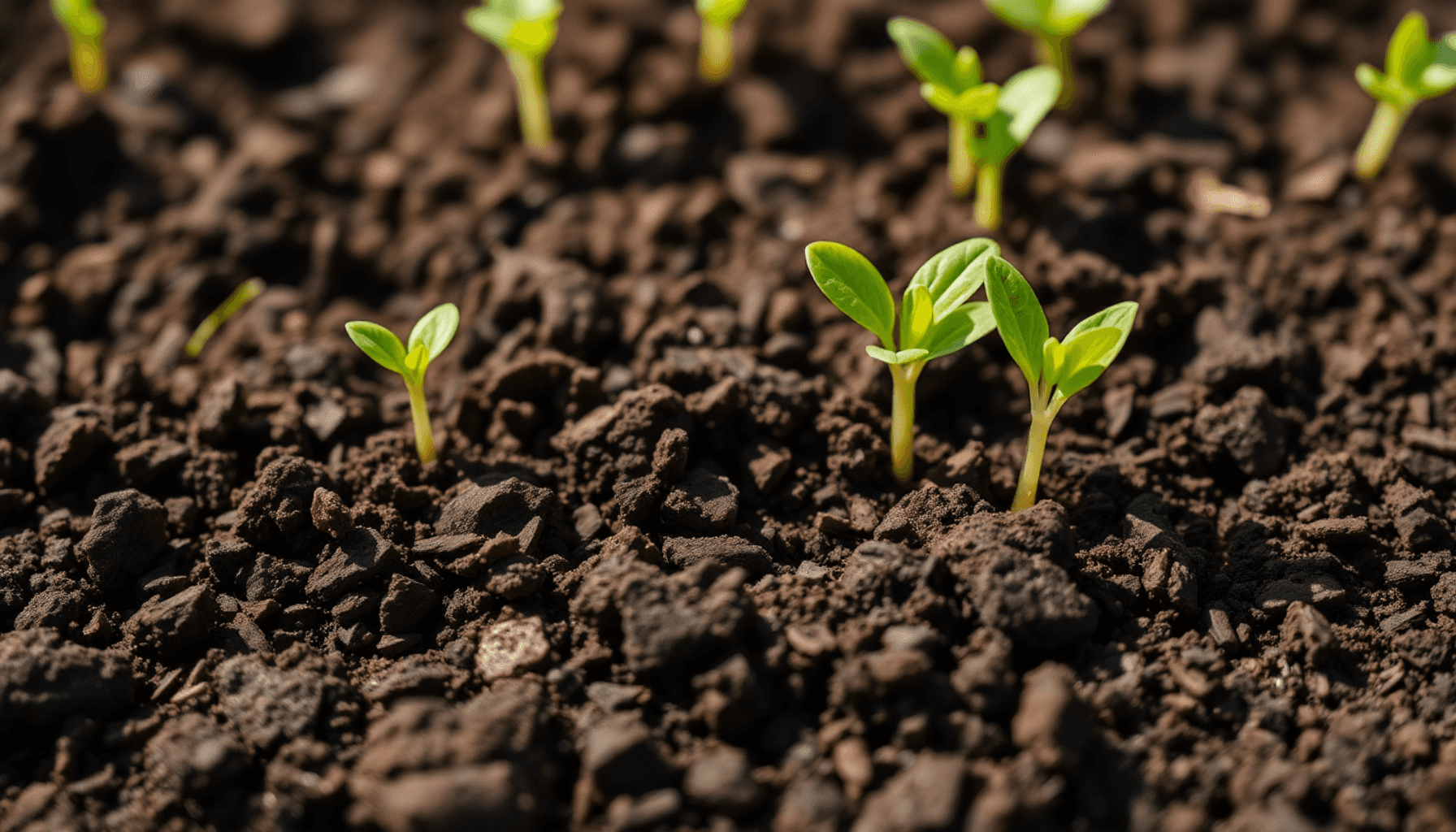

When it comes to soil types for gardening, one name stands out as the best: loam soil. But what exactly is loam soil? It is a type of soil that has a perfect balance of sand, silt, and clay particles. This balance creates an environment that supports healthy plant growth by providing good drainage, moisture retention, and nutrient availability.
Gardeners and farmers prefer loam soil because it combines the best qualities of its individual components. It’s neither too gritty nor too sticky. Instead, it has a texture that holds enough water without becoming waterlogged, while still allowing excess moisture to drain away. This balance ensures roots can breathe and absorb nutrients effectively.
Knowing what is loam soil is essential for anyone who wants to grow healthy plants. Its balanced composition makes it perfect for many different crops and garden plants, making loam a crucial part of successful gardening and farming practices.
Understanding Loam Soil Composition
Loam soil composition is defined by a balanced mixture of three primary mineral components: sand, silt, and clay. The typical proportions found in loam soil are approximately:
- 50% sand
- 30-50% silt
- 10-25% clay
This specific ratio creates the ideal soil texture that supports healthy plant growth by optimizing essential soil properties.
How Sand, Silt, and Clay Affect Soil Properties
Each mineral component influences the soil’s behavior differently:
- Sand particles are the largest among the three. Their size creates significant pore spaces which improve drainage and air circulation within the soil. This prevents waterlogging and allows roots to breathe.
- Silt has medium-sized particles that feel smooth or floury when dry. Silt holds moisture better than sand without becoming waterlogged, contributing to nutrient retention and providing a stable environment for roots.
- Clay consists of very fine particles with a sticky texture when wet. Clay particles have a high surface area which helps retain nutrients essential for plants. However, too much clay can cause poor drainage and compaction.
Balanced Composition Supports Optimal Soil Texture
The combination of roughly half sand, with substantial amounts of silt and a smaller portion of clay, results in soil that:
- Drains excess water effectively while retaining enough moisture for plants.
- Holds nutrients well without becoming dense or compacted.
- Maintains an ideal texture that is loose enough for root expansion but firm enough to support plant stability.
This balance is critical because soils dominated by one particle type tend to have limitations:
- Sandy soils drain too quickly and lose nutrients.
- Silty soils can become compacted and prone to erosion.
- Clay soils may retain too much water, suffocating roots.
Loam’s composition avoids these extremes, making it highly valued for gardening and farming where consistent moisture, aeration, and nutrient availability are key.
Characteristics of Individual Components
| Component | Particle Size | Texture When Dry | Drainage & Retention | Nutrient Holding Capacity |
| Sand | Largest (0.05–2 mm) | Gritty | High drainage; low water retention | Low nutrient retention due to large pores |
| Silt | Medium (0.002–0.05 mm) | Smooth or floury | Moderate drainage; good moisture retention | Moderate nutrient holding capacity |
| Clay | Smallest (<0.002 mm) | Sticky when wet | Poor drainage if abundant; high water retention | High nutrient retention but risks compaction |
Knowing these details helps you understand why loam soil strikes the right balance between drainage, nutrient availability, moisture retention, and aeration — all critical factors for plant health.
Physical Properties of Loam Soil
The loam soil texture is a key factor in its exceptional performance as a growing medium. It results from a balanced mixture of sand, silt, and clay particles, each contributing distinct physical traits that influence water movement and air circulation within the soil.
1. Particle Size and Texture
Sand particles are the largest, creating pore spaces that allow water to drain freely and air to circulate easily around plant roots. Silt particles are smaller and help retain moisture by holding water in tiny spaces. Clay particles, being the finest, have a high surface area that binds nutrients and holds moisture tightly but can limit drainage if present in excess. The combination in loam soil ensures enough large pores for drainage while maintaining fine particles that hold moisture effectively.
2. Moisture Retention and Drainage
Loam soil strikes an ideal balance between retaining moisture for root uptake and draining excess water to prevent saturation. This balance reduces the risk of root rot while ensuring plants have consistent access to water. The fine pores retain sufficient moisture, while coarse pores prevent waterlogging by providing escape routes for excess water.
3. Air Circulation
Adequate aeration is essential for healthy root respiration. The texture of loam soil allows air to penetrate deeply into the root zone. This oxygen availability supports beneficial microbial activity that aids nutrient cycling and promotes vigorous root growth.
4. pH Balance
Loam soils generally exhibit a near-neutral pH range (around 6 to 7), which is favorable for most plants. A neutral pH optimizes nutrient availability, allowing roots to absorb essential minerals such as nitrogen, phosphorus, and potassium efficiently. Extremes of acidity or alkalinity can lock nutrients out of reach or cause toxicities.
5. Root Development Benefits
The combination of balanced moisture retention, good drainage, ample air circulation, and neutral pH creates an ideal environment for roots to expand without stress. Roots can grow freely through the crumbly texture of loam soil, accessing nutrients and oxygen necessary for healthy plant development. This supports stronger plants with better resistance to drought and disease.
The physical properties derived from loam soil texture make it uniquely suited to sustain vigorous, healthy plants by facilitating optimal water management, air flow, and nutrient uptake at the root level.
How to Identify Loam Soil in Your Garden
Knowing how to identify loam soil yourself is a valuable skill for gardeners and farmers. You don't need expensive lab tests—simple soil testing at home can reveal a lot about your soil's texture and composition.
The Simple Tactile Test
Start by taking a handful of moist soil from your garden. Squeeze it gently in your hand and observe what happens:
- Loam soil forms a loose ball that holds together but crumbles apart easily when poked or pressed.
- Sandy soil won't hold its shape; it will slip through your fingers, feeling gritty and coarse.
- Silty soil feels smooth and floury, tending to form a weak ball that breaks apart very easily.
- Clay soil is sticky and dense, forming a tight ball that holds its shape firmly when squeezed.
This quick test helps you distinguish loam from other common soil types based on texture and cohesiveness.
Key Differences in Soil Feel
| Soil Type | Texture Feeling | Ball Formation When Squeezed |
| Loam | Soft, crumbly | Loose ball, crumbles easily |
| Sand | Gritty, rough | No ball formation, sifts through fingers |
| Silt | Smooth, powdery | Weak ball, falls apart quickly |
| Clay | Sticky, dense | Tight ball, holds shape firmly |
If the soil feels balanced—neither too gritty nor too sticky—you likely have loam or something close to it.
Performing the "Mudshake" Test
For a more detailed understanding of your garden's soil texture, try the mudshake test. This method separates sand, silt, and clay particles so you can estimate their proportions.
Step-by-Step Guide
- Collect about one cup of soil from your garden.
- Remove any debris like roots or stones.
- Place the soil into a clear glass jar or container with a tight lid.
- Add water until the jar is about two-thirds full.
- Shake vigorously for 2–3 minutes to fully suspend all particles.
- Set the jar on a flat surface and allow it to sit undisturbed for 24 hours.
Reading the Results
After 24 hours, the particles will have settled into distinct layers. Measure each layer's thickness with a ruler or estimate the percentage by eye.
- Bottom layer: Sand — the heaviest particles, settling first.
- Middle layer: Silt — medium-weight particles.
- Top layer: Clay — the lightest particles, suspended the longest.
These percentages give you an accurate picture of whether your soil fits the typical loam range (approximately 50% sand, 30–50% silt, and 10–25% clay). This hands-on method complements tactile tests and provides solid data for soil texture test purposes.
Identifying loam soil through these practical approaches equips you with insight into your garden's foundation — crucial for making informed decisions about planting and soil management strategies.
Using the Mudshake Test and USDA Soil Textural Triangle
The mudshake test is a simple, effective method to estimate the proportions of sand, silt, and clay in your soil. This hands-on approach helps you classify your soil type using recognized soil classification methods like the USDA Soil Textural Triangle.
Performing the Mudshake Test
- Collect a soil sample from several spots in your garden to get a representative mix.
- Remove any large debris such as roots, stones, or leaves.
- Place about 1 cup of soil into a clear, wide-mouth jar or container.
- Add water until the jar is about two-thirds full.
- Add a teaspoon of liquid dish soap to help break up soil particles.
- Secure the lid tightly and shake vigorously for several minutes until all clumps are dispersed.
- Set the jar down on a flat surface and allow it to settle without disturbance.
Observing Soil Layers
- After about 24 hours, distinct layers will form inside the jar due to different particle sizes settling at different rates.
- The bottom layer consists of sand particles — these are the heaviest and largest.
- Above that is the silt layer, finer than sand but heavier than clay.
- The topmost layer is clay, made up of very fine particles that take longest to settle.
Measuring Layer Thicknesses
- Use a ruler to measure the height of each sediment layer separately.
- Record the thickness of each layer in millimeters or centimeters.
- Measure the total height of all three layers combined (excluding any floating organic matter).
Calculate each component’s percentage with this formula:
[ \text{Percentage} = \left(\frac{\text{Layer thickness}}{\text{Total sediment height}}\right) \times 100 ]
For example, if your sand layer measures 3 cm and total sediment height is 10 cm:
[ \text{Sand %} = \left(\frac{3}{10}\right) \times 100 = 30% ]
Repeat for silt and clay layers.
Classifying Your Soil Using the USDA Soil Textural Triangle
The USDA Soil Textural Triangle provides a visual guide for classifying soils based on their mineral composition percentages. It divides soil types into categories such as sandy loam, silty clay, loam, or clay loam.
- Locate your calculated percentages for sand, silt, and clay on their respective axes of the triangle.
- Follow lines inward from each axis corresponding to your percentages until they intersect inside the triangle.
- The point where these three lines meet determines your soil texture class.
This method allows you to move beyond tactile assessments toward an accurate scientific classification. Knowing your precise soil texture aids in better understanding its drainage qualities, nutrient-holding capacity, and suitability for various plants.
Using both tactile tests and quantitative tools like the mudshake test combined with the USDA Soil Textural Triangle equips you with reliable knowledge about your garden’s soil — empowering you to make informed decisions for planting and soil management.
Benefits of Having Loam Soil for Gardening and Farming
Loam soil offers a unique combination of characteristics that directly contribute to plant growth optimization. Its balanced texture supports both moisture retention and drainage, which is essential for healthy roots. You want soil that holds enough water to nourish plants without becoming waterlogged. Loam achieves this by containing sufficient clay and silt particles to retain moisture, while the sand fraction ensures excess water drains away quickly. This balance prevents root rot and drought stress, two common problems in less ideal soils.
Good aeration is another benefit intrinsic to loam soil. The pore spaces between particles allow air to circulate freely around roots, supplying oxygen necessary for respiration. Roots deprived of oxygen struggle to absorb nutrients efficiently, leading to stunted growth and poor yields. Loam’s structure avoids compaction issues that often plague clay soils, making it easier for roots to expand and explore the soil profile.
Nutrient availability also ranks high among the benefits of loam soil. It holds nutrients well due to its clay and organic matter content but doesn’t trap them so tightly that roots can’t access them. Essential minerals like nitrogen, phosphorus, and potassium remain in the root zone longer compared to sandy soils where they might leach away quickly. This nutrient retention supports robust plant health without constant heavy fertilization.
Gardening tips when working with loam include maintaining its organic matter content through regular additions of compost or mulch. This practice preserves the soil’s fertility and helps sustain its beneficial physical properties over time.
Key advantages of loam soil:
- Balanced moisture retention and drainage
- Excellent aeration supporting root respiration
- High nutrient availability promoting vigorous growth
These qualities explain why loam is the preferred choice for many gardeners and farmers aiming for productive, thriving plants.
Maintaining or Improving Loam Soil Quality in Your Garden
Maintaining loam soil quality requires consistent care to preserve its balanced texture and fertility. One of the most effective methods for improving garden soil is adding organic matter regularly. Compost, aged manure, leaf mold, and grass clippings enrich the soil by:
- Enhancing nutrient content
- Increasing microbial activity
- Improving moisture retention without sacrificing drainage
Organic matter acts like a sponge, holding water during dry spells and releasing it slowly to plants. It also helps maintain the crumbly structure characteristic of loamy soil, which promotes root growth and air circulation.
Preventing Compaction
Preventing compaction is critical to maintaining loamy texture. Soil compaction reduces pore space, limiting oxygen availability and water infiltration. You can avoid this by:
- Minimizing foot traffic on garden beds
- Using raised beds or designated walkways
- Incorporating mulch to protect the surface from heavy rain impact
Compacted soil often feels hard and dense. Regularly aerate your garden soil by gently loosening it with a fork or garden tiller, especially before planting.
Managing Moisture Levels
Watch for signs of excessive dryness or waterlogging. Loam thrives with balanced moisture; too much water suffocates roots while too little stresses plants. To manage this:
- Install proper drainage systems if needed
- Water deeply but less frequently to encourage deep root growth
- Mulch around plants to retain moisture and moderate temperature fluctuations
Encouraging Sustainability
Sustainable gardening practices help preserve loam soil health over time. Crop rotation, cover cropping, and reduced chemical use support diverse soil life that keeps nutrients cycling naturally. Growing nitrogen-fixing plants like clover adds organic nitrogen back into the soil.
By focusing on these strategies — adding organic matter, preventing compaction, managing moisture levels, and encouraging sustainability — you protect the integrity of your loam soil and sustain its ideal growing conditions year after year. This hands-on approach empowers you to maintain a thriving garden bed with healthy, productive plants.
Conclusion
Understanding What is Loam Soil? How to Tell If You Have It gives you the knowledge to make the most of your garden. Loam soil is special because it has:
- Balanced texture that holds moisture yet drains well
- Good aeration for healthy roots
- Rich nutrient availability supporting robust plant growth
Use the tactile methods and the mudshake test to confirm if your soil fits the loam profile. Once identified, maintaining this ideal soil type becomes essential for gardening success. Regularly incorporate organic matter to boost fertility and preserve structure. Avoid compaction and extreme moisture conditions to keep your soil thriving.
Gardening success tips focus on nurturing loamy soil as a living system — treat it well, and it will consistently support vigorous plants season after season.
Healthy loam soil is not just a growing medium; it’s the foundation of a flourishing garden. Keep it vibrant, keep it balanced, and watch your garden thrive.
FAQs (Frequently Asked Questions)
What is loam soil and why is it ideal for gardening?
Loam soil is an ideal soil type for plant growth due to its balanced composition of approximately 50% sand, 30-50% silt, and 10-25% clay. This balance provides excellent drainage, moisture retention, nutrient availability, and aeration, making it highly favored by gardeners and farmers alike.
How can I identify loam soil in my garden using simple tests?
You can identify loam soil by performing tactile tests such as squeezing moist soil to observe its texture; loam forms a loose ball that crumbles easily. Additionally, the 'mudshake' test involves mixing soil with water in a clear container and allowing particles to settle into layers, helping estimate sand, silt, and clay percentages for accurate classification.
What are the typical physical properties of loam soil that benefit plants?
Loam soil has a texture that balances particle sizes, promoting optimal water movement and air circulation. It typically maintains a near-neutral pH which benefits plant nutrient uptake. These properties support healthy root development by ensuring good moisture retention, drainage, and aeration.
How does the USDA Soil Textural Triangle help classify loam soil?
The USDA Soil Textural Triangle uses measured percentages of sand, silt, and clay from tests like the 'mudshake' to precisely classify soil types. By plotting these proportions on the triangle chart, gardeners can confirm if their soil falls within the loam category or another classification.
What are the benefits of having loam soil for gardening and farming?
Loam soil supports balanced moisture retention and drainage simultaneously while providing good aeration around roots through its pore spaces. Its nutrient-rich composition promotes robust plant health and growth optimization, making it highly beneficial for both gardening and farming applications.
How can I maintain or improve loam soil quality in my garden?
To maintain or enhance loamy texture and fertility, regularly add organic matter such as compost to your garden beds. Prevent soil compaction by avoiding excessive tilling or heavy foot traffic, manage moisture levels to avoid dryness or waterlogging, and practice sustainable gardening techniques for long-term soil health.