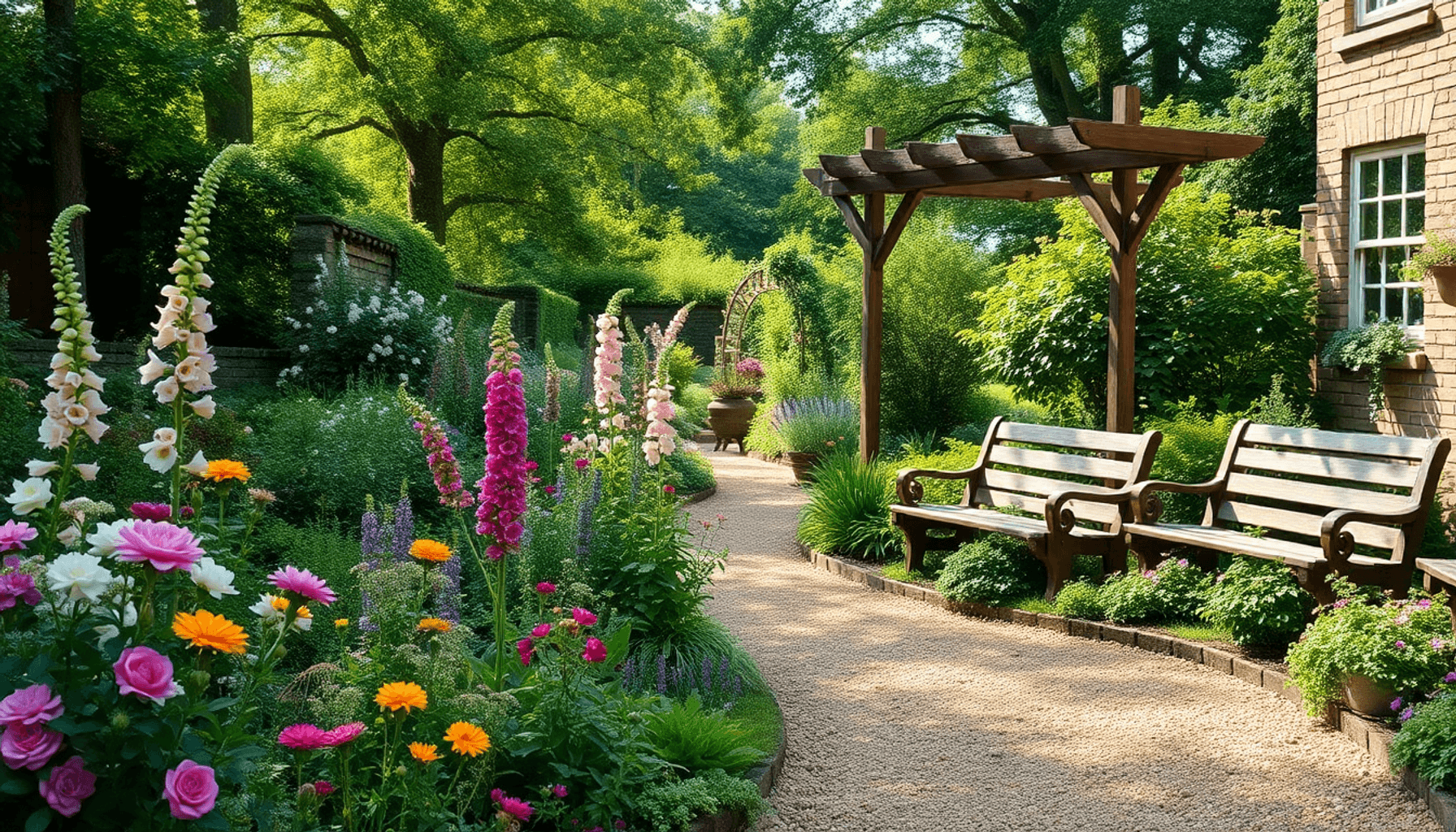

Cottage gardens have always been loved by gardeners in the UK. They are popular because they combine charm, color, and practicality, making them suitable for various garden spaces. If you enjoy a garden style that is warm and lively, cottage gardens are perfect for you.
What makes a cottage garden unique?
- Informal, densely planted flower beds with lots of colors and textures
- A combination of flowering plants, edible herbs, and fruits
- Fragrant flowers that delight the senses
- Arches and trellises with climbing plants for vertical interest
- Use of natural materials like wood and stone for an authentic look
This article will show you how to create a traditional UK cottage garden. You will learn about its key features, practical planting options, and maintenance tips. Whether you have a small urban garden or a spacious rural area, these cottage garden ideas UK will inspire you to confidently embrace this beloved gardening style.
Understanding the Cottage Garden Style
The cottage garden is a distinctive style deeply rooted in the history of traditional UK gardens. Originally emerging from the practical gardens of rural cottages, it evolved as a way for families to grow both decorative and useful plants in limited spaces. This garden style reflects an informal planting approach that contrasts with the more structured designs seen in formal gardens.
Definition and History
- Originated during the 16th century in England as functional kitchen and flower gardens.
- Designed to be productive yet beautiful, blending flowers with herbs, fruits, and vegetables.
- Became popular among gardeners seeking charm and abundance without rigid formality.
- Modern interpretations maintain historical influences while adapting to contemporary garden sizes and lifestyles.
Key Characteristics of Cottage Garden Style
Informal Planting:
Plants are arranged with a natural, flowing layout rather than strict rows or geometric patterns. This creates a relaxed atmosphere where plants intermingle freely.
Densely Planted Spaces:
Beds are full and overflowing, often layered with tall, medium, and low-growing species. This density minimizes bare soil and encourages biodiversity.
Colorful Blooms:
A wide range of colors appears throughout the seasons. The palette often includes soft pastels combined with vibrant hues to create visual interest from spring through autumn.
Scented Plants:
Fragrance plays an important role. Sweet-smelling roses, lavender, and honeysuckle invite sensory enjoyment beyond just visual appeal.
Edible Varieties:
Herbs like thyme and basil mix seamlessly with flowers. Runner beans climb trellises beside peonies; fruiting plants such as strawberries add practicality alongside beauty.
Charm, Sensory Appeal, and Mixed Planting Palettes
The cottage garden’s charm lies in its ability to feel both spontaneous and thoughtfully curated. Instead of uniformity, it embraces variety:
- Mixed palettes combine flowering perennials, annuals, bulbs, shrubs, and edible plants.
- Sensory appeal engages multiple senses — sight through vibrant colors, scent from fragrant blooms, touch from varied textures.
- The garden becomes a living tapestry where each plant contributes to a layered experience.
This style invites gardeners to focus on creating a welcoming space full of life rather than adhering to strict rules. Informal planting encourages experimentation while maintaining harmony through careful plant selection based on bloom times, height, and cultural needs.
Understanding these cottage garden characteristics helps you appreciate why this style remains beloved in the UK today. It offers practicality paired with timeless beauty—making it ideal for gardeners who want their outdoor space to feel personal, lush, and inviting.
Planning Your Cottage Garden Layout
Creating a successful cottage garden starts with thoughtful layout planning. The design should reflect the informal charm typical of this style, making your outdoor space inviting and full of character.
Choosing the Right Space Size for Your Cottage Garden
- Small spaces can still accommodate the lushness of a cottage garden. Focus on vertical growth and compact planting to maximize impact without overcrowding.
- Larger gardens allow more freedom for winding paths, multiple seating areas, and layered planting schemes.
- Assess your available area carefully. Whether a modest backyard or a spacious plot, tailor your layout to fit the size while maintaining an informal flow.
Designing Informal and Veering or Circular Pathways
Paths in cottage gardens are rarely straight or rigid. They invite exploration and add a sense of discovery.
- Use natural materials like gravel, crushed stone, or mown grass to create soft edges that blend seamlessly with surrounding plantings.
- Curved or veering pathways break up the space visually and encourage wandering.
- Circular paths around flower beds or seating areas enhance intimacy and give the garden a gentle rhythm.
- Keep pathways narrow where possible; this preserves planting space and emphasizes coziness.
Incorporating Vertical Structures for Climbing Plants
Vertical elements add dimension and support to your garden design.
- Arches make excellent entrances or frame views within the garden while providing a structure for climbers like roses or clematis.
- Trellises placed against fences or walls can turn blank surfaces into flourishing displays.
- Choose rustic materials such as hazel poles, untreated wood, or wrought iron to keep authenticity.
- Position vertical structures strategically to guide movement through the garden and create focal points.
Using Low Fences or Stone Walls as Backdrops and Supports
Boundaries in cottage gardens are part of the aesthetic rather than barriers.
- Low wooden fences, picket-style or simple rails, give definition without overwhelming delicate plantings.
- Stone walls, either existing or newly built with natural local stone, offer texture and seasonal interest when adorned with trailing plants like ivy or honeysuckle.
- These elements serve dual purposes: defining spaces and supporting climbing plants, adding layers of depth to your layout.
Key Tips for Effective Cottage Garden Layout Ideas
- Prioritize informal garden design principles that avoid symmetry and embrace natural curves.
- Combine hard landscaping with abundant planting to maintain balance between structure and softness.
- Allow room for plants to self-seed and fill gaps over time – this creates that classic dense cottage garden feel without rigidity.
Working with these guidelines lets you craft a layout that supports both beauty and practicality. Paths invite exploration; verticals bring height; fences and walls provide charm—all essentials in authentic UK cottage garden layouts.
Selecting Plants for a Classic UK Cottage Garden
Choosing the right cottage garden plants UK means blending structure, color, scent, and practicality. The planting scheme should reflect the informal, lush vibe characteristic of traditional cottage gardens while incorporating a variety of species that thrive in UK climates.
Foundation Trees and Shrubs
These provide height, seasonal interest, and structure to the garden:
- Magnolias: Their large, fragrant flowers herald spring and add elegance.
- Crab apples: Attractive blossom in spring with colorful fruit in autumn, supporting local wildlife.
- Hydrangeas: Offer voluminous blooms through summer into autumn; their mophead or lacecap varieties blend well within informal borders.
These plants anchor your garden vertically and visually without overpowering other layers.
Key Flowering Plants
A mixture of perennial flowers and biennials creates continuous color and texture:
- David Austin roses: Renowned for fragrance and repeat flowering; they embody classic English charm.
- Peonies: Bold, lush flowers with a strong presence in late spring to early summer.
- Foxgloves (Digitalis): Tall spires add vertical interest and attract pollinators.
- Phlox: Provides clusters of vibrant flowers during summer months.
- Cosmos & Snapdragons: Self-seeding biennials that fill gaps naturally, adding softness and movement.
Combining these plants ensures layered blossoms from early spring until the first frost.
Seasonal Bulbs for Year-Round Color
Bulbs punctuate the garden with bursts of seasonal vibrancy. Planting bulbs like:
- Alliums: Architectural globe-shaped blooms in late spring.
- Dahlias: Richly colored flowers from mid-summer to autumn.
These bulbs should be interspersed among herbaceous perennials to avoid rigid patterns and maintain an organic feel.
Incorporating Edible Plants
An essential feature of cottage gardens is mixing ornamentals with edible plants for gardens, reflecting practicality alongside beauty:
- Herbs: Basil and thyme add fragrance and can be harvested fresh for cooking.
- Vegetables: Tomatoes offer striking fruits on climbing varieties; runner beans bring vertical greenery with delicate blossoms.
- Small fruits: Strawberries and raspberries provide ground cover as well as sweet treats.
Edibles integrate seamlessly when planted among flowering companions, enhancing sensory appeal while attracting beneficial insects.
Self-Seeding Biennials for Natural Flow
Plants like cosmos and snapdragons naturally reseed themselves each year. This quality:
- Maintains density without constant replanting.
- Supports an effortlessly evolving landscape that feels spontaneous yet harmonious.
Encouraging self-seeding biennials helps sustain the informal look crucial to cottage gardens while reducing maintenance efforts.
Selecting your plants with attention to structure, seasonal interest, scent, and edibility creates a thriving tapestry typical of classic UK cottage gardens. This approach blends aesthetics with functionality, establishing a garden full of life and charm.
Creating Garden Features to Enhance Charm and Functionality
Cottage garden features that UK enthusiasts adore bring both beauty and practicality to these lush, informal spaces. By incorporating structural and decorative elements, we can enhance the sensory experience while supporting the natural flow of the garden.
1. Rose Arches and Arbours
Rose arches and arbours serve as striking focal points that draw the eye upward. These vertical structures provide essential support for climbing roses, clematis, or honeysuckle, adding height and dimension. Positioned at entrances or along pathways, they create inviting gateways or intimate corners. Using weathered wood or wrought iron complements the rustic charm typical of cottage gardens.
2. Bird Feeders and Water Elements
Attracting wildlife is a key element in creating vibrant, living gardens. Bird feeders strategically placed among shrubs invite songbirds, lending natural sounds that enrich the atmosphere. Incorporate water features such as shallow birdbaths or small ponds to provide drinking and bathing spots for birds and pollinators like bees and butterflies. These wildlife-friendly gardens not only promote biodiversity but also enhance pollination for flowering and edible plants.
3. Rustic Benches
Seating areas with rustic benches fashioned from natural materials like untreated wood or stone offer cozy retreats within the garden. Their simple, unrefined appearance blends seamlessly into the informal planting style. Placing benches near fragrant flowers or under shade-giving trees encourages relaxation and appreciation of the surroundings.
4. Garden Ornaments
Garden ornaments add personality without overwhelming the natural aesthetic. Choose pieces crafted from aged metals, terracotta, or hand-thrown ceramics that echo traditional countryside themes. Sundials, vintage watering cans, or whimsical animal sculptures fit well within borders or nestled among plants. These subtle touches convey a sense of history and homeliness synonymous with cottage gardens.
Incorporating these elements thoughtfully transforms a planting scheme into an immersive space full of character and life — an essential quality of authentic UK cottage gardens.
Materials and Hard Landscaping Choices for Authenticity
Creating a classic UK cottage garden means paying close attention to the materials you use in your hard landscaping and garden structures. The goal is to achieve an organic, rustic feel that supports the plants without overpowering them.
Preference for Natural Materials in Garden Features
- Wood stands out as the top choice for benches, planters, trellises, and fencing. Its texture and warmth blend seamlessly with the informal cottage style.
- Untreated or lightly treated timber ages naturally, developing character over time, which enhances the garden’s charm.
- Stone elements like low walls or edging contribute structure while maintaining a natural appearance. Local stone varieties work best because they tie your garden visually to the surrounding landscape.
- Gravel or compacted earth paths offer a softer alternative to concrete or paving slabs, allowing better drainage and supporting the informal layout typical of cottage gardens.
Using Recycled or Upcycled Materials
- Incorporating recycled garden structures adds authenticity and sustainability.
- Old wooden pallets can be transformed into planters or vertical growing frames for climbers like sweet peas or runner beans.
- Salvaged timber from dismantled fences or barns makes excellent material for arches, arbours, or rustic cabins.
- Metal fixtures such as vintage gates or repurposed wire mesh provide sturdy support for climbing plants while adding visual interest.
- These reclaimed materials often carry a weathered look that perfectly complements a cottage garden’s relaxed atmosphere.
Minimizing Hard Landscaping for an Organic Look
- Limit hard landscaping elements to essential pathways and structural supports; this keeps the garden feeling lush rather than formal.
- Avoid large expanses of paving; instead, opt for narrow gravel paths that meander naturally through planting beds.
- Use planting beds to soften edges and blur boundaries between hard surfaces and greenery.
- Choose permeable surfaces to promote healthy soil conditions and encourage beneficial insect activity.
- Position built features so they harmonise with plant growth patterns rather than confining them.
Emphasising natural materials gardening UK practitioners trust will help you maintain an authentic cottage garden environment. Rustic hard landscaping ideas focus on subtlety and synergy with the planting scheme rather than rigid design. Recycled garden structures not only reduce environmental impact but also bring unique character that new materials cannot replicate. This approach ensures your garden feels inviting, timeless, and truly connected to its place.
Planting Techniques and Color Schemes for Visual Appeal
Creating lush planting schemes in cottage gardens UK requires a focus on informal, naturalistic layouts rather than rigid uniformity. This approach encourages a relaxed, abundant look where plants can intermingle freely, mimicking traditional countryside gardens.
1. Embrace Informal Planting
Avoid straight rows or symmetrical patterns. Instead, allow plants to grow in clusters and drifts that blend into one another. This results in dense foliage and flowers, creating texture and depth throughout the garden.
2. Group Plants by Water and Soil Requirements
Simplify maintenance by planting species with similar needs together. For instance:
- Moisture-loving foxgloves alongside hydrangeas
- Drought-tolerant herbs like thyme near sunny, well-drained spots
Grouping reduces water waste and helps prevent plant stress, keeping your garden healthier with less effort.
3. Design Themed Borders Using Coordinated Color Schemes
Themed borders create visual harmony while maintaining the eclectic charm of cottage gardens. Popular color transitions include:
- White to blues and purples: Start with delicate white blooms such as lilies or snow-in-summer at one end, gradually moving toward deeper shades like delphiniums and phlox.
- Pastels blending into warm tones: Soft pinks and lavenders can flow into brighter peaches and reds with roses and snapdragons.
These gradients guide the eye naturally across the borders, adding both sophistication and interest.
4. Combine Flowering Plants with Edible Varieties
Integrate beauty with practicality by mixing ornamental flowers alongside herbs, vegetables, and small fruits. Examples include:
- Sweet basil nestled among cosmos for fragrance and color contrast
- Runner beans climbing trellises beside colorful nasturtiums which attract pollinators
- Strawberries planted at the foot of flowering perennials like peonies to fill gaps
This harmonious blend enhances sensory appeal while making your garden productive.
Planting schemes cottage gardens UK thrive when you balance aesthetic considerations with functional grouping. Thematic borders paired with informal planting techniques help you achieve a natural yet curated display that changes with the seasons—key to creating the classic cottage garden look you desire.
Cottage Garden Ideas UK: How to Create the Look depends heavily on these planting principles to ensure your garden is vibrant, manageable, and true to tradition.
Maintenance Tips for a Low-Upkeep Cottage Garden
Creating a cottage garden that requires minimal effort calls for smart choices and sustainable gardening practices tailored to the UK climate. Focus on these key areas to keep your garden thriving with less work.
Choose Hardy Perennials for Resilience
Opt for perennials known to flourish in local conditions. Plants like lavender, echinacea, helenium, and sedum are excellent examples. These species withstand UK weather fluctuations and resist common pests, saving you time on replacements and pest control. Hardy perennials care involves less frequent watering once established and minimal feeding requirements, aligning with low maintenance gardening UK principles.
Apply Mulching to Control Weeds and Moisture
Mulching is a simple yet effective technique to reduce weed growth and retain soil moisture. Use organic mulches such as bark chips, leaf mould, or well-rotted compost. Spread a 5-7 cm layer around plants but avoid piling mulch directly against stems to prevent rot. Mulching landscape beds also contributes to soil health by encouraging beneficial microbes, which supports sustainable gardening practices.
Limit Lawn Areas for Reduced Mowing
Lawns can be labour-intensive and time-consuming. Minimise grass patches within your cottage garden or replace them with groundcover plants like creeping thyme or moss that require little mowing. If lawn areas remain, consider using natural pest control methods such as encouraging ladybirds or lacewings to manage aphids instead of chemical treatments, keeping the garden eco-friendly.
Employ Drip Irrigation for Efficient Watering
Drip irrigation systems deliver water directly to plant roots, reducing waste and promoting healthier growth. This method suits the dense planting typical of cottage gardens because it avoids wetting foliage excessively, lowering fungal disease risks common in damp UK climates. Automated timers can further reduce watering effort while conserving water resources.
Manage Invasive Species Using Containers
Some vigorous plants can spread aggressively if not contained properly—self-seeding biennials like foxgloves or certain herbs might overrun borders if unchecked. Planting potentially invasive species in containers helps control their spread without sacrificing the natural flow of your garden design. Containers also allow easy repositioning based on seasonal growth patterns or maintenance needs.
Emphasizing hardy plants combined with thoughtful watering and weed management techniques ensures your cottage garden remains vibrant year-round with less physical labour. Sustainable gardening practices not only protect your plants but also support local biodiversity and ecosystem health.
Bringing It All Together: Step-by-Step Guide to Creating Your Cottage Garden
Creating a cottage garden in the UK can feel overwhelming at first, but breaking it down into manageable steps simplifies the process. This step-by-step cottage garden creation UK guide offers beginner gardening tips UK gardeners will find practical and easy to follow.
1. Assess Your Space and Soil Conditions
- Measure your garden space carefully to understand the scale you’re working with. Small or large, every space can accommodate a cottage garden style.
- Test your soil pH and drainage. Most cottage plants prefer well-drained, fertile soil but knowing specifics helps you choose plants that thrive naturally.
- Observe sunlight patterns throughout the day to identify full sun, partial shade, or shaded areas—this influences plant selection.
2. Plan Your Layout with Pathways and Vertical Structures First
- Sketch an informal layout featuring veering or circular pathways. Materials like gravel or grass paths create natural flow and soften boundaries.
- Decide on vertical elements early: arches, trellises, or arbours provide climbing opportunities for roses, clematis, or honeysuckle. These structures add height and dimension from the start.
- Incorporate low fences or stone walls in your design as backdrops that support plant growth and enhance rustic charm.
3. Select a Balanced Mix of Plants
- Begin with foundation plants such as magnolias or hydrangeas to give your garden structure and year-round interest.
- Add flowering perennials like David Austin roses, foxgloves, peonies, and phlox to ensure vibrant blooms across seasons.
- Plant seasonal bulbs including alliums and dahlias for bursts of color during transitional months.
- Integrate edible plants such as herbs (thyme, basil), vegetables (runner beans), and small fruits (raspberries) harmoniously within flower beds for practicality and wildlife attraction.
4. Install Garden Features Early
- Put up rose arches or benches before planting so that heavy work does not disturb delicate roots later on. These features become anchors around which planting plans evolve naturally.
- Position bird feeders and water features where they are visible from seating areas to encourage wildlife visits enhancing sensory appeal.
5. Plant Themed Borders with Attention to Bloom Times
- Organize plants by bloom sequence to maintain continuous color throughout the year—start with whites in spring, transition into blues and purples by summer, ending with warm tones in autumn blooms.
- Group plants sharing similar water and soil needs together for easier care while preserving informal density typical of cottage gardens.
6. Establish Maintenance Routines Focused on Sustainability
- Set up mulching schedules using organic materials like bark or leaf mold to conserve moisture naturally.
- Use drip irrigation systems installed during planting for efficient water delivery without wastage.
- Schedule regular but gentle pruning sessions that encourage healthy growth without disrupting the garden’s relaxed aesthetic.
This structured approach ensures your cottage garden develops with character while remaining manageable—a lush retreat full of charm tailored perfectly for UK conditions.
Conclusion
Creating a UK cottage garden look offers a unique blend of informal beauty and practicality. This style invites you to design a space that feels naturally lush and vibrant without demanding overly rigid maintenance routines. The charm lies in the dense, colorful planting palettes, the sensory appeal of scented flowers and edible plants, and the use of natural materials that give your garden an authentic rustic feel.
Benefits of cottage gardening include:
- Enhanced biodiversity by attracting pollinators with mixed plantings
- Year-round visual interest through thoughtful bloom sequencing
- A sense of coziness and retreat created by vertical structures and inviting seating
- Combining edible plants with ornamentals for both aesthetic pleasure and practicality
- Reduced upkeep through hardy perennials, mulching, and natural pest control
This style encourages you to embrace imperfections—the veering pathways, self-seeding flowers, and recycled materials all contribute to a garden that feels alive and welcoming. Your cottage garden becomes more than just a collection of plants; it transforms into a sensory retreat full of charm, color, scent, and life.
By following these Cottage Garden Ideas UK: How to Create the Look, you craft a personal sanctuary that reflects the timeless appeal of British country gardens. Whether you have a small urban plot or a larger rural space, this approach makes gardening accessible and rewarding.
"A cottage garden is not about perfection but about creating beauty that grows naturally with time."
Start planting with confidence. Let your garden tell its own story—one full of texture, taste, and tranquility.
FAQs (Frequently Asked Questions)
What are the key characteristics of a classic UK cottage garden?
A classic UK cottage garden features informal, densely planted beds filled with colorful, scented, and edible plants. It emphasizes charm and sensory appeal through mixed planting palettes including traditional flowering perennials, seasonal bulbs, and edible herbs and fruits.
How can I plan the layout of my cottage garden to achieve an authentic look?
To create an authentic cottage garden layout, choose a suitable space size and design informal veering or circular pathways using natural materials like gravel or grass. Incorporate vertical structures such as arches and trellises for climbing plants, and use low fences or stone walls as backdrops to support planting.
Which plants are ideal for a UK-style cottage garden?
Ideal plants for a UK cottage garden include foundation trees and shrubs like magnolias, crab apples, and hydrangeas for structure; key flowering plants such as David Austin roses, peonies, foxgloves, phlox, cosmos, and snapdragons; seasonal bulbs like alliums and dahlias; plus edible herbs (basil, thyme), vegetables (tomatoes, runner beans), and small fruits (strawberries, raspberries). Self-seeding biennials help maintain natural flow.
What garden features can enhance the charm and functionality of a cottage garden?
Adding rose arches and arbours creates vertical interest and focal points. Incorporate bird feeders and water elements to attract wildlife and pollinators. Use rustic benches made from natural materials for cozy seating areas and include garden ornaments that complement the informal rustic aesthetic to enhance charm.
How do I maintain a low-upkeep cottage garden in the UK?
Maintain a low-upkeep cottage garden by choosing hardy perennials suited to local conditions, applying mulching techniques to suppress weeds and retain moisture, limiting lawn areas to reduce mowing time, encouraging natural pest control methods, using drip irrigation systems for efficient watering, and managing invasive species with container planting strategies.
What materials should I use for hard landscaping to keep my cottage garden authentic?
For authentic hard landscaping in a UK cottage garden, prefer natural materials such as wood for benches and planters. Use recycled or upcycled materials for trellises or cabins to enhance the rustic feel. Minimize hard landscaping overall to maintain an organic look that supports plant growth effectively.