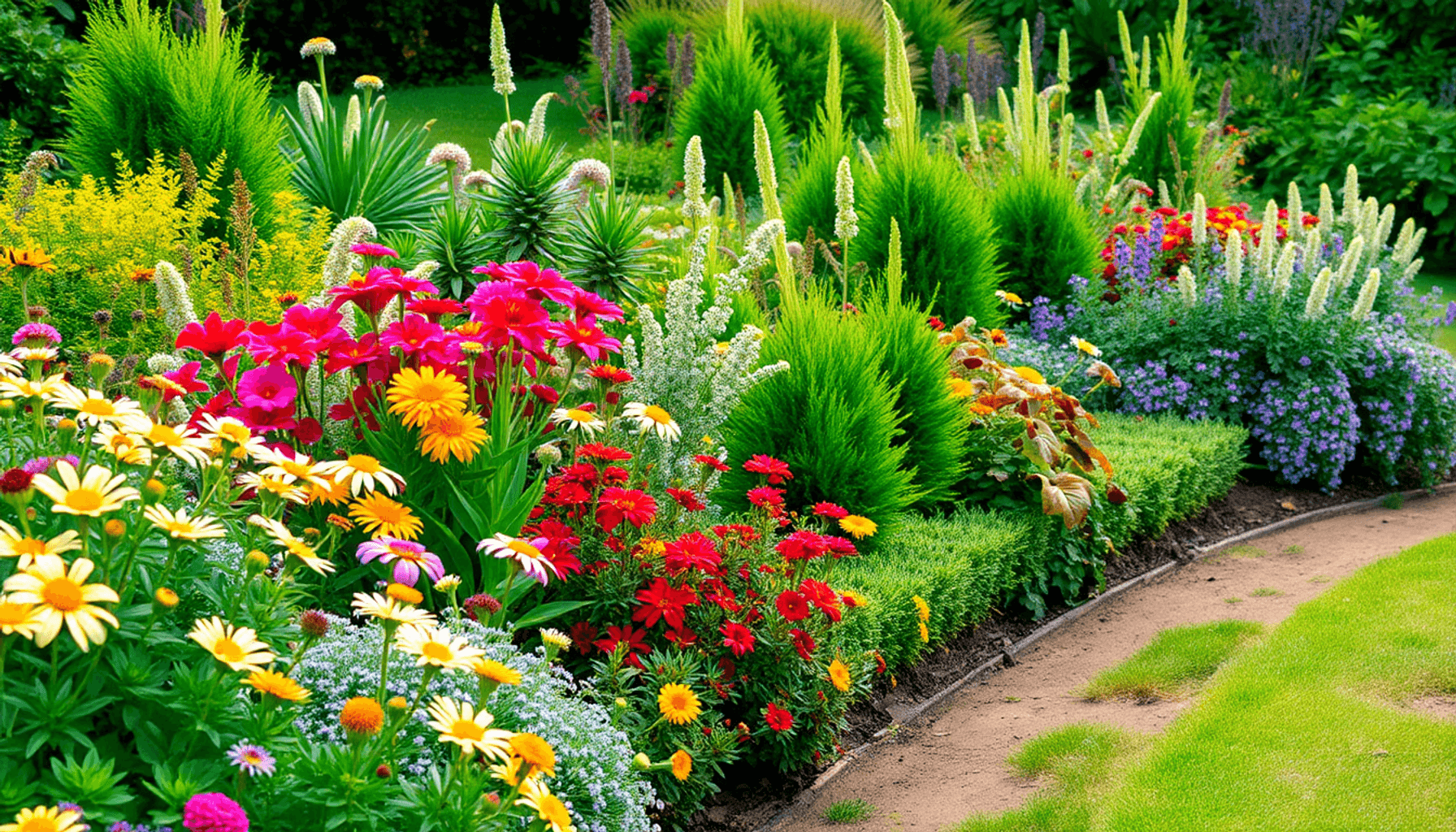

Flower borders are essential in UK garden design. They bring color, structure, and life to outdoor spaces, turning dull edges into lively displays that change with the seasons.
Why Flower Borders Matter:
- Color: Flower borders add vibrant hues from early spring to late autumn.
- Structure: Evergreen plants and shrubs create a stable visual framework for the garden.
- Wildlife Support: Carefully selected plants attract pollinators like bees and butterflies, as well as birds and beneficial insects.
Keeping Your Garden Lively Year-Round
Seasonal flower borders ensure your garden remains dynamic throughout the year. By choosing plants that bloom or display attractive foliage at different times, you maintain continuous interest instead of a temporary spectacle. This strategy guarantees your border always looks appealing, even during the colder months.
Flower Border Ideas UK: Plants and Designs for Every Season is a guide to creating these living artworks tailored to your garden's specific conditions. It goes beyond simply selecting beautiful flowers; it emphasizes purposeful design—harmonizing aesthetics with ecology for a flourishing garden all year long.
Understanding Your Garden Conditions
Knowing your garden conditions UK is essential for creating a successful flower border. The key factors to assess include soil type, light exposure, and the local climate. Each of these influences which plants will thrive and how your border will perform throughout the seasons.
Assessing Soil Type and Preparation
Soil quality varies widely across UK gardens. Identifying your soil type sets the foundation for plant health:
- pH Testing: Use a simple soil pH test kit to determine whether your soil is acidic, neutral, or alkaline. Most flowering plants prefer slightly acidic to neutral soil (pH 6.0–7.0), but some species like lavender or clematis tolerate more alkaline conditions.
- Soil Texture: Is your soil sandy, clay-heavy, chalky, or loamy? Sandy soils drain quickly but may lack nutrients; clay soils retain moisture but can become compacted. Loamy soil offers an ideal balance of drainage and fertility.
- Organic Matter: Adding organic matter such as compost or well-rotted manure improves soil structure, water retention, and nutrient availability. This preparation step boosts root development and supports vigorous flowering.
Evaluating Light Exposure: South-Facing vs. North-Facing Borders
Position relative to the sun dictates plant choice:
- South-Facing Borders: These receive the most sunlight during the day, ideal for sun-loving plants like roses, lavender, echinacea, and many Mediterranean herbs. Expect longer flowering periods here.
- North-Facing Borders: Shadier conditions suit shade-tolerant species such as hellebores, ferns, hostas, and some astilbes. These can provide lush foliage and subtle blooms where sunlight is limited.
Consider partial shade areas too—places that get morning sun but afternoon shade or dappled light under trees can support a diverse range of plants.
Considering Local Climate Factors for Plant Selection
The UK’s climate varies from region to region:
- Temperature Fluctuations: Coastal gardens often experience milder winters and cooler summers compared to inland areas. Mountainous regions might face harsher frosts.
- Rainfall Patterns: Some parts of the UK receive high rainfall (western Scotland), while others are relatively dry (southeast England). Choose drought-tolerant species if you have well-drained soils in drier locations.
- Wind Exposure: Open sites exposed to prevailing winds need sturdier plants that can withstand wind stress without damage.
Matching plants to your specific climate ensures better survival rates and reduces maintenance demands.
Taking time to analyze these garden conditions UK components equips you with a clear understanding before selecting plants or deciding on border design styles.
Planning Your Flower Border Design
Designing a flower border in the UK involves thoughtful decisions about border style and shape, size, and structural composition. These choices define the visual impact and practical function of your garden layout.
Choosing the Right Border Style: Curved vs. Straight Lines
- Curved borders create a relaxed, informal atmosphere. Their flowing lines add softness to garden edges, ideal for naturalistic or cottage-style gardens popular across the UK.
- Straight borders offer a more formal, structured look. They suit traditional or modern gardens where symmetry and clean lines reinforce design order.
- You can blend both styles by using straight lines near the house or pathways and gentle curves elsewhere to balance rigidity with ease.
Determining Border Size and Aspect to Influence Plant Choice
The size of your flower border impacts plant selection significantly:
- Large borders allow mixing tall shrubs, mid-height perennials, and low ground covers, providing layered height and depth.
- Narrow or small borders require careful choice of compact plants that won’t overcrowd yet maintain interest.
Aspect relates to the direction your border faces:
- South-facing borders support sun-loving species like lavender or echinacea.
- North-facing borders need shade-tolerant plants such as ferns or hellebores.
Knowing your border’s position ensures you select plants suited for light availability and microclimate conditions.
Designing with Structure in Mind: Arranging Plants by Height and Foliage Contrast
Structure is essential for year-round appeal. Arrange plants in tiers:
- Tallest plants at the back (if against a wall or fence) or center (for island beds) provide a backdrop.
- Medium-height shrubs and perennials fill the middle ground.
- Low-growing plants and ground covers form the front edge.
Intersperse evergreens among deciduous plants to maintain framework during winter months.
Foliage contrast adds textural interest:
- Combine broad-leaved with fine-textured foliage.
- Mix colors—dark green leaves next to silvery or variegated foliage create visual excitement.
Grouping plants in odd numbers (threes or fives) prevents a fragmented appearance, reinforcing flow along the border length.
Selecting a combination of shapes, heights, and foliage types helps your flower border stand out through changing seasons while complementing your garden layout UK-wide. This is especially important when considering planting perennials which can add significant punch to your flower border design.
Plant Selection for Every Season in the UK
Creating flower borders that impress throughout the year requires a thoughtful mix of plants. Building the “bones” of your border with evergreen shrubs and large structural plants offers a constant framework, anchoring the design no matter the season. These plants maintain shape, texture, and color even in winter, ensuring your border never looks bare.
Building the Structural Framework with Evergreens
Evergreens provide vital structure and form. Popular choices for UK gardens include:
- Boxwood (Buxus sempervirens): Classic for clipped hedges or rounded shapes.
- Holly (Ilex aquifolium): Adds glossy foliage and seasonal berries attractive to wildlife.
- Lavender (Lavandula angustifolia): Evergreen with aromatic leaves and summer flowers.
- Euonymus fortunei: Variegated leaves add brightness during dull months.
These plants help define your border’s outline and create contrast against seasonal bloomers.
Incorporating Herbaceous Perennials and Small Deciduous Shrubs
To introduce seasonal variation, mix in herbaceous perennials and smaller deciduous shrubs. They bring vibrant colors, changing textures, and dynamic interest from spring through autumn.
Consider these options:
- Echinacea purpurea (Coneflower): Long flowering period from midsummer to autumn, attracts pollinators.
- Hostas: Thrive in shade, valued for lush foliage that changes subtly across seasons.
- Rudbeckia (Black-eyed Susan): Bright yellow blooms that last well into autumn.
- Hydrangea macrophylla: Large flower heads that offer summer spectacle; some varieties change tone as they age.
Deciduous shrubs such as Spirea or Cornus (Dogwood) provide seasonal leaf color shifts and stem interest during winter when leaves fall.
Selecting Multi-seasonal Plants for Continuous Appeal
Plants classified as multi-seasonal maximize visual impact by offering more than just flowers:
- Foliage that changes color dramatically
- Persistent seed heads or berries
- Architectural shapes that catch frost or snow elegantly
Examples include:
- Heuchera varieties, prized for their colourful foliage all year round.
- Sedum spectabile, whose pink flower heads dry attractively to support late-season insects.
- Grasses like Miscanthus sinensis, which sway through summer into winter with seed plumes.
Grouping plants in odd numbers—threes or fives—helps avoid a choppy appearance. Repeat plant groups at intervals along the border to create rhythm and flow.
In compact gardens where space is at a premium, favour long-flowering perennials or those with dual-season interest to maintain strong presence without overcrowding.
Choosing the right combination of evergreen shrubs, herbaceous perennials, and multi-seasonal species tailors your flower border to thrive amid UK’s unique climate nuances while keeping your garden lively throughout every season.
Maximizing Wildlife Benefits with Your Flower Border Design
Creating a wildlife-friendly gardening UK space means selecting plants that support local ecosystems and encourage biodiversity throughout the year. A well-designed flower border can become a vital habitat for pollinators and other beneficial wildlife, enhancing the health and vibrancy of your garden.
Choosing Native or Pollinator-Attracting Species Suitable for All Seasons
Choosing native plants is one of the most effective ways to support local wildlife. Native species have evolved alongside British insects, birds, and small mammals, offering them the best sources of nectar, pollen, seeds, and shelter.
- Spring bloomers like bluebells (Hyacinthoides non-scripta), primroses (Primula vulgaris), and native willows provide early food sources for emerging pollinators.
- Summer-flowering perennials such as lavender (Lavandula angustifolia), foxgloves (Digitalis purpurea), and echinacea attract bees, butterflies, and hoverflies in abundance.
- Autumn interest plants including ivy (Hedera helix) and buddleia (Buddleja davidii) sustain late-season pollinators when food becomes scarce.
- Winter resources come from native shrubs like holly (Ilex aquifolium) with its berries feeding birds during colder months.
Pollinator-friendly borders UK also benefit from including a mix of flower shapes and colours to attract diverse insect species. Tubular flowers suit long-tongued bees and butterflies; open daisies are perfect for short-tongued bees; while clustered blooms invite hoverflies.
How Borders Can Soften Boundaries While Supporting Biodiversity
Borders serve more than an aesthetic purpose; they create transitional zones between garden areas or between garden and wild spaces. These edges soften hard boundaries such as fences or walls, blending different habitats seamlessly.
- Dense shrubbery offers nesting sites for birds.
- Leaf litter beneath plants provides cover for ground beetles and amphibians.
- Taller flowering plants supply perching spots for predatory insects that help control pests naturally.
Planting in layers—from ground cover to mid-height perennials to taller shrubs—mimics natural habitats more effectively than single-height borders. This structure supports a wider range of wildlife by offering varied microhabitats.
Incorporating features like log piles or small water sources within or near the border enhances its role as a mini-wildlife haven. These elements encourage amphibians, hedgehogs, and beneficial insects to thrive in your garden environment.
Designing your flower border with both beauty and biodiversity in mind creates a living space that benefits you visually while sustaining vital ecological functions year-round.
Conclusion
Creating year-round flower borders in the UK requires careful planning based on your garden's specific conditions and your personal goals for each season. Every garden is unique, so it's important to adapt these ideas to suit your space for the best results.
Keep these garden planning tips for the UK in mind as you design your border:
- Assess your soil type and light exposure carefully before selecting plants.
- Choose a border style that complements your garden's architecture and desired atmosphere.
- Build a strong structural foundation with evergreens and shrubs to provide continuity through all seasons.
- Layer in herbaceous perennials and deciduous plants to add bursts of seasonal color and texture.
- Incorporate native and pollinator-friendly species to enhance biodiversity and support wildlife year-round.
- Plan for maintenance by allowing some flexibility in plant replacement and seasonal refreshment.
Your border can be a dynamic feature that changes gracefully through spring blooms, summer vibrancy, autumnal hues, and winter structure. With patience, observation, and a bit of experimentation, you’ll develop a planting scheme that not only pleases the eye but also thrives in the local climate.
Flower Border Ideas UK: Plants and Designs for Every Season offer endless inspiration. Use this knowledge as a foundation for creating a garden space that reflects your style while celebrating the natural rhythm of UK seasons. The satisfaction of watching your border evolve and flourish will reward your careful planning season after season.
FAQs (Frequently Asked Questions)
Why are flower borders important in UK gardens?
Flower borders play a vital role in UK gardens by adding color, structure, and attracting wildlife. They enhance garden aesthetics throughout the seasons and support biodiversity by providing habitats for pollinators and other beneficial species.
How do I assess my garden conditions for successful flower border planting in the UK?
To create thriving flower borders in the UK, evaluate your soil type by testing pH and organic matter content, observe light exposure such as south-facing or north-facing borders, and consider local climate factors. This assessment helps in selecting suitable plants that will flourish year-round.
What are effective design tips for planning flower borders in UK gardens?
When planning flower borders in the UK, choose border styles like curved lines for an informal look or straight lines for a formal appearance. Consider the size and aspect of your border to influence plant choice, and design with structure by arranging plants based on height and foliage contrast to create visual interest.
Which plants are best for creating seasonal flower borders throughout the year in the UK?
Building year-round interest involves using evergreen shrubs and large plants as the 'bones' of your border for structure. Incorporate herbaceous perennials and small deciduous shrubs to introduce seasonal variation, ensuring your flower border remains vibrant across all seasons.
How can I design a wildlife-friendly flower border that supports pollinators in the UK?
Select native or pollinator-attracting plant species suitable for all seasons to maximize wildlife benefits. Designing borders that soften garden boundaries not only enhances aesthetics but also creates habitats that support biodiversity and encourage pollinators throughout the year.
What are key considerations to tailor flower border designs based on personal garden conditions in the UK?
Tailor your flower border designs by carefully assessing your unique garden conditions including soil type, light exposure, and local climate. Align your planting choices with seasonal goals to ensure year-round interest while maximizing benefits such as color, structure, and wildlife attraction in your UK garden.